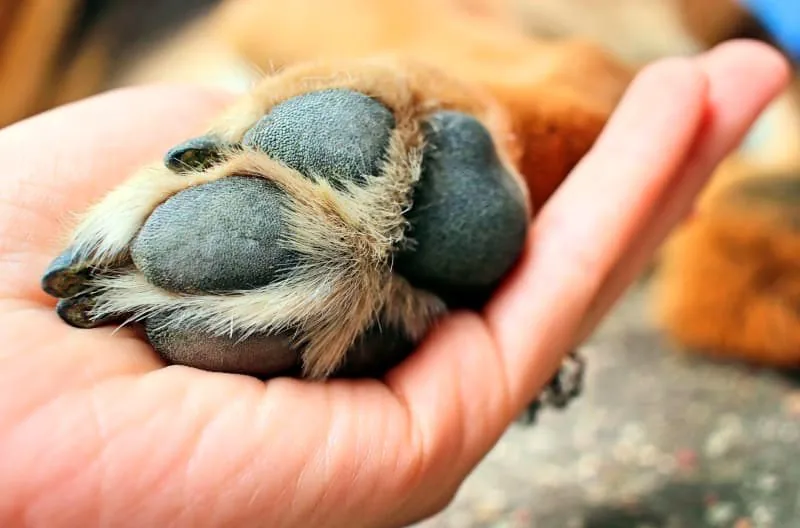
 Care
Care
How to Treat a Dog's Paw Pads?
They never stop playing and running around everywhere, so it's normal for our dog to occasionally end up with some kind of injury to their paw pads. Whether from stepping on a rock or splinter, or from scraping against a rough surface.
Let's take a detailed look at what we can do to treat a dog's paw pads, as long as it's a minor wound.
Why do dogs hurt their paw pads?
In the vast majority of cases, dogs hurt their paw pads from contact with foreign objects, sharp items, or unfavorable ground conditions where they've walked or exercised. For example, your dog might have a cut on their pads from stepping on a somewhat sharp rock, a piece of glass, or any item — natural or not — that's pointed or has splintered.
Doing intense exercise or physical activity for a long stretch of time can lead to erosion of the paw pads, due to excessive, frequent friction between this area and the ground. The result is usually chapping and the appearance of wounds and cracks on a dog's paw pads.
Another fairly common cause is contact with very hot or excessively cold surfaces. Both extreme cold and intense heat can cause burns on the paw pads, and some materials, like concrete or asphalt, tend to absorb heat easily and get extremely hot when directly exposed to sunlight.
Lastly, and just as important, we should watch for stereotypic behaviors and obsessive-compulsive disorder in dogs. Although they're not the same thing, in both cases we'll see very frequent or nonstop repetition of certain behaviors, such as digging, licking or biting at their paws, which can cause wounds on the paw pads and other forms of self-injury.
How do you know if a dog's paw pads are in bad shape?
It's important to check your dog's paws fairly often, not just to see if they're hurt, but also to check for parasites or any sign of illness (for example, dermatitis). There are also some signs worth paying special attention to, since they usually indicate dogs have some kind of injury on their pads. The main ones are:
- Licking or biting their paws or paw pads intensely or frequently.
- Avoiding putting weight on a paw while walking or sitting.
- Redness or bleeding on the paws.
- Limping or difficulty walking/moving.
While checking your dog's paw pads, it's very important to try to spot whether the skin in this area is red, raised, cracked, cut, or raw. And depending on what you find during this check, you'll need to take different steps to ensure your dog recovers properly.
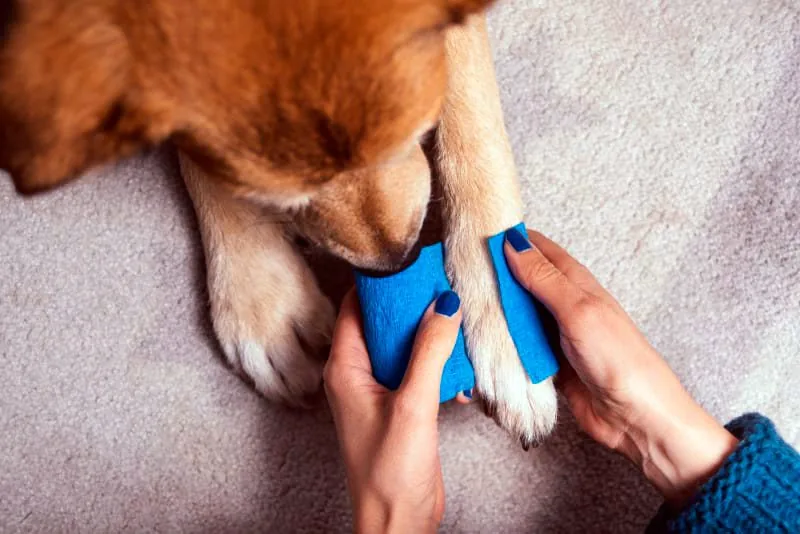
How to help a dog with hurt paw pads
If you notice your dog's paw pads have burns or deep cuts, it's essential to take them quickly to a vet hospital or clinic to check whether stitches and/or specific treatment are needed.
Also, if you notice the skin in this area is very cracked or hardened, veterinary care will be important to rule out any underlying health issue. For example, conditions such as pododermatitis and hyperkeratosis often cause changes in the texture and appearance of the pad's skin, and can even lead to ulcers developing in this area.
With that said, we now want to share a brief first-aid guide so you can help a dog with shallow injuries or wounds on their paw pads. Take a look:
How to treat wounds on a dog's paw pads
- Start by washing the wound only with clean, lukewarm water to remove any dirt and blood residue. This will help prevent infection and let you see how healing is progressing.
- After washing, we recommend trimming the fur around the paw pad skin, especially between the toes. This is important to prevent moisture buildup, which encourages microorganisms to grow, raising the risk of infection and hindering healing.
- The next step is applying hydrogen peroxide to the injured area and gently drying it with clean gauze.
- Next, you can apply diluted iodine or veterinary-grade chlorhexidine digluconate (spray or gel) to further clean and disinfect the wound. Remember to dry off any excess moisture with clean gauze.
- If the vet has prescribed a burn gel or a healing ointment, this is the ideal time to apply it, with the wound completely clean and dry.
- Since paw pads are constantly in contact with the ground and various dirt and debris, they usually need to be bandaged to prevent contamination and heal fully. It's best to use sterile gauze and hypoallergenic tape, changing the bandage 1 to 2 times a day.
- If the dog needs to be left alone at home, it's best to use an Elizabethan collar to keep them from compromising the bandage by licking or biting at their paws.
While there are some natural ingredients that can help heal the skin on the paw pads, it's important to always check with the vet before using them, to make sure they're truly beneficial and safe for your dog.
Natural remedies for healing wounds on a dog's paw pads
- Aloe vera: has healing, pain-relieving, antiseptic, moisturizing, and regenerative properties. After extracting the pulp from an aloe vera leaf, you can apply it to your dog's paw pads to help heal injuries and prevent dryness and cracking. Always remember to clean the wound well before using aloe vera, and protect it with a bandage afterward.
- Vitamin E + coconut oil: this mix has moisturizing, soothing, regenerative, anti-inflammatory, and antibacterial properties. It's very effective for speeding up healing and keeping the pads well hydrated, preventing erosion and cracking. To make it, just mix 1 vitamin E capsule with 50ml of diluted coconut oil.
- Lavender oil: has antibacterial action and helps skin cells regenerate. To make homemade lavender oil, just add ½ cup of dried lavender flowers to 1 cup of warm (not boiled!) coconut or olive oil, and let it steep for at least 5 hours before applying to injured paw pads.
- Honey: is one of the best natural healing agents for skin, since it stimulates regeneration of epithelial and granulation tissue cells. It also has excellent antibacterial, antiseptic, and soothing properties. You can apply a thin layer of honey to the injured area (after properly cleaning it) and bandage it for protection.
Lastly, it's worth noting that healing time for wounds on a dog's paw pads can range from a few weeks to several months, depending on how serious the injury is and the level of care given to support healing.
IMPORTANT: This article is for informational purposes only and does not constitute veterinary, nutritional or behavioural advice. Every dog is different, and only your trusted vet can advise you on its specific needs.