 Care
Care
Pododermatitis in Dogs: Symptoms and Treatment
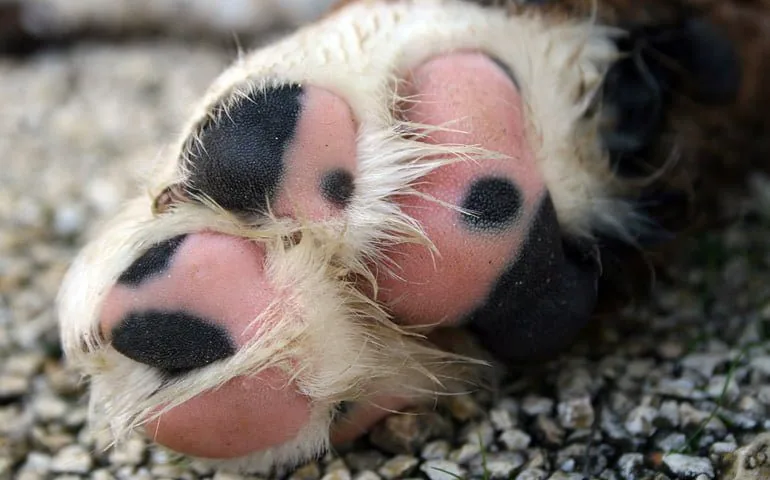
Pododermatitis is a condition that can affect dogs' feet, front and back. Since this part of the body is in constant contact with the ground, it's especially vulnerable.
That's why we need to check this area regularly. If we find any abnormality, such as pododermatitis, we'll need to see the vet. Delaying it could worsen our dog's symptoms and harm its health.
What Is Pododermatitis?
Pododermatitis is defined as inflammation of the feet, specifically the spaces between the toes, known as interdigital spaces. Very different causes can be behind this inflammation.
What Causes Pododermatitis?
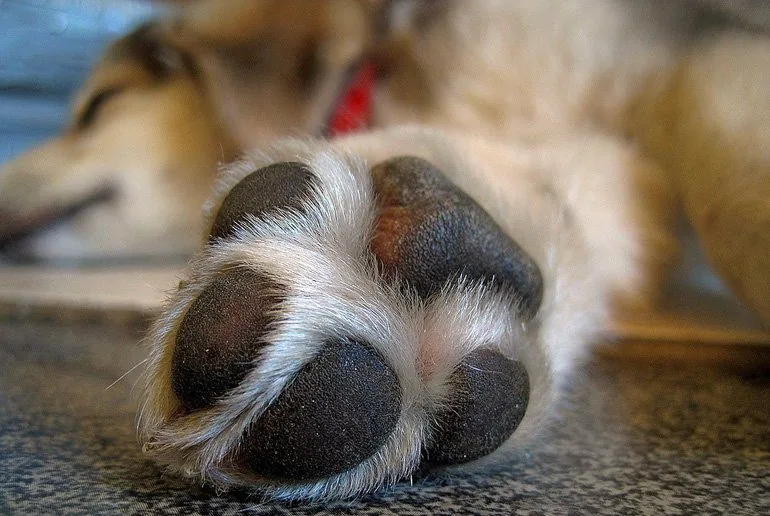
The most common causes of pododermatitis in dogs are trauma, meaning impacts to the paws, or the presence of foreign bodies such as rocks, splinters, glass, etc., which can cause injuries of varying severity.
But there are other causes too, such as:
- Contact dermatitis, which is inflammation that happens when the skin reacts to the presence of various irritants, such as cleaning products, plants, etc.
- Allergies, where the immune system overreacts to substances that, in principle, pose no real health risk.
- Parasites such as mange mites.
- Fungi.
- Endocrine conditions such as hypothyroidism.
- Autoimmune diseases, in which the immune system attacks its own body.
- Cysts developing in the interdigital area.
- Dogs with psychological problems can also compulsively lick their paws to the point of causing pododermatitis.
Which Breeds Get Pododermatitis Most Often?
Any dog can be affected, but since it's usually caused by impacts or foreign bodies, those with a more active lifestyle — jumping, running, or crossing rocky, wooded, or generally rough terrain — will be more likely to develop pododermatitis.
So, it will be easier to spot pododermatitis in dogs used for hunting, racing, or herding livestock, simply because they're more exposed to injuries to their paws given their living conditions.
Symptoms of Pododermatitis in Dogs
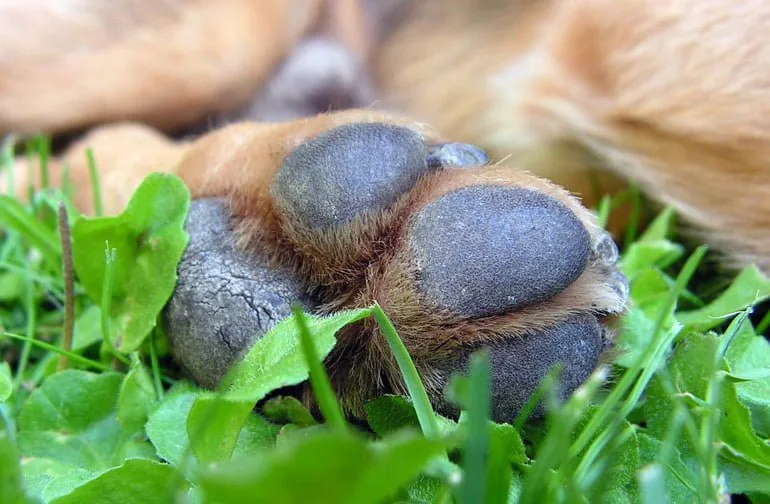
Below, we'll look at the most common signs that can point to our dog having pododermatitis. We may see them on one or more paws, and they are:
- Redness in the interdigital area.
- Swelling of the feet, which can extend to the legs.
- Nodules.
- Wounds or blisters.
- Discharge, which can contain blood.
- Limping due to pain.
- Darkened fur in the area as a result of frequent licking.
- This excessive licking eventually causes hair loss.
- As the area becomes inflamed, complications can develop that worsen the condition, such as bacterial infections.
How Do I Know If My Dog Has Pododermatitis?
Any of the symptoms we've described is reason enough to see the vet. It's this professional who can confirm or rule out the diagnosis. Since there are so many possible causes behind pododermatitis, getting the diagnosis right is essential.
In other words, pododermatitis itself is easy to identify, since it's simply inflammation of the interdigital area. What's tricky is determining what caused it. The number of affected paws can give us a clue. So, if pododermatitis is only in one paw, it's more likely due to a foreign body or an impact.
On the other hand, when we find more than one paw affected, the most likely diagnosis will be some systemic disease, such as an allergy, mange, or autoimmune problems.

How Is Pododermatitis Diagnosed?
To find out what caused the pododermatitis, the vet can examine the fur and skin looking for parasites. Bloodwork can reveal whether a systemic disease is present. It's also possible to take a sample and request a biopsy. There are tests and elimination diets available to detect possible allergens.
What Is the Treatment for Pododermatitis?
Logically, treatment will depend on what triggered the pododermatitis, which is why confirming the diagnosis matters so much.
We'd highlight the following recovery-oriented guidelines:
- If there's a bacterial infection, antibiotics are essential. On the other hand, if what's found is fungi, treatment will be antifungal. Parasites are combated with the appropriate deworming product.
- Disinfectants such as chlorhexidine may be prescribed to keep the area as clean as possible.
- Foreign bodies need to be removed.
- Allergies can't be cured, but they can be treated to improve the dog's quality of life and manage the symptoms.
- If we need to disinfect or apply topical treatments, it can be a good idea to carefully trim the fur in the area.
- In some cases, an Elizabethan collar will be needed to keep the dog from continuing to lick the affected area, since licking worsens the condition and slows recovery.
Bibliography Carlson and Giffin (2002): Manual práctico de veterinaria canina. Madrid: Editorial el Drac.
IMPORTANT: This article is for informational purposes only and does not constitute veterinary, nutritional or behavioural advice. Every dog is different, and only your trusted vet can advise you on its specific needs.