 Breeds
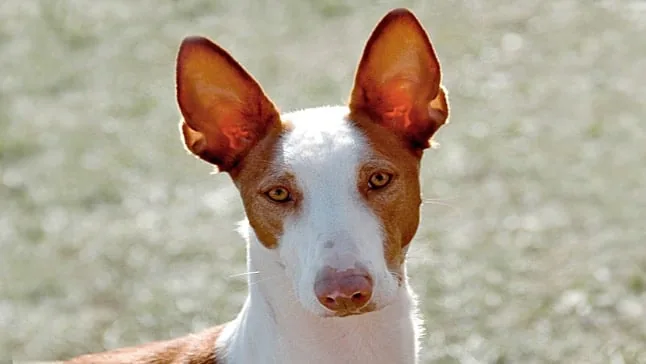
Iberian Podenco
Tireless hunter, born tracker, and loyal companion: the Iberian Podenco combines three virtues that make it unique among Spanish dogs. Contrary to what many believe, it isn't the only Podenco variety found on the peninsula, nor the oldest in terms of documented domestication.
Types of Podencos: Beyond the Iberian
Podencos originally come from Egypt and were spread across the Mediterranean by the Phoenicians thousands of years ago. Spain and Portugal hold the greatest diversity of types, each adapted to its own territory and local prey.
- Iberian Podenco: the most common variety on the peninsula, with three distinct sizes (large, medium, and small). Specialized in night tracking and rabbit hunting.
- Ibizan Podenco: native to the Balearic Islands, arriving around 3,400 BC. Smaller than the Iberian, with a red-and-white coat and an extraordinarily developed sense of smell. It measures between 56 and 74 cm and weighs 19 to 25 kg.
- Portuguese Podengo: arrived in Portugal in the 15th century. The smallest type, with a coat that often masks the breed's typical features. Very loyal and attentive to its family.
- Andalusian Podenco: comes in three varieties (large, medium, small). A dog with great stamina and speed, historically used to hunt wild boar, ducks, and rabbits.
- Valencian Podenco: a regional variety with characteristics similar to the Iberian but adapted to the geography of eastern Spain.
- Canarian Podenco: an island breed adapted to a subtropical climate.
- Other varieties: the Pharaoh Hound, the Cirneco dell'Etna, and the Maneto round out this family of Mediterranean hunters.
Physical Characteristics That Define the Iberian Podenco
The Iberian Podenco's size varies depending on which of the breed's three varieties you're looking at: the large variety stands 55 to 65 cm at the withers and weighs around 27 kg as an adult; the medium variety stands 40 to 52 cm at the withers and weighs 16 kg; and finally, the small variety ranges from 30 to 42 cm in height with an approximate weight of 8-10 kg.
Regardless of size, the body always has a lean but sturdy look. The head is conical and elongated, with a long, fine muzzle and a pair of small ears that fold inward and are always held erect. The coat can be smooth and coarse, or long and silky. Coat color is generally white or fawn.
Life expectancy ranges from 10 to 12 years, a respectable lifespan for a working dog that reflects its genetic sturdiness.
Temperament: Intelligent, Loyal, and Always Alert
Intelligent, noble, and always alert, the Iberian Podenco has a very balanced temperament, remaining submissive and extremely loyal to its owner, with whom it ends up forming a strong bond.
That said, this apparent gentleness isn't a blank check: if it feels punished or treated cruelly or unfairly, it can end that friendship for good. As a dog born and bred to hunt, it's highly resilient, tenacious, and brave. It isn't strictly a guard dog, though it can act as one if needed. In fact, it can be fairly rough and even aggressive with strangers and other dogs, especially males, including those of its own breed.
It likes being with its family and going out to walk and run freely in open country. Thanks to its sense of direction, it can wander far from home and still find its way back without getting lost. It's a very affectionate breed, but a sensitive one too, needing constant company and not handling long periods of solitude well.
The Iberian Podenco enjoys family life but needs space: its strong sense of direction lets it wander miles from home and always find its way back.
Ibizan Podenco vs. Iberian Podenco: Key Differences
Although they share a Mediterranean origin and hunting traits, the Ibizan Podenco and the Iberian Podenco are distinct breeds with significant differences. The Ibizan is smaller (56-74 cm compared to the 55-65 cm of the large Iberian) and has a finer coat, often in red-and-white tones, though it can also be pure white, chestnut, or "lion" colored.
The Ibizan arrived in the Balearic Islands around 3,400 BC and is considered the islands' national breed. Its sense of smell is extraordinarily developed, comparable to the Iberian's, but its more compact size makes it better suited to smaller living spaces. The Iberian, on the other hand, comes in three size varieties and is more versatile across different types of hunting. Both require firm but never harsh training, and both are loyal yet wary of strangers.
If you want to better understand the differences between a galgo and a podenco, you'll find that although both are hunters, the galgo hunts mainly by sight in short sprints, while the podenco combines sight, hearing, and smell to pursue prey for hours.
How to Train an Iberian Podenco?
The Iberian Podenco has a great capacity for training. For training to be effective, it needs to tap into the dog's natural instincts. It's essential from the very start to be clear and consistent with the commands you give it.
It's born practically pre-trained when it comes to hunting work. Instinctively, this clever, persistent dog is able to track and follow the scent of a target for hours, covering long distances without stopping until it reaches its goal. Unlike sighthounds, it can also do this at night.
Either way, it's always best to take charge of its training from puppyhood. The necessary socialization process should begin before the dog turns three months old, teaching it to respond to recall and rewarding it with affection and small treats. Throughout this training process, it's very important to avoid violence or an overly harsh approach if you want to build a positive relationship.
Recommended Care
The Iberian Podenco's role as a hunting and outdoor dog is an added benefit for its generally good health. This breed doesn't usually suffer from hereditary problems and isn't threatened by many of the diseases and disorders that affect other dogs.
That doesn't mean we can neglect our Podenco entirely. During the summer months, for example, you need to be very careful to prevent heatstroke: avoid excessive physical exercise during the hottest hours of the day, make sure it always has water within reach, and find it a cool, shaded spot in the yard or garden.
LEG AND PAW-PAD INJURIESDespite its physical toughness, it's prone to acute injuries in its legs and wounds on its paw pads while hunting. Always keep a good antiseptic on hand and check its paws after every outing in the field.
Finally, it's a good idea to brush your Podenco's coat with a rubber grooming glove or a slicker brush, especially during shedding season. It doesn't need bathing too often (once a month should be enough), just enough to keep its coat clean.
Is It Worth Having an Iberian Podenco?
The Iberian Podenco is an exceptional companion for anyone who understands its hunting nature and is willing to give it the space, training, and company it needs. It's not a dog for apartments or absent owners, but in the right home — with access to open country, constant activity, and a relationship built on mutual respect — it becomes a loyal, intelligent dog deeply bonded to its family.
Its stamina, sense of smell, and working ability make it irreplaceable for hunting, but it's also an excellent life companion for anyone who values its balanced temperament and noble nature.
IMPORTANT: This article is for informational purposes only and does not constitute veterinary, nutritional or behavioural advice. Every dog is different, and only your trusted vet can advise you on its specific needs.