 Breeds
Portuguese Podengo
Although its name suggests Portuguese origin, the Podengo's roots actually trace back to Phoenicia, making it one of the oldest hunting breeds in Europe. Its compact size hides a predatory instinct so strong it can work any type of terrain, from rabbit burrows to big game, depending on the variety.
The Temperament of the Portuguese Podengo
The Portuguese Podengo's behavior is strongly shaped by its habit of roaming fairly large open spaces. This trait is seen as the root of its liveliness and intelligence.
Smart, hardy, and rustic, but also watchful. This little dog never forgets who its owner is or the family around it, so it's common to find dogs that are very affectionate with children and quick to show clear signs of fondness. At home it's approachable and expressive, enjoying scent games and active walks that keep its mind engaged.
That warm temperament, though, tends to stay reserved for those it knows well. As a natural watchdog, this breed tends to be reserved with strangers, and it may even turn aggressive if it crosses paths with another animal or pet. With early socialization, it can live comfortably alongside other dogs and learn to interact with new people, although it will always keep a degree of initial caution.
Types and Varieties of the Portuguese Podengo
The Portuguese Podengo is a born hunter: its predatory instinct is so strong that it can work any type of terrain, from rabbit burrows to big game, depending on its size variety.
The Portuguese Podengo splits into three main size varieties, each bred for a specific type of hunting. If you're after a versatile dog with similar Iberian roots, the Podenco Ibérico shares many of the same working traits and temperament.
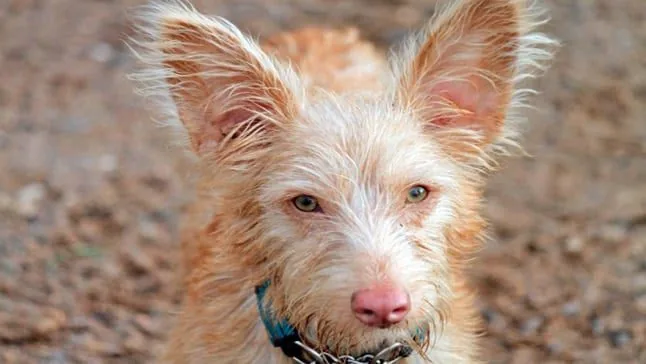
Pequeno (Small): stands 20 to 30 cm tall and weighs 4 to 6 kg. Agile and fast, it specializes in hunting rabbits out of burrows and rocky terrain. Its build is proportionate and athletic, with a triangular head, large erect ears, and a muscular body ideal for quick movement.
Médio (Medium): represents the balance between energy and manageability. It works as a versatile rabbit hunter, adapting to different terrain just as effectively as the small variety but with more power.
Grande (Large): used for big-game hunting, it has the same athletic build as its smaller relatives but with greater size and stamina across varied terrain.
Besides the size varieties, there are two coat types: smooth coat, very easy to maintain, and wire coat with a characteristic beard on the muzzle. The coat is medium in thickness; when short it's smooth, and when long it takes on a rougher texture. There's no undercoat, which makes grooming easy even for first-time owners.
Physical Characteristics of the Portuguese Podengo
This is a well-proportioned animal, with a solid bone structure and developed musculature. Its long, narrow head is topped by a pointed muzzle that becomes a real advantage while hunting.
The Portuguese Podengo is well known for its highly expressive eyes, a sign of the close bond usually seen between these dogs and their owners. This trait reflects its intelligence and its capacity for emotional connection with the family.
The most common coat colors in this breed are dull or matte black, along with shades of brown and yellow. There are also white dogs, or dogs with combinations of these tones in solid or patched patterns. Regardless of color, the coat is tough and coarse, protecting the dog from harsh weather while working outdoors.
Coat Care by Type
Although the Portuguese Podengo is a low-maintenance dog, coat upkeep varies slightly depending on the type.
Smooth coat (short): needs gentle, occasional brushing to remove dead hair. It doesn't require intensive upkeep, which makes it ideal for owners without previous experience.
Wire coat (long): needs weekly brushing to keep it looking good and tangle-free. The characteristic beard on the muzzle needs special attention to prevent matting. Even so, it remains easy to care for compared with other long-coated breeds.
In both cases, keep the nails trimmed, check the ears often to prevent infection, and brush the teeth regularly. It doesn't shed excessively or need frequent baths, which makes its upkeep considerably simpler.
Training the Portuguese Podengo
Training the Portuguese Podengo can be relatively straightforward if you bring the necessary patience. Knowing this is a dog completely in its element while hunting, it's easy to understand its tendency toward hyperactivity and easy distraction.
That said, being a dog prone to getting carried away by stimuli doesn't clash with its famed intelligence. That's why keeping this mini hunter's energy in check is basically a matter of presenting the lesson in an engaging way, using positive reinforcement built around play or treats.
Naturally, training started during puppyhood will be more effective and easier to carry out. From the very start, socialize it with people, dogs, and varied environments. Teach it to handle being alone and work on recall and self-control from an early age, since its hunting instinct can lead it to follow scent trails without restraint.
Portuguese Podengo Puppies
Portuguese Podengo puppies are bright, fun-loving dogs eager to learn. Their natural curiosity and energy call for a stimulating environment where they can explore safely.
Socialization is critical during the first few months. Expose the puppy to different people, dogs, sounds, and environments so it develops confidence and adaptability. Positive training works better than any coercive method: use play, treats, or praise to reinforce desired behavior.
One of the main challenges is teaching the puppy to cope with being alone and to respond reliably to recall. Work on these aspects from the start, since the hunting instinct can be very strong even in young dogs. Set clear limits on where it's allowed to explore and practice obedience in safe spaces before allowing it freedom in open areas.
General Care for the Portuguese Podengo
Once training is in place, there's little else to worry about with our four-legged friend. It's considered a low-maintenance dog that's easy to care for, which makes sense given its strong personality and its natural drive to keep hunting.
Beyond its modest food and supply needs, you won't need to worry much about shedding or constant brushing either. This dog has stamina to spare, typically living to 12 to 14 years of age.
RISK OF ESCAPE DUE TO HUNTING INSTINCTThe biggest danger with this Podengo is the chance it could escape and get lost, given its irrepressible urge to follow scent trails. Make sure fencing is sturdy, keep it on a leash in uncontrolled areas, and work obsessively on recall from puppyhood. A Podengo in hunting mode can cover miles without even realizing it.
Price of the Portuguese Podengo
The price of a Portuguese Podengo runs around 1,500 euros, though this figure can vary significantly depending on several factors.
Cost depends on the breeder's reputation, the dog's genetic line, the size variety (the small ones tend to cost more than the medium or large ones), and whether the dog comes with a registered pedigree. Specialized breeders with a track record of hunting or show champions tend to charge more.
If you're looking for a Portuguese Podengo, contact registered breeders directly for current pricing. Keep in mind that the initial price is only part of the total cost: you'll also need to budget for vaccinations, deworming, microchipping, spaying/neutering if needed, and ongoing veterinary care throughout its life.
Is the Portuguese Podengo the Dog for You?
The Portuguese Podengo is ideal for owners looking for an intelligent, independent dog with real character. Its compact size makes it suited to different living spaces, but its energy and need for mental stimulation require an owner committed to regular exercise and environmental enrichment.
If you live in a rural area or have access to open spaces where the dog can run and explore, this Podengo will make an exceptional companion. It's possible in a city apartment too, but you'll need to dedicate time to long walks and scent games that channel its hunting instinct.
Its tendency to follow scent trails and its initial reserve with strangers call for early socialization and consistent training, but once that foundation is in place, you'll have a loyal, expressive, and surprisingly adaptable dog by your side for 12 to 14 years.
IMPORTANT: This article is for informational purposes only and does not constitute veterinary, nutritional or behavioural advice. Every dog is different, and only your trusted vet can advise you on its specific needs.