 Care
Care
How to Improve Our Dog's Joint Health
Just like people, our furry companions can develop joint problems. Joint issues result in pain, reduced mobility, and, ultimately, a decline in our pets' quality of life.
At any sign of joint pain, such as limping, not lifting a leg to urinate, or losing interest in play, we should take our dog to the vet so they can make a diagnosis and set treatment guidelines.
However, we shouldn't wait for health problems to appear before taking action — it's a good idea to strengthen our dog's joints from an early stage. Here are some tips on how to strengthen and improve our dog's joint health.
What is a joint?
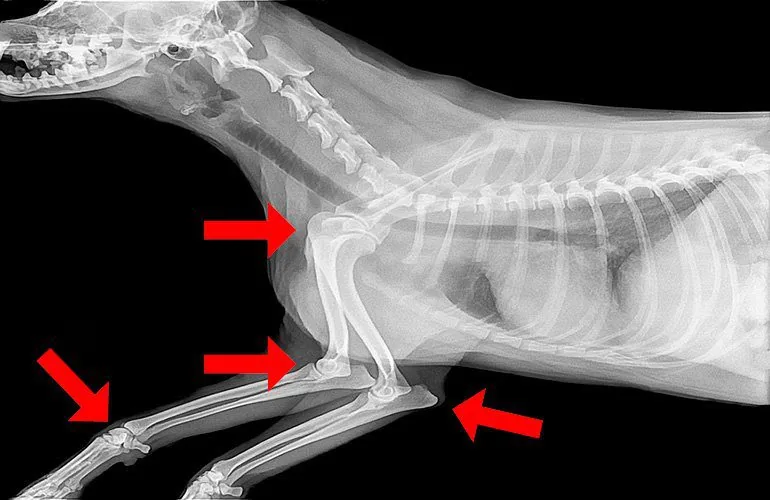
A joint is the anatomical point of contact between two bones. Joints are generally mobile, and through the sliding motion between the bones that form them, they allow movement of the limbs and other parts of the body.
To keep the bones from rubbing against each other with every movement, their ends are protected by joint cartilage, an elastic, resistant structure that protects the bones from impact.
If the structures that make up the joint start to deteriorate, movement is reduced and pain is experienced. Because of this, it's a good idea to strengthen a healthy dog's joints to keep them from deteriorating prematurely.
What factors affect joint health?
Many factors can directly or indirectly affect joint health, but let's focus on the ones we can actually influence:
Weight control
Being overweight increases the load placed on the joints, putting stress on the cartilage and the other joint structures.
When cartilage is overloaded, it thins, leaving the bone less protected against impact, which can lead to secondary bone problems.
Because of this, it's essential to keep our dog at their optimal weight through a healthy diet with portions suited to their needs.
A balanced, complete diet
Our dog's health is directly tied to their diet, and nutritional imbalances can lead to serious bone and joint problems.
Feeding our dog high-end kibble ensures their nutritional needs are properly met.
There are also specific supplements to support cartilage nutrition and improve joint health, such as chondroprotectants, hyaluronic acid, or omega-3 fatty acids.
WATCH OUT! Be very careful with calcium supplements, since in many cases giving them can actually harm the animal's health, so they should only be given under veterinary prescription.
Physical exercise
Physical activity is essential for properly maintaining joints and has a range of beneficial effects:
- Supports nutrition of the joint cartilage, improving joint health and mobility.
- Improves muscle mass and strength.
- Improves coordination and balance.
- Increases physical endurance.
- Helps control or reduce weight.
- Prevents future injuries.
For exercise to have these positive effects on our dog's joint and overall health, it needs to be regular, moderate physical activity.
If we do high-intensity exercises the animal isn't used to, we could get negative results or even cause injury.
Exercises to improve a dog's joint health
To improve our pet's joint health, they should get moderate-intensity exercise daily.
Walks
Walking is one of the best exercises our pet can do. Generally, three 15-minute walks a day at a continuous pace are recommended.
This means that during the first part of the walk, the dog can spend time sniffing around and going to the bathroom, and afterward at least 15 minutes should be spent walking without stopping.
Ideally, the animal should be able to walk freely, without their movement being restricted by a leash and without being pulled or yanked.
Other exercises
Besides walks, there are a number of exercises we can do 3-4 times a week that improve musculoskeletal health:
CavalettiThis involves the dog stepping over obstacles (bars) with their legs. The animal needs to lift each leg over the bar, one at a time — jumping over the obstacle doesn't count. This exercise improves joint mobility and muscle mass.
Sit-ups (sitting exercise)Most dogs know how to sit when asked, so we can use this skill to help strengthen their hindquarters.
Giving a pawThe paw-giving motion involves lifting and extending the front leg, making it a beneficial exercise for the elbow and shoulder joints.
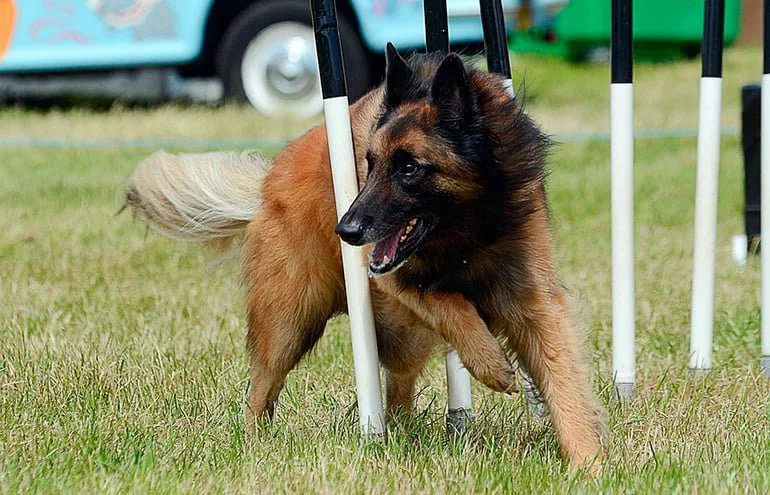
Zigzag or figure-eight movementHaving our pet move in a zigzag or figure-eight pattern with their body improves spinal mobility and back muscle strength.
Walking on slightly soft surfacesWalking on an inflatable mattress or foam mat improves muscle tone and strength.
Ideally, these exercises should be combined as a circuit, so the animal goes through the different activities one after another.
The number of repetitions for each exercise, or the total length of a circuit, depends on each individual animal, especially their physical condition and stamina. So, it's a good idea to start with 10 minutes of combined exercises and gradually increase the duration week by week based on their progress.
Exercise should be an enjoyable activity for the dog, so we should never push the animal to physical or mental exhaustion.
If any sign of discomfort is noticed in the dog while doing these exercises, the activity should be stopped immediately, and a vet should be seen to rule out possible health problems.
With these activities, besides strengthening our dog's joints, we'll be strengthening our bond with them, and it'll be a fun way to spend more time with our furry friends.
Bibliography Carlson and Giffin (2002): Manual práctico de veterinaria canina. Madrid: Editorial el Drac.
IMPORTANT: This article is for informational purposes only and does not constitute veterinary, nutritional or behavioural advice. Every dog is different, and only your trusted vet can advise you on its specific needs.