 Nutrition
Is Home-Made Food Good for Dogs?
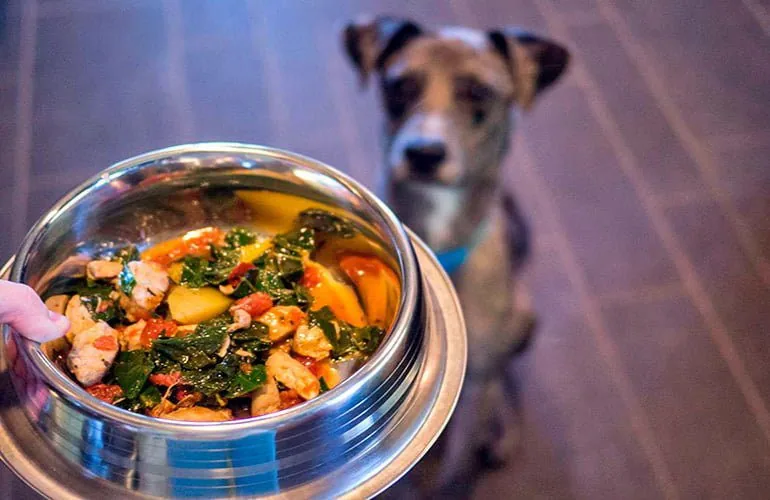
These days we find a wide range of options for feeding our dog. So many that it is sometimes hard to settle on one, and owners have plenty of questions about it. Among them all, home-made food stands out.
Preparing our dog's food at home is not the same as building their diet on our leftovers, though. Quite the opposite: to guarantee our companion gets every nutrient they need, the menu has to be put together in consultation with experts.
What Is the Right Diet for a Dog?
Dogs are carnivores, but because of the domestication process, they can be considered omnivores. That is, their diet includes both animal and plant foods. Animal protein is the most important ingredient. As with any other species, dogs need to enjoy a balanced diet to stay healthy.
But here is the key point: balance for dogs is not the same as it is for us. Dogs are not smaller humans, and it is a mistake to build their diet on our own meals. Doing so will have consequences for their health. Broadly speaking, their menu should be made up of:
- 70-80% animal protein from meat or fish, such as chicken or salmon, but also organ meats.
- 20-30% grains, fruit and vegetables. Fibre intake matters here. Examples include maize, wheat, soya, rice, oats, chicory, bran, apple, watermelon, pear, carrot, pumpkin and potato.
- Treats should never make up more than 10% of the diet and have to be deducted from the total daily ration. Go for healthy rewards, such as carrot or apple, or praise them with strokes or affectionate words.
- As a rough guide, nutritional needs are 26% protein, 36% carbohydrate and 38% fat or lipids, which can come from animal or plant sources, such as oils. Olive oil stands out among these.
- Good-quality food does not need supplementing with vitamins or minerals, since these are already found in the foods we choose.
The Importance of Amino Acids for Dogs
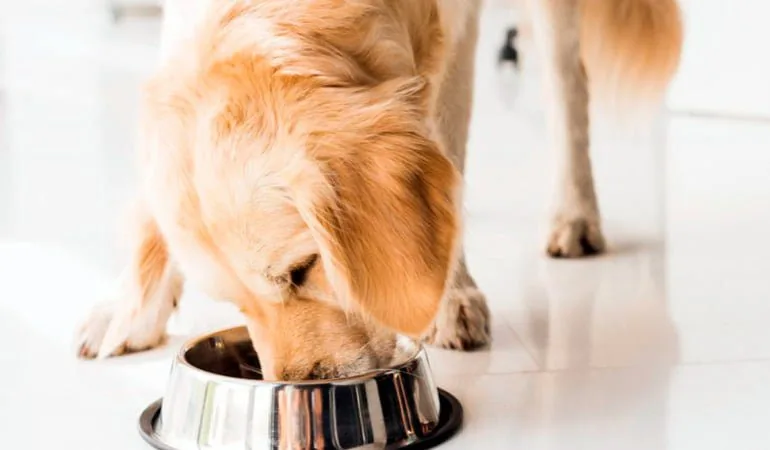
A suitable menu for a dog has to contain, without fail, the ten amino acids considered essential in this species. These are arginine, histidine, isoleucine, leucine, lysine, methionine, phenylalanine, tryptophan, threonine and valine. Amino acids are the building blocks of protein.
The ones considered essential are so precisely because a dog's body cannot synthesise them. That is why the only way they can get them is by eating them through food. A shortfall causes conditions such as growth problems, issues with the immune system or anaemia.
A good way to provide them all is by mixing animal protein with other protein from plants. This is not about throwing random ingredients on the plate, though. A vet specialising in nutrition is who has to give us the guidance.
A Dog's Life Stages
To feed our dog properly it matters to take note of what stage of life they are at. Their nutritional needs depend on it. Broadly speaking, these are the stages usually referred to:
- Puppy: from the start of weaning, at around two months old, until generally a year. Especially at the start, this is a stage of rapid growth that will call for a good supply of protein and calories.
- Adult: from one year to seven.
- Senior or geriatric: from seven years onward. Calorie needs drop. We can also increase antioxidant-rich foods.
- Pregnant and nursing bitches: throughout pregnancy, which lasts around two months, and while the dog is nursing. Around the expected due date, the bitch should be eating 1.5 times her usual ration.
- Sick dogs: some conditions need a specific diet. In these cases food acts as another form of medication.
Finally, beyond taking these stages into account, another very important factor is how much physical activity the dog gets in their everyday life. Obviously, a dog who runs, jumps and plays for several hours is not the same as one who is walked for only a few minutes; the former will need a diet with more calories.
How Much Food Should I Give My Dog a Day?
Even if we go for home-made food, this does not mean the dog has to eat as many times as is recommended for humans. How many meals we give depends on our schedule and our dog's characteristics.
Puppies are recommended to have 3-4 meals a day. As they grow, this drops to two, which can become one in adult dogs. If the dog gets very anxious around food, it is better to give it several times.
Otherwise, one can be enough. What matters is that we keep it at the same or a similar time, since dogs feel more secure with an established routine. What should always be available to them is a bowl of clean, fresh water.
How to Make Home-Made Food for Dogs
As happens with us, certain pathogens, such as parasites and bacteria, can be picked up from food. That is why, even though the BARF diet, based on raw food, has become fashionable lately, it is advisable to cook it to prevent illness.
At the very least, it should be frozen. Depending on the foods chosen, we can boil, griddle or bake them. Care needs to be taken with bones or fish bones that could harm the dog.
No salt or sugar should ever be added. It can be a good idea to spend a couple of days preparing several portions, packaging them and freezing them to use through the week. That way we will not have to cook every day.
Can Dogs Have Dairy?
Cheese or yoghurt could be part of the diet, as long as the dog has no lactose intolerance. Adult dogs have lost the enzyme that digests this sugar, so they can suffer digestive upset after eating dairy. We can offer our dog a small amount and include it in the diet if they tolerate it.
The Benefits of Home-Made Food for Dogs
Working hours, living with more than one pet, or how easy it is to find kibble or tins, on top of the price, all make us think twice about cooking at home. Especially if we understand this is not about giving them leftovers. Here are the advantages of doing it:
- We choose the ingredients ourselves, and they are entirely trustworthy and good quality, having passed every check for human consumption.
- The recipe can be tailored to our dog's taste and characteristics.
- We guarantee the preparation does not cause the food to lose nutrients, while making it easier for the body to absorb them. Avoiding processed foods has beneficial effects on health.
- Well designed, it covers every need a dog has, whatever stage of life they are at.
- We can do without colourings, preservatives and additives in general.
- Fresh products are appealing to every dog.
- We can vary the recipes, keeping the interest of dogs who seem to get bored of eating the same thing every time.
- It is a diet with high nutritional value.
- Last but not least, cooking our dog's food ourselves is a way of strengthening our bond.
How Do I Start Giving My Dog Home-Made Food?
If you are interested in cooking for your dog, the first step is to inform yourself. Look for information written by canine nutrition professionals. You can also sign up for courses and, of course, consult an expert to help you design the menu. Bear in mind that if the diet is not balanced, your dog can suffer nutritional shortfalls.
These will end up causing health problems. Home-made food, we stress again, is not sharing your plate with your dog. Once you are clear on what and how to cook, introduce the new diet gradually so your dog can adapt. Sudden changes can cause them gastrointestinal upset.
Bibliography Carlson and Giffin. 2002. Manual práctico de veterinaria canina. Madrid. Editorial el Drac. Villagrasa, María. Adecuación nutricional de los alimentos. Revista Ateuves no. 25. pp. 14-17.
IMPORTANT: This article is for informational purposes only and does not constitute veterinary, nutritional or behavioural advice. Every dog is different, and only your trusted vet can advise you on its specific needs.