 Care
Care
Is It True That Dogs Hold Grudges?
It's scientifically proven that dogs have emotions. Many studies have found that our most loyal friends experience feelings like joy, sadness, depression, or even jealousy.
Another analysis concludes they have the same level of sensitivity as young children. But is it possible that, on top of all this, they also hold grudges? At Soyunperro.com, we tell you what the scientific studies say.
Is It True That Man's Best Friend Can Hold a Grudge?
Many people agree on what a dog's personality should be like: noble, loyal, obedient... in short, a friend through thick and thin. Another widespread idea is that they have a unique ability to forgive, no matter what you've done.
But as we dig deeper into their psychology, you'll see it's not all rosy in the canine universe. In fact, it can be hard to accept that our beloved companion could harbor a feeling as dark as resentment. But it's a scientifically proven fact that dogs tend to hold grudges more than other non-domesticated species like wolves.
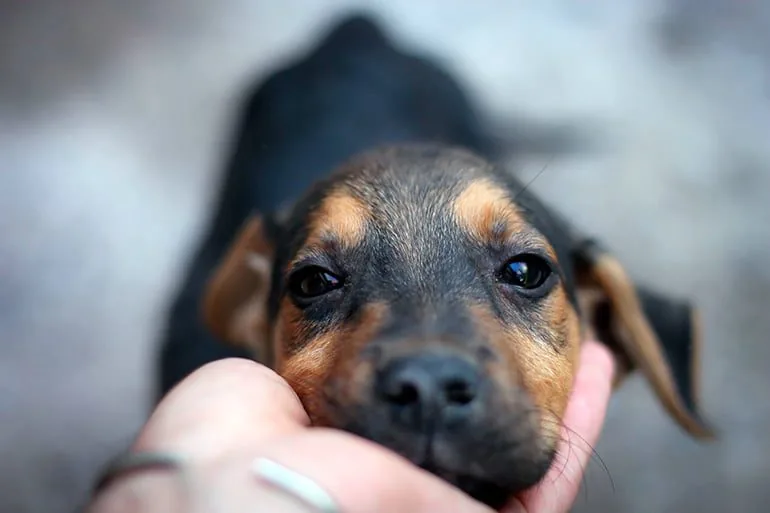
What Science Says: "Dogs Have Become More Individualistic and Less Dependent"
A 2018 study conducted by the Royal Society Open Science found that dogs are less likely than other species to forget incidents and misunderstandings with other individuals. The main reason behind this limited ability to move past old disagreements has a lot to do with humans.
Through centuries of living alongside humans, dogs have become more individualistic and less dependent on cooperating with other members of their own species. Wild animals, on the other hand, know that reconciliation is a strategy for keeping the group functional and thus ensuring survival.
The study's results are fascinating. In the case of wolves, individuals took an average of 10 minutes to start playing and sniffing each other after a fight, while dogs wouldn't even glance at each other hours after a scuffle ended; this stubbornness led to new disputes, so the resentment kept growing.
While wolves are more aggressive and violent in their actions, they tend to move past disagreements faster, since they need to work as a team behind their leader. Dogs tend to be socialized to varying degrees, which means they're not aggressive in their daily lives. Because of this, faced with any misunderstanding, they don't feel the need to repair the relationship with whoever wronged them.
What Can Make a Dog Hold a Grudge Against Us?
Now that we know our companions can hold onto some resentment, the question is: what actions on our part can create this grudge? There are two key aspects to keep in mind. The first is upbringing and the environment they were raised in. The second is which breed they belong to.
Regarding the first point, we need to understand that every individual is shaped by their surroundings. A puppy that's suffered mistreatment, or been trained through traditional methods focused on punishment, will hold a grudge against humans in general, and particularly toward whoever mistreated it. If it's a breed with aggressive, territorial traits, its reaction could have serious consequences.
But, Are Some Breeds More Prone to Grudges Than Others?
Experts say a dog's personality is shaped 50% by the environment it's raised in and 50% by its innate traits. These combine the individual's own temperament with breed-specific characteristics.
There are breeds with a prouder, more stubborn temperament. Among these are every type of Terrier — a wide range of feisty dogs including the Airedale Terrier, the Lancashire Terrier, the Skye Terrier, the Blue Kerry Terrier, and other breeds in this family.
Other varieties also tend to be difficult to handle, like the Akita Inu, the Lhasa Apso, the Pekingese, or the Chihuahua. These should be handled firmly but without aggression, since they never forget a slight.
In short: while some breeds are more prone to this feeling, it's essential to offer all of them a calm environment, firm training, and kind treatment at every stage of life. A well-raised, balanced dog will be less prone to holding grudges and more open to sharing a home with other dogs or animals.
IMPORTANT: This article is for informational purposes only and does not constitute veterinary, nutritional or behavioural advice. Every dog is different, and only your trusted vet can advise you on its specific needs.