 Nutrition
Is Raw Meat Good for Dogs? Pros and Cons
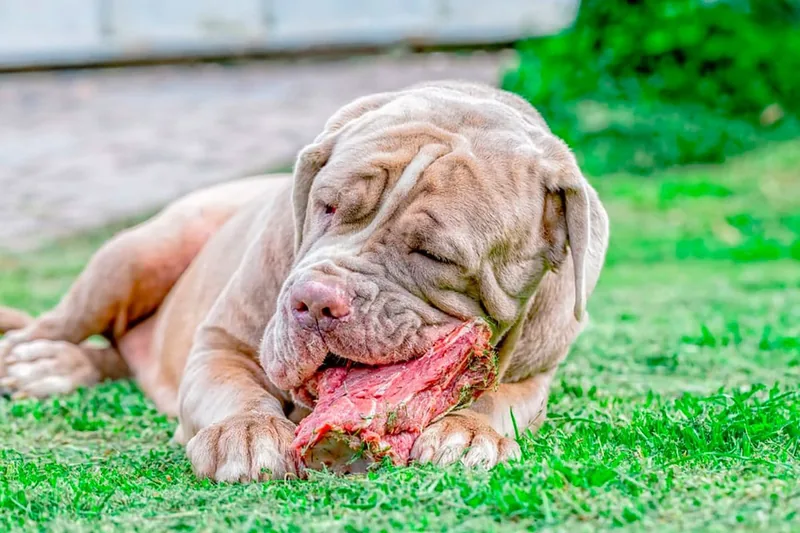
There is a great deal of debate over whether it is advisable to feed a dog raw meat, whether it could be a health risk, or even whether it could affect their behaviour.
Here at Soyunperro we are going to clear up the benefits and risks of feeding a dog raw meat, so you can decide for yourself how to feed your dog.
Are Dogs Carnivores?
A dog's digestive system is fully adapted to eating raw, unprocessed food. Their gut digests meat very efficiently. They have also been shown to have a greater ability to digest carbohydrate than wolves.
On another note, a dog's teeth are entirely carnivorous, allowing them to grip and tear meat with their canines and incisors, but they also have three pairs of molars in the upper jaw and two in the lower jaw, which help them chew both meat and other foods.
It is very common, in defending raw meat consumption, to point to its evolutionary fit with dogs' diet.
Given how hard it is to separate dogs from humans, to understand what these animals eat in the wild the simplest and most consistent option is to turn to members of the species living freely. On the African continent (specifically in Tanzania) there are packs of wild dogs whose diet has been studied. They get their food from 4 main sources, ranked by the energy obtained from them:
- Cooked grains from human food, millet and maize among them, depending on the area where the animal studied was found (which suggests scavenging behaviour rather than hunting).
- Meat: from a wide range of species, dog included (indeed, they naturally show cannibalistic behaviour).
- Fruit and vegetables (depending on the time of year).
- Human faeces (a very stable source of minerals and vitamins throughout the year).
So today, dogs who live independently of humans and have never tasted kibble eat both plant-based and meat-based foods.
Even so, this adaptation does not mean they have become omnivores as such; rather, despite a preference for animal-based foods, they show a great deal of adaptation to and acceptance of plant-based foods such as fruit. We recommend you read our article on fruits recommended for dogs.
Is Raw Meat Bad for a Dog?
It depends. Their digestive system digests meat efficiently. Meat is also a source of high-quality protein with high biological value; that is, meat is a great food.
Giving it raw can be problematic, though. The health checks that the meat we buy at the supermarket passes are not designed for it to be eaten raw, but to be cooked.
So we will be giving our dogs a considerable bacterial load, and these bacteria will become part of our dog's gut microbiota. Among them are some that cause diarrhoea in dogs and humans alike, such as E. coli, Salmonella or Listeria. We will go into the consequences of these further on. Raw or lightly cooked meat or fish is also used in every BARF diet recipe.
What Type of Meat Can a Dog Eat?
Dogs can eat practically any type of meat raw, chicken, beef, foal and lamb among them, obviously.
Under European law, an animal cannot eat meat of its own species, to avoid a repeat of what happened with so-called "mad cow disease". So no, a dog should not eat dog meat (even though they naturally would).
Risks of Feeding a Dog Raw Meat
Absolutely every raw food carries bacteria, and some of these can cause illness. That is precisely why milk is pasteurised, meat is cooked and fruit is washed.
On another note, regulations set limits on the bacteria present in these products so that subsequent processing (cooking, pasteurisation or washing) removes any bacterial load they may have and they pose no health risk (as long as it is cooked).
As mentioned above, bacteria such as Salmonella, E. coli and Listeria will become part of dogs' gut. But does the presence of these bacteria mean illness will appear in our animals?
When acute diarrhoea appears, a diagnosis is rarely reached; instead, supportive treatment is given and with it the diarrhoea clears up. Clinical experience does show a link between acute diarrhoea and feeding raw diets, though. What does the science say? There are studies linking animal deaths to feeding these diets. From haemorrhagic diarrhoea in dogs to tuberculosis in cats.
Another point to consider is that many of these bacteria do not only cause illness in dogs; they can also cause it in humans, who can catch them through handling the food or the animal's faeces.
This matters especially for immunosuppressed owners or pregnant women, since among the most common bacteria is Listeria, which in a 2019 outbreak caused 5 miscarriages in Andalusia (as well as 200 cases and 2 deaths). This risk is enough for therapy dog organisations working in hospitals to have banned the use of these diets.
There are also parasites to consider; although most meat for human consumption is entirely free of parasites, or carries a load that poses no risk after cooking, there is always a risk (freezing is a great option — the recommended time to guarantee they are destroyed is 18 months).
As with bacteria, owners also put themselves at risk from parasites, both through handling the faeces and through handling the food.
Choking is another danger that necessarily comes with it: if we give our dog pieces of meat that are too large, they may get anxious and try to eat them too quickly… it is highly advisable to cut or even mince the meat, depending on our dog's size, and give it with no bone.
And no, our dog will not become more aggressive from eating raw meat. Nor will they try to attack or devour us — those are simply urban myths with no scientific basis whatsoever.
Benefits of Feeding a Dog Fresh Meat
Fresh meat contains very high-quality, highly digestible essential protein and amino acids (digestibility that is not lost if it is cooked).
Being a moist food, it releases more compounds into the air and smells better (though less so than when cooked); it is likely to be more palatable for dogs, meaning they enjoy it more.
Beyond this, no further benefits of feeding raw meat have been scientifically demonstrated.
Where to Buy Meat for My Dog?
Broadly speaking we have two options: buying the meat ourselves or buying a diet already formulated for dogs:
- Buying meat: Any large supermarket with food intended for human consumption will do. Make sure the use-by date is as far off as possible and, if we think it worthwhile and have the option, freeze the meat. We can even ask the shop assistant for meat for our dog, and they will advise us on the cheapest option, or seasonal meat.
- Buying formulated diets: If for everyday reasons such as lack of time from work or study, lack of means to prepare fresh food for our dog, or whatever the reason may be… we can always buy packaged meat, in dehydrated format, specially made for dogs.
Even so, in various studies carried out in the United States there have been recalls of these products for Salmonella and Listeria. In several studies carried out in Europe, contamination by various bacteria has been detected above the limits permitted for sale (some of it even resistant to antibiotics).
IMPORTANT: This article is for informational purposes only and does not constitute veterinary, nutritional or behavioural advice. Every dog is different, and only your trusted vet can advise you on its specific needs.