 Breeds
Italian Greyhound
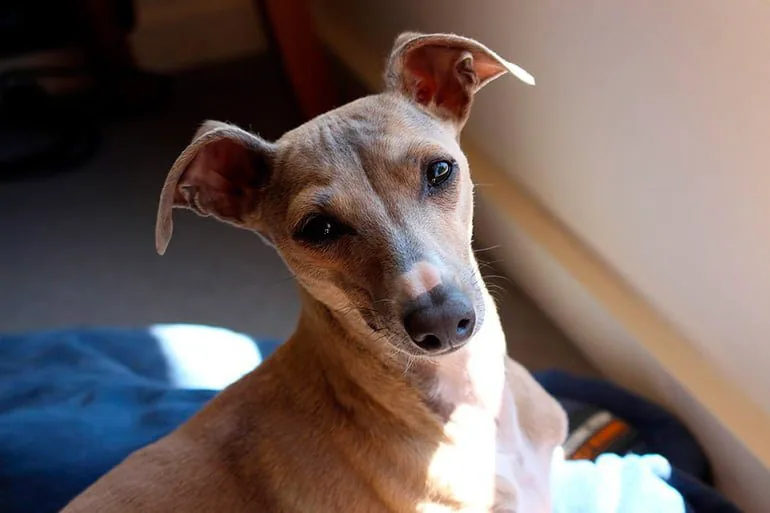
The Italian Greyhound, the smallest of the sighthounds, combines the elegance of a born runner with a heart that beats only for its family. Beneath its fragile appearance hides an ancient companion dog, built to live glued to its people. Understanding its physical traits, history, and needs is the first step toward a full, happy life alongside this canine gem.
An Unmistakable Silhouette
The official American Kennel Club (AKC) standard describes the Italian Greyhound as a sighthound with refined lines and fine bones. Its height at the withers ranges from 33 to 38 cm and its weight sits between 3.2 and 6.4 kg, with no significant difference between males and females. This breed's life expectancy runs around 13 to 15 years under optimal conditions.
The coat is short, satiny, and has no undercoat, giving it a velvety feel but little thermal protection. Accepted colors include every shade of fawn, blue, cream, red, black, and white, as well as bicolor combinations. Its slender silhouette, with a deep chest reaching down to the elbows and a very tucked-up belly, gives it an elastic, elegant trot.
Unlike other sighthounds, its bones are extremely fine, which makes it a dog prone to fractures from jumps or falls that other breeds would handle without issue.
Noble Origins Around the Mediterranean
The earliest depictions of similarly shaped dogs appear in Ancient Egyptian tombs, suggesting that selection for miniature sighthounds began thousands of years ago. Through trade routes, these graceful dogs reached Greece and Rome, where they became established as exclusive companion dogs, never intended for hunting.
During the Renaissance, they became a status symbol in European courts: Catherine de' Medici, Frederick II of Prussia, and Italian nobility adored them. In the 19th century, breeders refined the breed until fixing the modern standard, and kennel clubs officially recognized it in the early 20th century. Today, the Italian Greyhound retains intact that aristocratic air that has accompanied it for over two thousand years.
A Companion of Shadow and Velvet
The Italian Greyhound's temperament is extremely affectionate and sweet. Its personality, more dependent than that of other sighthounds, turns it into its owner's shadow: it needs constant contact and doesn't handle prolonged loneliness well.
This intense attachment can lead to separation anxiety if independence isn't worked on from puppyhood with gradual sessions. With children and other pets it's peaceful, but its physical fragility means play needs supervision to prevent pulling or falls. Its energy is intermittent: it combines bursts of activity with long naps, so it doesn't need exhausting exercise, just calm walks and brief stimulation.
What Only the Italian Greyhound Has
The breed's limited genetic diversity was analyzed in a scientific study from the Center for Companion Animal Health, which found reduced genetic variability from historical inbreeding and its possible link to a higher susceptibility to autoimmune diseases.
The Italian Greyhound is also famous for its obsession with blankets: it burrows under any fabric to stay warm, a behavior inherited from its lack of body fat. Its double-suspension gallop, with all four legs off the ground twice per stride cycle, is a display of pure biomechanics. Historically, in Italian courts they were called "sleeve dogs" because ladies carried them inside the sleeves of their dresses to keep warm.
Essential Health and Care
The near-total absence of subcutaneous fat makes the Italian Greyhound extremely sensitive to cold. It needs protection from the cold with coats or sweaters even indoors if the temperature drops below 15°C. Rigorous dental hygiene is another priority: its small mouth is prone to tartar buildup and periodontal disease.
Among the hereditary health problems, notable ones include patellar luxation, progressive retinal atrophy, and various autoimmune diseases. Its fine bone structure makes it prone to bone fractures, so the home should be free of dangerous jumps. Ideal exercise consists of short walks and controlled play, avoiding exhausting runs that could damage its joints. Early socialization and independence training help prevent separation anxiety, one of the most common disorders in the breed.
IMPORTANT: This article is for informational purposes only and does not constitute veterinary, nutritional or behavioural advice. Every dog is different, and only your trusted vet can advise you on its specific needs.