 Care
Care
Julius K9 Harness: We Tried It!
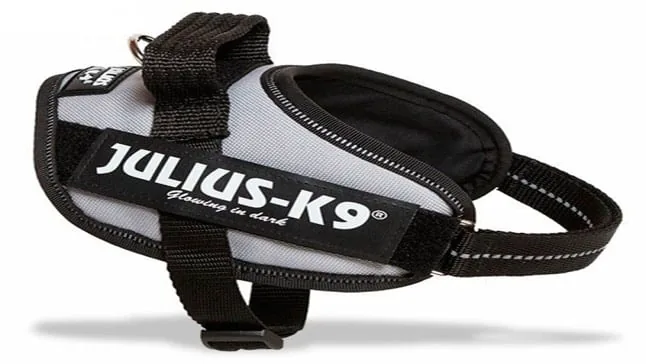
We're going to dig into how well this new, currently trendy type of dog harness performs and what quality it offers — of course, we're talking about the Julius K9 IDC. This is a harness that, unlike others, puts no pressure on the dog's neck.
Thanks to its simple but effective strap system, we can control our dog without the harness pressing on its neck when it pulls. The harness's force is distributed across the chest and front of the dog.
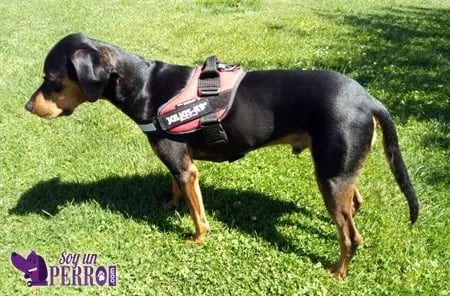
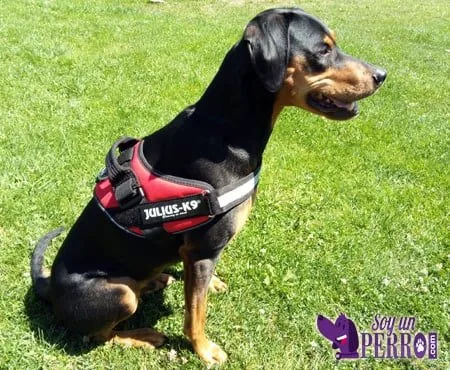
Since we didn't want to talk about a product without trying it first, we bought a red Julius K9 for our great friend Beltxa, who took on the fantastic role of tester. Here are our most honest thoughts.
How Good Is the Quality of the Julius K9 IDC Harness?
This is a harness made with high-quality materials — the moment you pick it up, you can simply feel it's not a product made with poor raw materials.
The sturdiness of its straps, the thickness and durability of the top section, as well as the stitching and finishes, show this is a product that took many hours of work. A well-finished product.
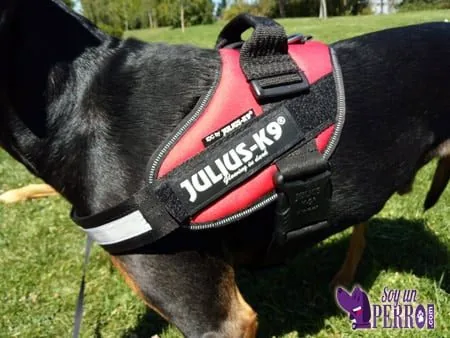
So, our opinion of the Julius K9 is quite positive on this front — it's not a cheap harness within the wide range of dog harnesses available, but it's without a doubt the highest-quality one we've used so far. It's worth it.
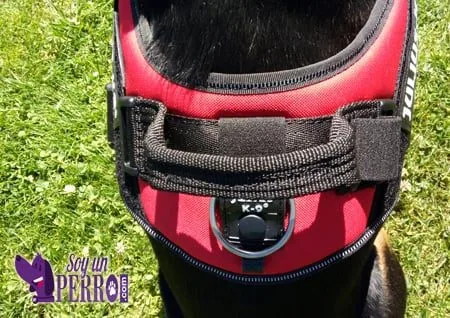
This harness comes with reflective straps on the front leash attachment, very useful when walking your dog at dusk or at night, since they greatly improve visibility, especially if there's a risk of nearby cars.
How to Use the Julius K9?
Putting it on is very simple — just adjust the strap located at the front of the dog, across its chest, and then adjust the strap wrapping around its rib cage, which secures the dog from underneath its chest.
Once the straps are adjusted, simply undo or fasten the buckle with an easy click, every time you want to put the harness on or take it off your dog. To take it off or put it on, simply pass the dog's head through the gap between the front strap and the harness, then tighten the chest strap's buckle.
Honestly, it's the simplest harness we've tried so far — simple and practical at the same time. On top, it has a metal buckle where you can attach the leash, whether retractable or not. It also has a very sturdy handle, in case you prefer to hold the dog by hand.
The whole harness is made of high-strength polyester, so not even the strongest dog can break it no matter how hard it pulls. So, this harness can be used with a leash or simply by hand.
Benefits of Using a Harness
This harness's main benefit is its balance point — since it's secured on top and attached to the dog via a front strap and one wrapping around its chest, it can be said the dog is held from a point where it can be controlled without it suffering excessive pressure from the harness when it pulls.
In simple terms, it's a comfortable harness for both the dog and the owner. Another of its benefits is that its stitching is strong and it's designed in polyester, making it a very durable harness.
Also, the part touching its back, the thickest part, is breathable as well as waterproof — we can't think of what else they could've done with this harness; it seems to us it took many hours of work and dedication.
Pros and Cons of the Julius K9
We'll start by saying we personally loved it — it's a sturdy, resilient harness, exactly what you'd expect when you want to keep your dog comfortably controlled, both for it and for you.
The pros of the Julius K9 are:
- Perfect balance for holding the dog
- Pull force distributed between the front and lower straps
- Very comfortable for both the dog and us
- Has a handle for manual holding besides the leash attachment
- Reflective strip on the front, improving visibility in low light
- Durable materials
- Different sizes to choose the best fit for your dog's size
In our opinion, the cons of the Julius K9 are:
- A bit pricier compared to other harnesses (though we have to admit it's higher quality, so it's somewhat justified).
- The harness shifts around on medium-small dogs
- Chafes the front armpits on medium-small dogs
For anyone focused on the cons, we should note that on large dogs, this harness stays perfectly in place. That said, on medium-small dogs, like the one we used, a very lovable sixteen-kilo dog, the harness tends to shift toward the sides.
When this happens, the dog doesn't walk comfortably, since part of the harness rubs against the lower side of its chest. If we try to tighten it further, the strap under its chest ends up rubbing against the front legs' armpits, causing chafing.
So, if your dog is small, we recommend borrowing one from a friend before buying it, to check it fits your dog perfectly and works well. If your dog is large (over twenty kilos), you won't have problems as long as you choose the right size.
IMPORTANT: This article is for informational purposes only and does not constitute veterinary, nutritional or behavioural advice. Every dog is different, and only your trusted vet can advise you on its specific needs.