 Breeds
Komondor
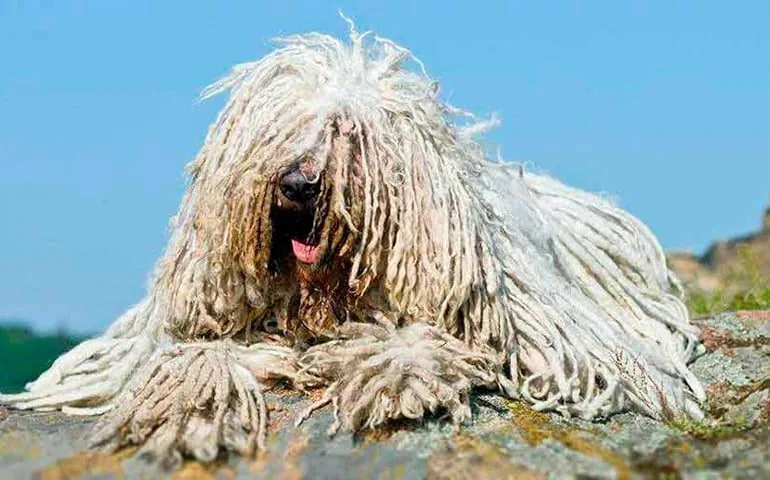
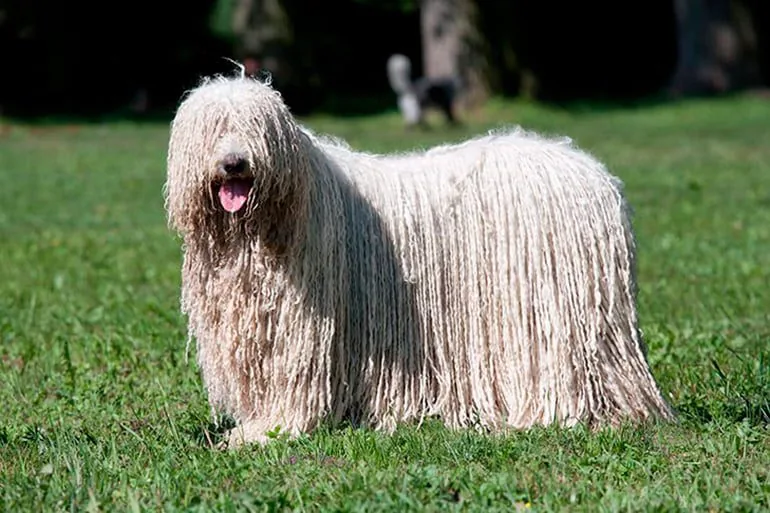
These dogs, similar in appearance to the Puli breed, are among the largest dogs there are. In fact, the Komondor breed is classified as giant. Its dropped ears and corded coat are its most distinctive traits. Despite its innocent look, its 7 kg of coat hides a muscular body and a dominant temperament.
If you're considering bringing a dog of this breed into your home as a pet, you should know it isn't recommended as a first dog given its dominant, independent temperament, and that it demands a considerable investment of money and time to keep all its needs met. In this post you'll get to know this charming breed.
Characteristics of the Komondor
Being a molosser-type dog, it has a sturdy, powerful build with long legs. As a result, it's a good jumper and moves with great agility. That's hard to believe when you look at its unusual coat, which covers its entire body. Its eyes are also hidden beneath its cords, but they're oval and dark.
Its tail is long, its ears are dropped and V-shaped, and its muzzle isn't very long, though it's still visible, ending in a black nose. Its coat is double-layered, giving it a look comparable to a Hungarian sheep. Historically, this coat has protected it from wolf and bear attacks, as well as from low temperatures.
 Height between 65 and 85 cm in males and between 64 and 71 cm in females
 Weight between 36 and 60 kg in males and between 34 and 45 kg in females
 Long, dense, curly, corded coat. These distinctive cords are white. As puppies they have a soft, curly, fluffy coat that sheds around 8-10 months. By age 2 they take on their typical corded look
 Loyal, family-oriented temperament; somewhat stubborn and protective
 Good health, but prone to dysplasia
 Estimated life expectancy of between 10 and 12 years
Temperament of the Komondor
They're intelligent, affectionate, and independent. They have a strong protective instinct, likely because they've been bred as flock-guarding dogs. That said, they tend to get bored easily and prefer doing things their own way. Given their dominant, independent temperament, they're not suited to inexperienced owners.
They tend to get along well with children, with whom they're especially patient, and with other pets. That said, it's worth starting training and socialization from around 4 months of age to prevent aggressive behavior that could complicate living together. Given their background living close to nature, they're dogs that need an area to roam.
Although they adapt to city life, they're especially happy if they have access to outdoor grounds where they can run and explore. That said, always fenced and supervised.
What Care Does the Komondor Need?
Caring for a Komondor centers on its coat. Given its composition and shape, it requires regularly checking each of its cords. To do this, you'll need to manually separate each cord by hand, one by one, to keep them from matting against the skin.
They usually shed twice a year, in spring and fall. You should use these seasons to split long mats into shorter ones so tight cords form properly. You'll need to trim its coat 2 or 3 times a year, as well as bathe it fairly regularly.
Visiting a professional dog groomer will ensure it's dried properly, which helps prevent fungal infections. You should also deworm it regularly and check for fleas and ticks. Trim excess hair around its eyes, ears, and paw pads to prevent infection.
History of the Breed
There are several theories about this breed's origin. According to some experts, it dates back to the year 900, when the Magyar tribes of Prince Árpád settled on the Hungarian steppe. Others believe Mongol invaders may have introduced it to the Danube basin during their 13th-century invasion.
It's also thought to be related to the Ovtcharka breed, brought over by the Huns as they passed through the southern Russian steppe, and to the Tibetan Mastiff, given its molosser-type traits. Either way, in 1930 Komondors were imported to the U.S. and soon received official breed recognition.
During the Second World War, however, the German army decimated this breed, nearly driving it to extinction. The efforts of Hungarian breeders living in the West managed to bring the breed back, and by 1960 it once again had a strong presence in the U.S. Outside these two countries, though, it remains fairly unknown.
Fun Facts About the Komondor Dog
It's said there are barely 10,000 Komondors left on the planet. They're somewhat barky dogs, perhaps from being used to herding sheep and goat flocks. Its unmistakable coat has served it well for blending in among sheep and catching wolves off guard. Its effectiveness against them is record-setting.
Without a doubt, Komondors combine the best qualities of a gentle, protective pet with those of leaders given great responsibilities. Although they're not overly energetic, they do need daily physical activity. You won't get bored with one around.
IMPORTANT: This article is for informational purposes only and does not constitute veterinary, nutritional or behavioural advice. Every dog is different, and only your trusted vet can advise you on its specific needs.