 Breeds
Characteristics of the Long-Haired German Shepherd
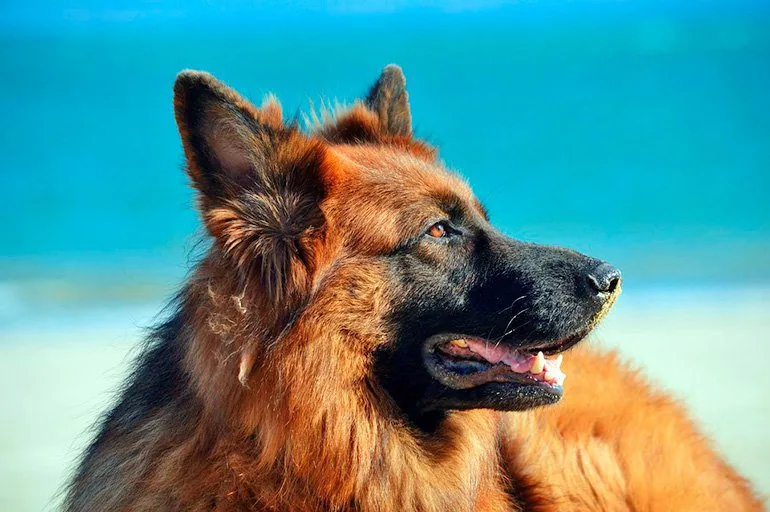
The long-haired German Shepherd is a canine variety distinguished, as the name suggests, by its long coat. Native to Germany, it has a thick double coat, ideal for keeping your dog protected against cold weather.
We'll explain this shepherd variety's characteristics, its main care needs, and important details about its temperament. Ready?
Physical Characteristics of the Long-Haired German Shepherd
The long-haired German Shepherd isn't a different breed from the well-known German Shepherd — it's a variety with a longer coat. It's medium-to-large in size, muscular, and powerful-looking, with strong, well-structured legs.
Physically, it stands between 60 and 65 centimeters at the withers in males, and 55 to 60 centimeters in females. Despite this, the body is longer than it is tall.
As for weight, the ideal range is between 30 and 40 kilos for males, and 22 to 32 kilos for females.
This shepherd variety has a dense, straight coat. The tail is long and thick, the muzzle is elongated, and the ears are pointed and upright. According to the American Kennel Club, this breed's life expectancy falls between 7 and 10 years.
Coat Characteristics
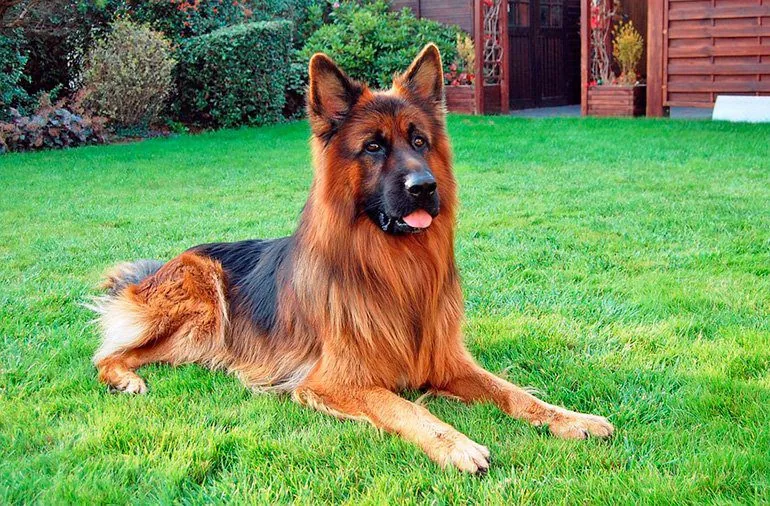
Among the German Shepherd varieties, the long-haired one has a double coat, meaning it has both an undercoat and an outer coat.
The undercoat is coarse, dense, and firm, short on the head and legs but longer on the back and neck. The outer coat, meanwhile, is longer and softer, with loose tufts on the ears, the middle of the legs, and the tail.
The coat comes in a combination of black with reddish, chestnut, and yellow areas, black with gray, or solid black. In every case, the nose is always black, with a mask of the same tone on the muzzle, around the eyes, and on the ears.
Coat Care for the Long-Haired German Shepherd
Despite the long coat, caring for your German Shepherd's coat won't be difficult. Brush once a week to help remove dead hair. This lets you catch tangles early, though the shepherd's coat doesn't tend to mat much, thanks to its coarse texture.
Depending on your country's climate, the dog will shed its coat once or twice a year. During this period, more dead hair will fall out, and you can help by brushing a couple of times a week. Use a comb with wide, spaced-out teeth for brushing.
You can decide how often to bathe your dog based on how much exercise they get and how much time they spend outdoors. Use products formulated specifically for dogs when bathing.
During summer, it's important to watch for external parasites like fleas and ticks, since they can easily thrive in a long coat.
Temperament of the Long-Haired German Shepherd
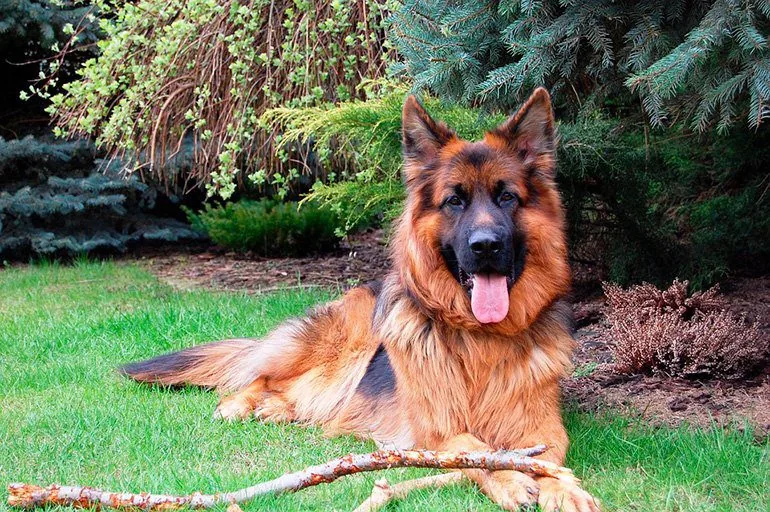
The temperament is the same as described for the German Shepherd in general. It's a good-tempered dog that isn't easily rattled. It shows confidence and a protective, loyal personality.
When well socialized, it gets along great with other dogs, animals, and people. It also likes to stay active, so it'll make an excellent companion for you if you enjoy walks and exercise.
Health Issues in the Long-Haired German Shepherd
Like other dog breeds, the German Shepherd can contract viral and bacterial illnesses, such as parvovirus, distemper, and mastitis, among others.
On top of that, there are some common conditions you should know about, since the breed has a genetic predisposition to them. These conditions include:
- Hip dysplasia
- Elbow dysplasia
- Glaucoma
They also frequently suffer from gastric torsion (bloat), though its exact cause still isn't fully understood. Knowing this is crucial if you have a long-haired German Shepherd, since you need to watch for any symptoms.
Despite the possibility of these health issues, it's a strong, healthy dog, capable of living in a variety of climates and thriving as a companion animal.
IMPORTANT: This article is for informational purposes only and does not constitute veterinary, nutritional or behavioural advice. Every dog is different, and only your trusted vet can advise you on its specific needs.