 Breeds
Maltese
The Maltese carries centuries of history through bustling ports and aristocratic salons. From ratter to inseparable companion, this miniature breed shows off a lively intelligence, an affectionate temperament and a natural elegance that wins everyone over. Discover everything you need to know to understand and care for it properly.
What the Maltese is like
The Maltese belongs to the companion dog group and shows a compact, balanced silhouette. Its height at the withers ranges between 20 and 25 cm in both males and females. According to the official American Kennel Club standard, weight falls below 3.2 kg, with an ideal range of 1.8 to 2.7 kg. The breed's life expectancy is notable, often reaching 12 to 15 years with proper care.
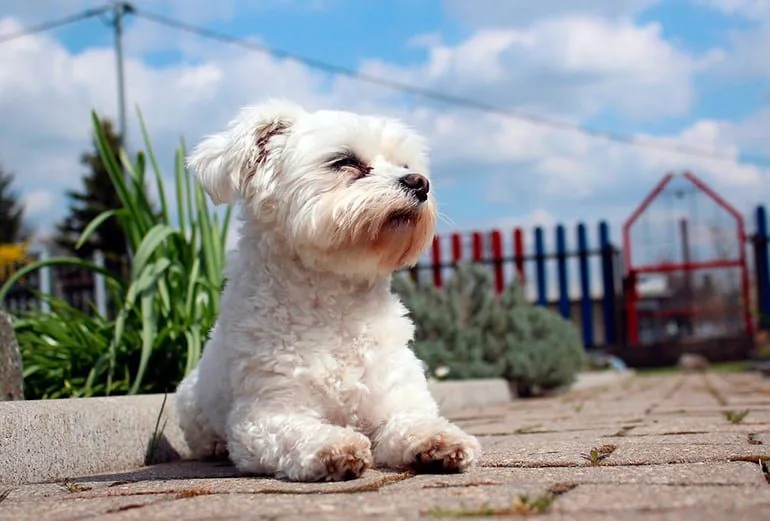
Its most visible trademark is the pure white coat, made up of long, straight, silky hair that falls on either side of the body without curling. It has no undercoat at all, which reduces shedding and gives it that distinctive texture. Some dogs show slight ivory or pale lemon tones on the ears, allowed within the standard provided they don't break the overall impression of a white dog.
From ratter to jewel of the nobility
The Maltese's origins have nothing to do with the cushions it occupies today. Its ancestors worked the ports of the Mediterranean, doing a very different job: hunting rats on ships and in warehouses. Phoenician traders, and later the Romans, carried these small dogs across the Mediterranean basin, planting the seed of what would become a cosmopolitan breed.
Its rise to fame came when European nobility took notice of its small size and immaculate coat. During the Middle Ages, the Maltese became a status symbol at the courts of France and Italy. Aristocratic ladies carried them in their sleeves or in baskets, selecting the most docile dogs. That constant selection for temperament buried its past as a working dog and shaped the affectionate companion we know today.
The Maltese temperament
Talking about the Maltese means talking about a companion dog through and through. Its affectionate temperament keeps it close to the family, always ready for a cuddle or a spot on the sofa. It isn't an independent dog: it needs to feel like an active part of the household and takes part enthusiastically in the daily routine. Cheerful, curious and free of aggression, its personality overflows a body that barely tops two kilograms.
It stands out for an adaptive intelligence uncommon in breeds its size. It picks up commands quickly thanks to its observation skills and its eagerness to please. Positive reinforcement sessions with treats and praise get excellent results, especially when kept short. It also has a marked emotional sensitivity: it reads its owner's moods and responds with calm or play depending on the situation. That same sensitivity explains why separation anxiety is one of its weak points; long stretches alone can trigger barking or destructive behaviour.
Facts only the Maltese holds
Few dogs can claim a naturally hypoallergenic coat. Lacking an undercoat, the Maltese barely sheds, making it a common choice for people with mild allergies. That trait, combined with its size, is what let it travel in the arms of nobility for centuries without leaving a trace on their gowns.
The breed also holds genetic clues of interest to science. A scientific study from the College of Veterinary Medicine identified a variant in the serotonin transporter gene linked to myxomatous mitral valve disease, one of the most common heart conditions in these dogs. Understanding this genetic link may open the door to earlier screening and better management of a disease that quietly affects a great many small companion dogs.
Care and health of the Maltese
Myxomatous mitral valve disease tops the list of hereditary health problems in the breed. Alongside it are patellar luxation, common in small dogs, and a marked tendency to build up tartar, which can lead to dental problems if left unattended. Unsightly tear stains under the eyes also need constant attention to prevent skin infections.
As for exercise, it doesn't need long distances, but it does need daily walks and interactive play to keep its mind active. Two or three outings a day are enough to burn off its energy and prevent restlessness at home. The real challenge is coat maintenance: it calls for daily brushing with gentle tools to prevent tangles and keep its silky shine. Regular eye cleaning with specific products and routine dental hygiene round out a routine that, without being complicated, is essential for the Maltese to reach old age healthy and elegant.
IMPORTANT: This article is for informational purposes only and does not constitute veterinary, nutritional or behavioural advice. Every dog is different, and only your trusted vet can advise you on its specific needs.