 Breeds
Miniature Schnauzer
The Miniature Schnauzer stands out for his characteristic wire coat, unmistakable beard and a temperament combining courage with family devotion. Originally bred in Germany to hunt rats on farms, this compact dog went from an effective hunter to one of the most cherished companions in urban homes worldwide.
What is a Miniature Schnauzer like? Characteristics
This is a miniature version of the Schnauzer. The Fédération Cynologique Internationale (FCI) breed standard notes that his body is vigorous, but compact and lean. The torso shape is square, while the head is sturdy and elongated, with an unmistakable muzzle.
The nose is black with wide nostrils. The jaw has a scissor bite, while the ears are V-shaped, folding down over the face. As for the eyes, they're oval and set forward. The iris colour is dark, either black or brown, and the look conveys confidence and liveliness.
The coat is what's known as wire, hard to the touch. It has two layers: a soft inner layer and a short, harsh outer coat. Despite its harshness, the coat lies flat. This breed also has a bushy beard and eyebrows.
Height between 30 and 35 cm in males and females. Weight between 4 and 8 kg. These numbers make him an ideal dog for flats and small spaces, without sacrificing his presence or character.
Coat colours and variants
The coat comes in four colour combinations: pure black, pure white, salt and pepper, and black and silver. All dogs of the breed have a facial mask, a trait defining his unmistakable expression.
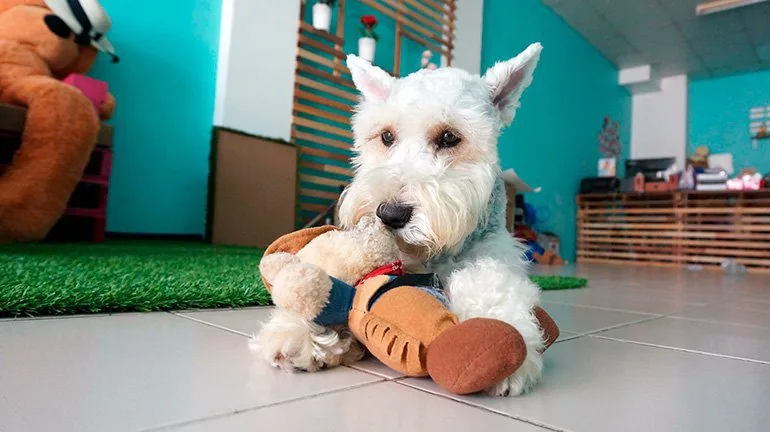
The white Miniature Schnauzer is a visually striking variant with a pure white coat with no markings. He keeps dark eyes and a black nose. This variant needs more care than others, especially with visual hygiene, since he's prone to staining from oxidation around the tear ducts and mouth.
The salt and pepper coat shows a greyish tone with mixed shades, the result of interwoven white and black hairs. It's the most common variant and the one that best resists fading over time. Black and silver combines a dark coat with silver markings on the legs, chest and cheeks.
Miniature Schnauzer temperament and personality
His temperament is affectionate and friendly. He's a good family dog, thanks to his loyal, devoted and protective nature. Best of all, he adapts perfectly to living in houses and flats.
He's brave, defending his territory from intruders regardless of the opponent's size. He's also very intelligent and obedient, so training him isn't hard. He gets on well with children, since he loves playing and spending time with them. That said, remember that, as with any breed, you need to supervise his interactions.
There are a few downsides to the breed's personality: he can be a bit nervous and noisy if not given physical activity. He also keeps a tendency to chase small animals, so he isn't recommended if you have hamsters, hedgehogs or similar pets at home.
Does the Miniature Schnauzer bark a lot?
Yes, he's a fairly barky dog by nature. His origin as a guard dog explains this tendency: he was bred to alert to intruders and defend his territory, an instinct that remains intact even in the miniature version.
He barks quickly at strangers, unusual noises or any movement he considers suspicious. This trait makes him an excellent alert dog for the family, but it also means he can be noisy in urban settings or if he doesn't get enough stimulation.
Training can help you control excessive barking, especially if you teach him not to bark at the doorbell or everyday noises. However, you won't be able to completely eliminate this behaviour: it's part of his essence. Early socialisation and regular exercise significantly reduce barking from anxiety or boredom.
Is the Miniature Schnauzer aggressive?
No. He isn't an aggressive breed by nature. He's loyal, lively, intelligent, affectionate and cheerful. He adapts well to all kinds of situations and families, and feels devotion for his people, whom he'll protect by being wary of strangers until he gets to know them.
What sometimes gets mistaken for aggression is his well-developed protective instinct. He can seem reserved or distrustful with strangers, but this isn't aggression: it's caution. With early socialisation and clear leadership, he learns to tell real threats apart from everyday situations.
There's no scientific evidence linking coat colour to an aggressive temperament. The myth that black is more aggressive than white or salt and pepper is false. Temperament differences come down to breeding line, socialisation and training, never colour. All share a high level of intelligence and trainability.
History and origin of the Miniature Schnauzer
He has his roots in Germany, where he was developed from the Standard Schnauzer during the 19th century. Breeders sought a smaller version keeping the temperament and intelligence of his ancestor, but with a more manageable size for hunters and urban families.
Originally, he was used to hunt rats on farms and in stables, a task where his compact size and agility were ideal. His courage and determination made him popular quickly, and he soon went from working dog to a cherished family companion.
The breed was officially recognised by the Fédération Cynologique Internationale in the early 20th century. Great artists of the era, like Albrecht Dürer, immortalised these dogs in their work, showing the esteem they were held in even before their formal standardisation. If you're interested in the larger version, he shares many of these historical traits.
What care does a Mini Schnauzer need?
Despite his small size, he has enormous energy and vitality. He likes daily walks, whether in the city or the countryside. If you don't have a garden or yard, take him to the park to play, he'll love having fun with you; the most recommended activities are running and chasing the ball.
During walks, we suggest keeping him on a lead or harness until you reach a safe place; otherwise, he'll chase any small animal he sees! Planning a family trip to the beach or mountains? Your Schnauzer will want to join in. He really enjoys family activities, don't miss the chance to share these experiences with him.
Diet and coat care
Given his size, food portions are small, but quality is essential. Go for good-quality kibble specific to small or active breeds. Avoid food with too many fillers and make sure it contains enough protein to maintain his musculature.
The coat needs regular brushing, at least three times a week, to prevent tangles and maintain its characteristic texture. Every 6-8 weeks, it's advisable to take him to a dog groomer for a professional bath and a trim respecting the breed standard. If you have a white one, pay special attention to stains around the eyes and mouth. Being a breed that doesn't shed, brushing is even more important to stop dead hair building up.
Check his ears weekly, since they tend to accumulate dirt. Brush his teeth several times a week to prevent dental problems, common in small breeds. Nails should be trimmed every 3-4 weeks or when you hear them clicking on the floor.
Common conditions in the Schnauzer breed
Miniature Schnauzers generally enjoy good overall health, but they're prone to certain congenital and acquired diseases. Progressive retinal atrophy is a hereditary disease affecting vision that can lead to blindness. Spondylocostal dysostosis is a bone malformation affecting the spine and ribs.
They can also suffer from persistent Müllerian duct syndrome, a reproductive problem in females, and degenerative myelopathy, which affects the spinal cord causing progressive weakness in the hind legs.
Additionally, this breed is prone to elevated blood fat levels (hyperlipoproteinaemia), pancreatic inflammation (pancreatitis), diabetes and bladder stones. Although uncommon in this breed, some individuals can develop heart problems like dilated cardiomyopathy. Keep up regular vet check-ups, especially from age 7 onward, and make sure the breeder runs genetic tests on the parents.
How much does a Mini Schnauzer cost?
The price varies significantly depending on several factors: the breeder's reputation, the bloodline, coat colour, geographic location and whether the puppy is intended for shows or simply as a family pet.
In the Spanish market, the reference price is around €836, though it's possible to find individuals from €600 up to €1,500 or more, depending on the factors mentioned. Those from champion lines or with exceptional pedigree can cost significantly more.
When looking for a breeder, make sure they run genetic tests on the parents to rule out hereditary diseases. A responsible breeder will provide health documentation, health guarantees and ongoing support. Be wary of prices that are too low, which can indicate unscrupulous breeders or undisclosed health problems.
Also consider adoption through shelters or rescue associations specialising in the breed. Although it's less common to find Miniature Schnauzers up for adoption, it's an ethical, affordable option worth exploring.
Is it worth having a Miniature Schnauzer?
He's an exceptional companion if you're after a small dog with a big personality. His size makes him perfect for flats, but his energy and character make him suited to active families who enjoy regular walks and play.
If you can tolerate the barking, value unwavering loyalty and are willing to invest time in coat care and socialisation, this breed will give you years of fun, protection and company. His intelligence makes training rewarding, and his size means he's easy to take with you to many places.
That said, he isn't the ideal breed if you're after a quiet dog, if you have other small animals at home, or if you can't devote time to his mental and physical stimulation. With the right expectations and commitment, he'll enrich your life for 12 to 15 years.
IMPORTANT: This article is for informational purposes only and does not constitute veterinary, nutritional or behavioural advice. Every dog is different, and only your trusted vet can advise you on its specific needs.