 Care
Care
My Dog Has Nasal Discharge — Common Causes
While a bit of nasal discharge in our dog might not seem alarming, if it persists or we notice any other symptom, we need to see a vet.
Below, we'll go over the most common causes that can explain our dog having nasal discharge. Although we associate discharge with a cold, we'll look at other diseases characterized by nasal secretions.
- You might also be interested in: Symptoms of Influenza in Dogs
Nasal Discharge in Dogs
Discharge appears due to the presence of anything in the nasal passages capable of causing irritation. In addition, a dog with discharge usually also sneezes, since this is also due to nasal irritation.
Sometimes, dogs with nasal discharge also show nausea due to what's known as post-nasal drip, where the mucus ends up in the throat, causing gagging. Below, we'll explain different causes of nasal discharge.
Why Do We Need to See the Vet If Our Dog Has Nasal Discharge?
Although nasal discharge might seem like a minor issue, especially if it's watery and the animal shows no serious symptoms, the truth is there's a risk of complications.
A foreign body, a tumor, or infections such as those caused by bacteria or fungi can damage the nasal mucosa. In these cases, the picture worsens with the appearance of bleeding of varying severity. In addition, it could become complicated by rhinitis and sinusitis.
Canine Atopy
Watery, clear nasal discharge, sneezing, and rubbing the face with the paws or against objects are the typical signs of this condition. The scratching eventually damages the skin.
It's due to an allergic reaction that, although it may start out seasonal, eventually shows up year-round. It's complex to determine exactly what triggers the allergic reaction. Treatment would involve avoiding this allergen, but that's not always possible. That's why controlling the clinical picture is the goal instead.
Presence of Foreign Bodies
When a foreign body gets into the nose, discharge is usually only released from the nostril where it's lodged. The objects most often found in dogs' noses are seeds, plant awns, or splinters.
It's common for the dog to sneeze in an attempt to expel them, which can even cause bleeding. If the foreign object doesn't come out soon, thick, one-sided discharge eventually develops.
Sometimes they can be seen and carefully removed with tweezers, but generally they'll be lodged fairly deep and need to be removed by the vet, usually under anesthesia. Antibiotics are usually prescribed afterward to prevent bacterial infections.
Rhinitis and Sinusitis
The nasal cavity extends inward through the frontal and maxillary sinuses. So, any nasal infection can end up affecting these areas too. Rhinitis is infection of the nasal cavity, while sinusitis is the term used when the sinuses are affected too.
There are different causes, such as an allergy or the presence of viruses like herpesvirus, adenovirus, or parainfluenza, which will produce watery, clear nasal discharge. On the other hand, if bacteria or fungi are involved, the discharge will be thick and foul-smelling.
Sneezing and gagging also occur. Distemper, tumors, or dental infections are other causes of rhinitis and sinusitis. Veterinary treatment is essential, depending on the trigger. Cases that become chronic will be hard to resolve and may even need surgery.
Oronasal Fistulas
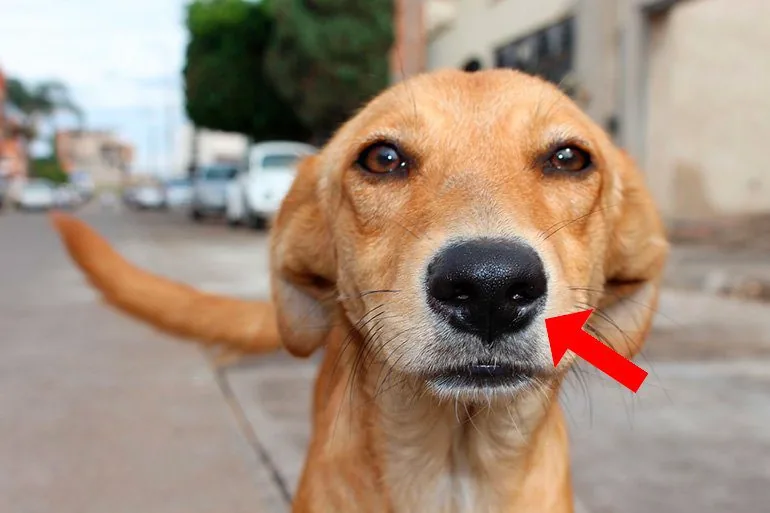
In this case, nasal discharge occurs from just one nostril. There can be sneezing that increases after eating. When a fistula forms, the food and water the dog swallows come back out through the nose. Some dogs are born with this problem due to a cleft palate.
More often, it happens due to an infection in a tooth located in the upper jaw. If an abscess forms from a buildup of pus, it can open into the nasal cavity. The tooth falls out, leaving a hole that allows passage from the mouth to the nose. It's resolved with surgery.
Tumors and Polyps in the Nose
If our dog has a tumor or polyp located in the nasal region, discharge will come out through the nostril where it's located. There can also be bleeding. These growths make it harder for air to pass through.
Polyps can be removed, though they're likely to come back. Older dogs are more prone to these growths being tumors, malignant in a high percentage of cases. Benign ones can be removed, and malignant ones treated, though the prognosis will be guarded.
Nasal Discharge and Nervousness
Finally, in some dogs we may notice watery, water-like nasal discharge that appears when they're very nervous. It has no clinical significance, there are no other signs, and it resolves spontaneously as soon as the dog calms down.
Bibliography Carlson and Giffin (2002): Manual práctico de veterinaria canina. Madrid: Editorial el Drac.
IMPORTANT: This article is for informational purposes only and does not constitute veterinary, nutritional or behavioural advice. Every dog is different, and only your trusted vet can advise you on its specific needs.