 Training
My Dog Is Jealous — What Do I Do?
As we know, dogs have feelings and emotions just as we humans do. One of these feelings is jealousy, which can be directed at other pets or even at humans, such as when we adopt a new dog or a baby arrives home.
Although it may seem funny, jealousy stemming from competition between household members brings serious behavioural problems. That's why it matters that you know how to act in time to prevent this situation — here's some advice below.
Is Jealousy in a Dog a Problem?
Having more than one dog can be a great idea to stop your veteran dog being left alone during your absences. Even so, a new member's arrival can become a problem for your dog if they don't manage to understand the split in your attention.
Your dog may consider the new dog is breaking the bond between them and their human and soaking up the cuddles and attention that used to belong only to them. This competition can happen with any being who comes between the dog-owner relationship.
If this happens and no steps are taken to stop the jealousy going on for a long time, we'll be putting at risk the health of the dogs, or even that of the humans dealing with this dog.
Hatred, aggression and fights will be some of the first consequences we'll notice in these dogs. What's more, we shouldn't forget the feeling of sadness, abandonment, disappointment and depression that, even if unjustified, our jealous dog will feel.
How Does Jealousy Come About?
Just as happens with humans, canine jealousy can show up suddenly after a new member joins the "pack". The dog won't understand why they need to share their love with another individual, and this will trigger jealousy in them.
Even so, besides specific circumstances, some dogs are more prone to jealousy than others. Small breed dogs tend to be possessive and territorial around their owners and belongings. On the other hand, large dogs tend to be more sociable and open.
This doesn't mean you can escape jealousy if you have a Golden Retriever, for example. Training is another key point on this topic. If you train your dog as "the baby of the house" and one day another baby arrives, whether real or a pet, your dog will feel threatened and abandoned.
Symptoms of Jealousy in a Dog
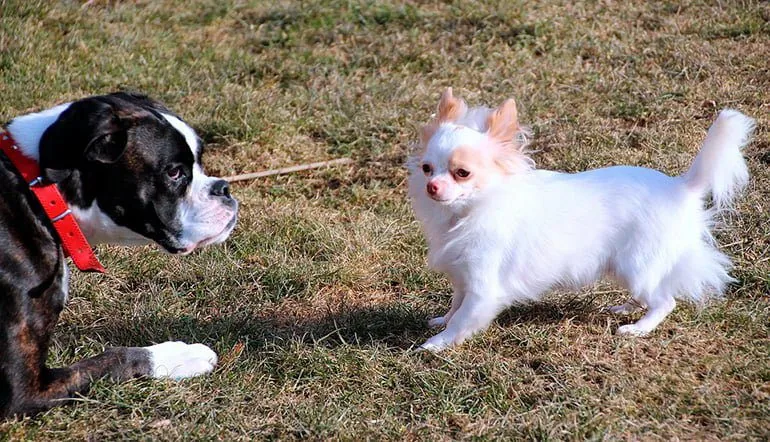
A jealous dog will start showing changes in mood and character. Their desire to play with you drops, they growl when the member they're jealous of comes near, they seem low and depressed, and often isolate themselves.
Besides these first signs, you can be alerted that your dog is jealous if they show the following symptoms:
- Barking when you approach the other member
- Urinating inside the house as a call for attention and to mark their territory
- Becoming possessive and not leaving your side
- Baring their teeth and showing aggression towards the animal or person bothering them
- Destroying toys and/or their bed to get your attention
- Going back to their usual character once that member is absent
- Showing changes in their appetite
- Hiding
- Whining for no apparent reason
Types of Jealousy in Dogs
There are two clearly distinct types of jealousy in dogs. On one hand, sexual jealousy, mainly seen between males from competition and mating. On the other, jealousy stemming from lack of attention or standing, the type of jealousy we're covering today.
Within the second type of jealousy, the combinations where insecurity between members can happen are varied — among the most common, the dog can be jealous of:
- Another dog or pet
- A child or baby
- Their owner's partner
How to Prevent Jealousy?
Whether your goal is preventing jealousy in your dog, or you're looking for a solution once it's arrived, below we offer some key advice you can put into practice to get your dog to be calm, friendly and sociable.
Prior Training
- The dog isn't a baby: don't treat your dog as if they were a baby, since, even though to you they're your baby, this can confuse them in the long run and make them possessive towards you.
- Set rules: don't let your dog do whatever they want. Set limits and teach your dog basic obedience commands.
- Reinforce their suitable behaviours positively.
- Scold them if needed: don't spoil them excessively — if they do something wrong, let them know.
- Remember socialisation with other dogs and people is vital for getting our dog to feel comfortable around other individuals.
Behaviour After the New Member's Arrival
Jealousy Between Pets- Introduce the new member in a friendly way. Give them time to sniff each other, interact, establish hierarchies, and share fun moments. Avoid leaving them alone during the first few days.
- Likewise, set aside a space and special belongings for each animal, such as beds, toys and food bowls. At first, it's best to avoid them sharing things…
- Try not to stop giving the same attention you used to offer your dog, even if the other member is a puppy. Stroke both animals for the same amount of time.
- Reward suitable behaviours with treats when they manage to be together with no disagreements.
- Avoid giving affection to the dog if they're being aggressive towards the other member, since the dog would understand they're being rewarded for that attitude.
- Increase the doses of affection towards the jealous dog when they get close to or are near the other individual. This way, the dog will link the presence of other pets or people with an increase in cuddles or other positive behaviours.
- Scold your dog when they show bad behaviour, such as growling at the other individual. A firm "No" can work as a call for attention. Even so, always avoid physical punishment.
- Likewise, don't let them do whatever they want simply because they're jealous. Keep your authority and make them respect the rules.
- Always remember to reinforce their behaviour positively when they behave well in front of the other member they're jealous of.
In the case of jealousy between pets, remember the most important thing is not to show differences between the two members. Dogs notice everything, and will pick up on the change right away. Be patient and empathetic with your dog, and help them understand you have love for both of them.
Jealousy From a Baby's Arrival- If a baby's arrival home is approaching, get them used to it even before the baby arrives. Make the most of the months before to let the dog approach the pregnant belly, smell the baby's belongings and so on.
- Once the baby's born, introduce them carefully and affectionately so they can sniff them under your supervision.
- Although the dog needs to get used to the new situation and the home's hierarchy, don't stop paying attention to the dog, even if you no longer have as much time.
- Make sure the time you devote to the dog is "quality" time. That is, besides time for their basic needs, set aside a slot for playing, cuddling them, or doing whatever they enjoy most, showing them just how much you still love them.
- Follow steps 5 to 9 from the "Jealousy Between Pets" section.
- Learn more at: How to train our dog for a baby's arrival.
It matters to note that, if your dog has already reached the point of showing aggression, or you haven't managed to stop their jealousy following these steps, you should consult your vet or ethologist to fix this problem as soon as possible.
IMPORTANT: This article is for informational purposes only and does not constitute veterinary, nutritional or behavioural advice. Every dog is different, and only your trusted vet can advise you on its specific needs.