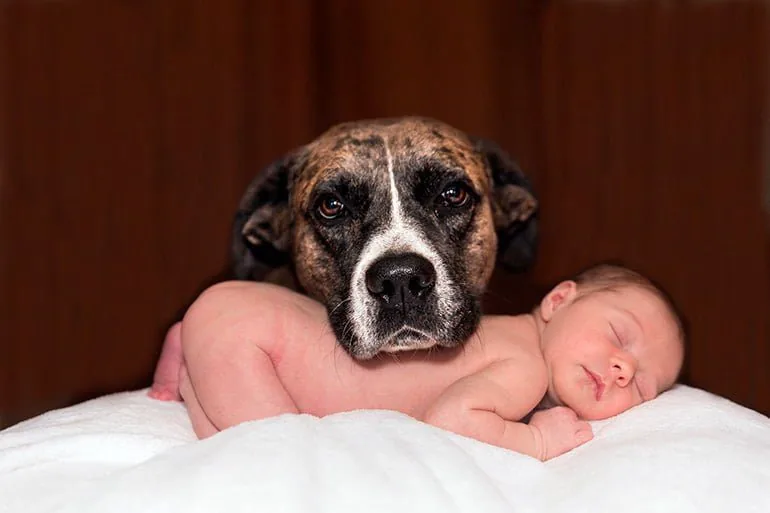
 Training
What to Do to Help Your Dog Get Along With Your Baby
There's no better news than a new baby arriving home, a new family member who'll fill us with joy and happiness. Even so, if we have a dog, the situation can get a bit more complicated, so it's practically essential to prepare our dog for the growing family.
Most dogs are affectionate, respectful and submissive, so by following this simple advice there shouldn't be any problems. Even so, some dogs are dominant, aggressive and possessive… and these will need professional help, as we'll explain below.
- Don't miss: Teach your puppy to pee on pee pads
Changing the Dog's Routines for the Baby's Arrival
Dogs are, broadly speaking, creatures of routine, just like us humans. If our dog is used to going out at certain times to pee and poo or go for walks, we need to think about whether those times will still work once the baby arrives home. It's well worth putting together a small schedule and gradually getting our dog used to their new times, if there are any changes.
Prepare the house for the baby — set up their cot, toys and other items every baby needs, within their sight. Let them see them, smell them, and know they need to respect them (they're not their toys). It matters that our dog gets socialised with all the new items before the baby arrives.
Think about the time you're going to devote to your dog. We all love our dogs to bits, but if a baby needs our attention, it's entirely understandable that we may need to take time away from many other things, such as our dog (among so many others).
Being realistic, if you're not going to be able to devote the same time to your dog as now, it's best to gradually reduce that time before the baby arrives. They shouldn't link the drop in time you spend with them to the baby's arrival, which is why it matters to do this well in advance.
Be responsible and aware the dog is also part of your family — when we say think about the time you devote to them, it's because we assume you devote all your free time to them. But if you only devote a few hours a day, organise your time well — they need you too.
Introduce new smells into the house, start using or placing baby cologne and the odd nappy somewhere in the house. Introducing smells is hugely positive, since it's their most developed sense.
We all know babies spend a few days in hospital before they can go home. Take your baby's dirty (used) nappies home, let the dog sniff them and get to know the smell.
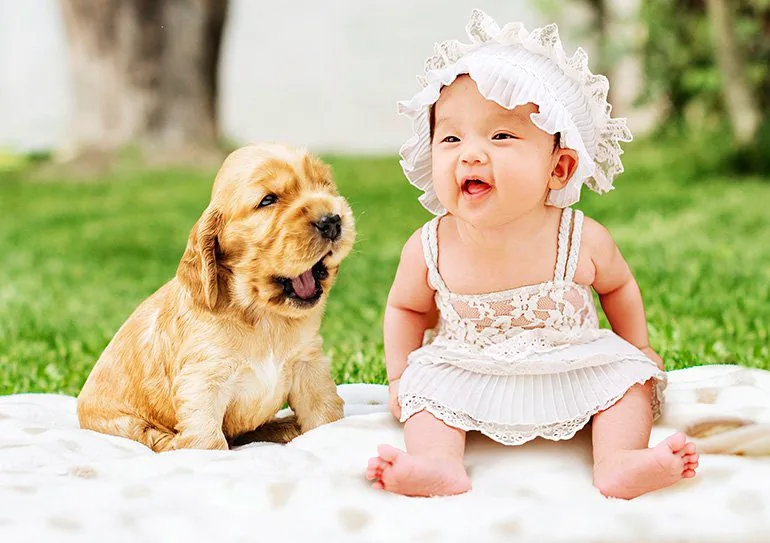
How to Introduce the Baby and the Dog
The introduction matters a great deal for good day-to-day life together, since it will shape our dog's first impression, and it needs to be positive. It's essential to be entirely clear our dog isn't aggressive — if we suspect they could be, it's best to see a professional trainer (without doubt). If they're one of the breeds recommended for living with children and have been well trained, you shouldn't have a problem, though it never hurts to be cautious.
If we're entirely certain our dog isn't aggressive, when we get home we should let them come over and greet us naturally. We should also let them sniff the baby, obviously with caution and always with another adult present just in case, but it's a great sign if they willingly want to sniff the baby out of simple curiosity.
If they try to lick them, we should let them too — it's a sign of respect and affection. The introduction should happen with harmony, calm and smiles — dogs pick up on our mood, and if they see us worried or nervous, they may get nervous too.
Behaviour should be equal to prevent jealousy in our dog — when we cuddle the baby, we should also cuddle them, since they're all part of the family. Leaving the dog out, not letting them approach or pushing them aside, is very contradictory. Remember you should train the dog and the child, so they respect each other as the baby grows up.
Respect the dog's walks, their cuddles, and even devote time exclusively to them. A dog who gets attention rarely shows jealousy.
Precautions to Take With the Dog Before the Baby's Arrival
Every dog is good, or at least that's what their owners think, and the truth is that's more or less the case. Dogs are good by nature, but if they haven't been trained, or have received poor training, they can be aggressive and dangerous.
Our dog being respectful with us doesn't mean they'll be the same with the baby — we need to know their character around any other child, on the street, at the park and so on… Even their character with other dogs. If our dog has shown or shows any sign of aggression, or we suspect they could be aggressive, we should see a professional trainer without fail. Only they can prepare the ground for the baby's arrival.
If our dog is a big softie and we're a hundred percent sure nothing's going to happen, we can follow the steps set out in this article, but always under supervision. Under no circumstances should you leave a baby and a dog alone.
We need to watch their behaviour for many months after the baby's arrival to make sure there's no jealousy or change of character. Generally there isn't, and everything goes well, but that doesn't mean we should let our guard down.
Use common sense — if your dog weighs fifty kilos, it might be worth paying attention to play, since dogs can accidentally cause harm while trying to play.
IMPORTANT: This article is for informational purposes only and does not constitute veterinary, nutritional or behavioural advice. Every dog is different, and only your trusted vet can advise you on its specific needs.