 Care
Care
My Dog Sleeps a Lot — Is It Normal or Sick?
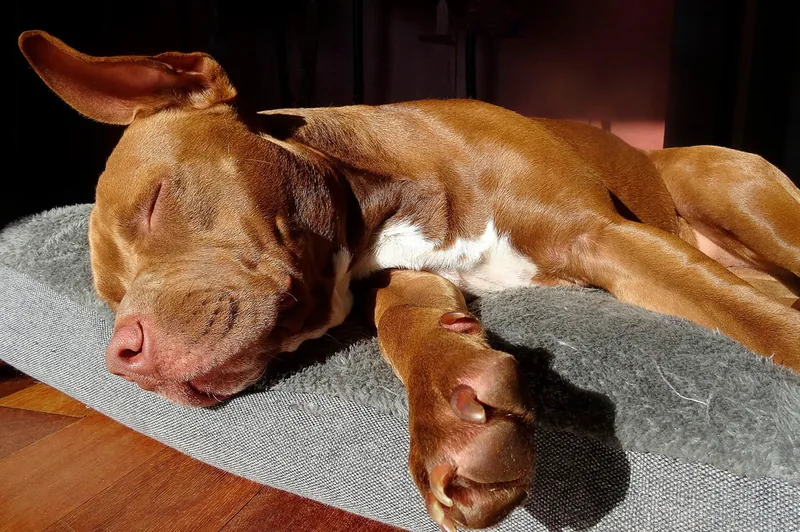
We all know dogs are animals that spend a good part of the day sleeping, resting, or simply enjoying a relaxed state on their beds. However, if a dog sleeps a lot, it can be a symptom of a condition that requires veterinary attention.
Let's take a detailed look at when it's normal for a dog to sleep a lot and when we should consider it a health problem. What information we can infer from the position it sleeps in, and whether there are other associated symptoms to keep in mind.
My Dog Sleeps a Lot — Is That Normal?
To understand your pet's sleep behavior, we need to go back to its origin and domestication. The wolf, a predator after all, sleeps for long periods after long treks searching for prey, and likewise, dogs usually sleep deeply several times a day and for a few hours each time.
An adult dog sleeps roughly half the hours of the day, spread across daytime and nighttime hours. Being lying on its bed doesn't always mean it's asleep or dreaming, since often it's simply resting or bored.
Not every dog sleeps the same number of hours — some breeds are sleepier than others, and its situation and environment will also greatly influence its sleep hours.
A young dog, a puppy, sleeps many more hours than an adult dog. They generally wake up to eat and burn energy playing, until they fall asleep again.
Does Climate Affect Sleep Hours?
In the northern hemisphere, days are longer during summer and shorter in winter, and your pet's internal or biological clocks can perceive this very well. Your dog's sleep is regulated through melatonin, a hormone that regulates your pet's biological clocks and is closely linked to how much daylight there is.
So, we can say that in winter, dogs sleep more hours deeply. Another factor explaining this is their need, during the colder months, to maintain body temperature. Without a doubt, pets' sleep is also encouraged by the fact that walks are shorter in winter.
In summer, during the hottest hours, dogs prefer to stay indoors, choosing cool, quiet spots as a mechanism to regulate against high temperatures. On the other hand, with good weather, we're more likely to take our pet out for more walks (humans also have biological clocks telling us the best time for activity).
So, we can say they sleep more in winter than in summer.
Every Dog Is Different
Although dogs are big sleepers, some are especially high-energy and spend much less time sleeping than others. Factors such as breed, age, and pregnancy status will change each dog's sleep behavior. A calm dog can sleep many more hours than a nervous one purely due to genetics, such as the Andalusian Bodeguero, for example.
Did you know the position our dog sleeps in tells us about its mood?
The dog's age and its surrounding environment also directly influence this. A young dog is more energetic than an old dog, so it will sleep less. A dog that stays indoors all day (in a quiet home) will also sleep more hours than a herding dog.
My Dog Is Old and Sleeps a Lot
Older dogs are the ones spending the most hours sleeping, since their energy level is lower and they need to replenish it more often. On the other hand, if your dog is getting on in years, you should consider it may have joint pain that keeps it resting and sleeping more. Cognitive disorders such as canine Alzheimer's are also a cause of your pet sleeping a lot.
If we notice our dog starting to forget things or showing any other symptom we consider strange, it's best to request a veterinary check-up to rule out any possible health problem.
My Dog Sleeps a Lot and Shows Other Symptoms
If you notice your pet's sleep periods continuously getting longer, it could be due to stress or listlessness, or other conditions that show up with the following symptoms.
- Fatigue
- Fever
- Apathy
- Loss of appetite
- Crying/whimpering
- Vomiting/diarrhea
If you notice any of these symptoms, don't hesitate to request an appointment with your trusted vet for a check-up. Remember dogs can't talk, and it's often possible they're sick without us having noticed their signs of pain.
IMPORTANT: This article is for informational purposes only and does not constitute veterinary, nutritional or behavioural advice. Every dog is different, and only your trusted vet can advise you on its specific needs.