 Care
Care
My Puppy Has a Lump on Its Belly Button
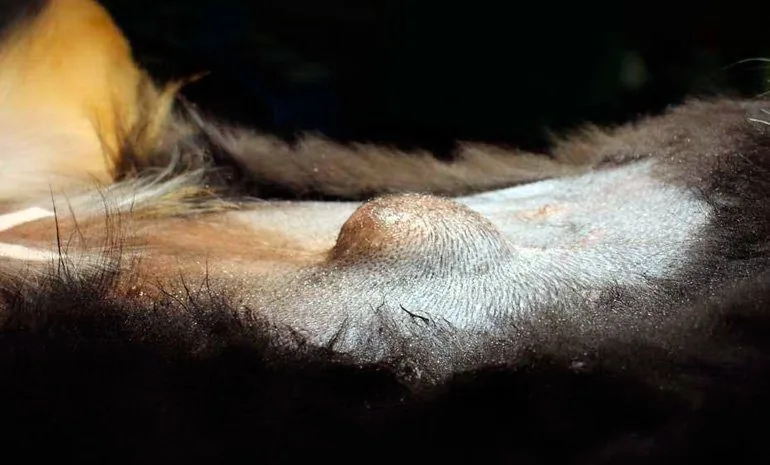
It's relatively common for both male and female puppies to show a lump on their belly, in the belly button area. In most cases, it will be an umbilical hernia. In this SoyUnPerro article, we'll explain what it involves and how we can fix it.
What Is an Umbilical Hernia?
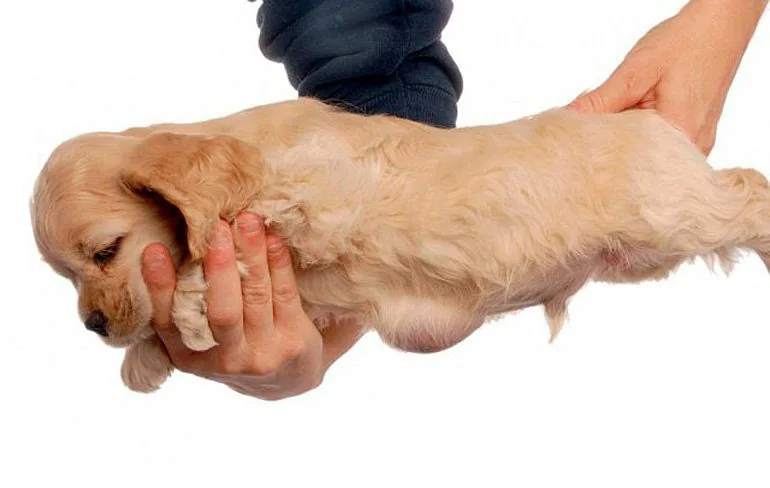
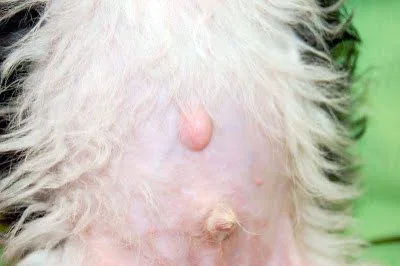
This is a protrusion of fat or intestine through an opening in the abdominal wall. This opening should have closed during development. Dogs where this closure doesn't happen will have a hernia. The portion of fat or intestine coming out is what we see as a lump. These hernias usually appear around two weeks of age.
Hernias in puppies are mostly located in the groin and belly button area. They're called, respectively, inguinal hernias and umbilical hernias. In addition, a hernia is reducible if it's possible to push it back into the body by pressing on it. If this doesn't happen, the hernia is said to be incarcerated.
Hernias seem to have a hereditary basis. There's a genetic predisposition explaining the delayed closure of the abdominal opening or ring. But there are also some cases where the hernia occurs because the newborn's umbilical cord was cut too close to its abdomen.
If we find an umbilical hernia in one of a litter's puppies, it's a good idea to check its siblings too, in case another one is also affected.
Are Hernias in Dogs Dangerous?
Incarcerated hernias can become strangulated. Strangulation refers to the loss of blood supply due to constriction. In this case, the lump we'll see will be hard and painful to the touch. This is a veterinary emergency.
In addition, if we manage to insert a finger into the abdominal opening the hernia has protruded through, it will need to be repaired surgically. The bigger problem with hernias is that a fragment of intestine can come out through the opening left behind. If it becomes strangulated, as mentioned, that part of the intestine will lose blood flow.
An organ without the nutrients it receives from blood can end up becoming necrotic, meaning it will die if not treated quickly. A portion of intestine going through this process poses a serious risk to the animal's life.
What Do I Do If My Puppy Has an Umbilical Hernia?
Generally, we should know smaller umbilical hernias usually resolve on their own before the puppy turns six months old. There's a common recommendation to bandage the puppy's belly to reduce the hernia, but this measure has no real effect and doesn't influence its disappearance.
If the dog has already turned six months old and the hernia is still present, we could be facing two different situations depending on the puppy's sex. This is because, in females, we can take advantage of the spaying surgery to repair the hernia at the same time. In these cases, the surgery can be delayed a few months.
Removing the ovaries and uterus is done precisely through an abdominal incision. Although vets increasingly make smaller incisions, if the female being spayed has a hernia, they'll take advantage of the procedure to cut a bit more and, this way, fix the hernia.
Although the cut is somewhat bigger than usual for spaying, no complications usually occur during the post-operative period. Our job at home will be to make sure the female doesn't touch the wound and that it heals without problems.
If instead of a female we live with a male, even if we neuter him, the surgery to fix the hernia will be separate.
The vet could indeed do both procedures the same day, but logically, we'll have two cuts, though only a few centimeters long. Just as with females, the dog will go home the same day of the surgery. There, we'll also need to watch how the wound is healing.
Inguinal Hernias
Much of what we've explained for umbilical hernias applies to those developing in the groin area. These are more common in females, and due to their location, aren't always diagnosed, potentially going unnoticed.
The problem with these hernias in females is that, if umbilical ones can contain a fragment of intestine, inguinal ones could involve the uterus, especially if a pregnancy occurs. Surgery is recommended for them.
In males with inguinal hernias, it may be enough to periodically monitor their progress, since they're usually small and disappear spontaneously during the first months of life. If this doesn't happen, surgery is also an option.
IMPORTANT: This article is for informational purposes only and does not constitute veterinary, nutritional or behavioural advice. Every dog is different, and only your trusted vet can advise you on its specific needs.