 Care
Care
Ocular Proptosis in Dogs — How to Respond?
Proptosis is the protrusion of the eyeball out of its socket. As you might imagine, this is a veterinary emergency that requires us to seek help immediately.
There are various causes, such as trauma, tumors, or abscesses, that can push the eye out of place. In addition, some breeds are more prone to it. Let's take a detailed look at everything related to proptosis.
Which Dogs Get Proptosis?
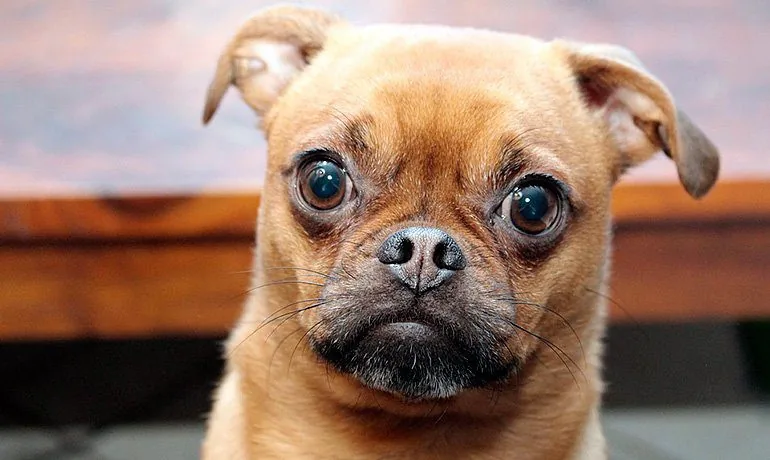
Proptosis, or luxation, is a disorder any dog can experience, but some are more predisposed to it. In fact, for some breeds, such as brachycephalic ones, it can be considered a common problem. These are ones with large, bulging eyes. For example, Boston Terrier, Pug, Pekingese, or Maltese.
What Causes Proptosis?
This eye damage is usually the result of bites from other animals or trauma to the area, such as impacts or being hit by a car. But even a struggle with a dog belonging to a risk group can push the eyeball out of place — for example, when we try to give it a pill and it resists.
In non-brachycephalic dogs, the trauma needs to be much stronger to cause protrusion. Other causes are abscesses, hematomas, or tumors located right behind the eye. If they're large enough, or keep growing, they're able to push the eyeball out of its socket. Finally, glaucoma is another cause.
Retrobulbar Abscess
This abscess is a buildup of pus that occurs behind the eye. It causes a lot of pain and develops quickly. We can suspect it since it causes swelling in the periocular area, which, besides pain, makes it hard for the dog to open and close its mouth. To treat it, the vet needs to drain it, removing all the pus.
Retrobulbar Hematoma
This hematoma is made up of blood clots and is located behind the eyeball. It appears suddenly and can be due to a blow to the head or a blood disorder. Treatment will depend on the cause.
Retrobulbar Tumor
This is one that grows in the retrobulbar space, behind the eye. Since it usually grows slowly, the protrusion will be gradual. Unlike abscesses or hematomas, tumors don't seem to be painful.
Glaucoma
Chronic glaucoma is another cause of proptosis, since it's a condition that can increase the eye's size, causing it to protrude. This is a serious disease that causes blindness. It involves an increase in intraocular pressure that damages the optic nerve and retina.
In chronic cases, the dog loses its vision, and since the eye has grown in size and appears protruded, its removal may be recommended to prevent corneal damage, which it will be prone to given its condition.

Why Is Proptosis Serious?
When the eyeball is pushed out of its socket, there's a risk the eyelids will close behind it, preventing the eye from going back to its place. In addition, the area behind the eye will swell, which also makes it harder for it to return to its normal position.
Proptosis can always cause loss of vision. Hence its extreme severity and the importance of seeing the nearest vet clinic immediately. In short, this isn't a problem we can stay home waiting to improve on its own.
What Do I Do If My Dog Has Proptosis?
We definitely need to head to a vet. To do this, it's advisable to cover the affected eye with a damp cloth or gauze. This is meant to prevent it from drying out, since it will be exposed and without blinking to protect it. Of course, we need to prevent the dog from touching it with its paws.
If the nearest vet clinic is more than half an hour away and we know how to do it, we can try to reposition the eye ourselves. If that's not the case, or if we try and don't succeed, we shouldn't keep insisting — we should seek professional help instead.
What Is the Treatment for Proptosis?
Repositioning the eye in its socket is essential, but first, since proptosis can be due to severe trauma, the animal's overall condition needs to be checked. This way, we can know the risk involved in giving it anesthesia. Meanwhile, the eye stays covered and moist to gradually reduce swelling.
In addition, the clinician, based on the characteristics of the proptosis, since the damage can be more or less severe, needs to assess whether it's possible to recover the organ's function or not.
There are several surgical techniques to choose from. If this isn't the first time the dog has had proptosis, or if the vet considers there's a high risk of recurrence, they may recommend surgery to prevent it.
Bibliography Carlson and Giffin (2002): Manual práctico de veterinaria canina. Madrid: Editorial el Drac. Peña, Teresa (2016): Situaciones urgentes: ¿Qué hacer ante una laceración palpebral? ¿Son todas las úlceras iguales? ¿Cómo plantear su tratamiento? ¿Cómo resolver un prolapso ocular? Urgencias oftalmológicas. Avepa Formación Continuada.
IMPORTANT: This article is for informational purposes only and does not constitute veterinary, nutritional or behavioural advice. Every dog is different, and only your trusted vet can advise you on its specific needs.