 Breeds
Pachón Navarro
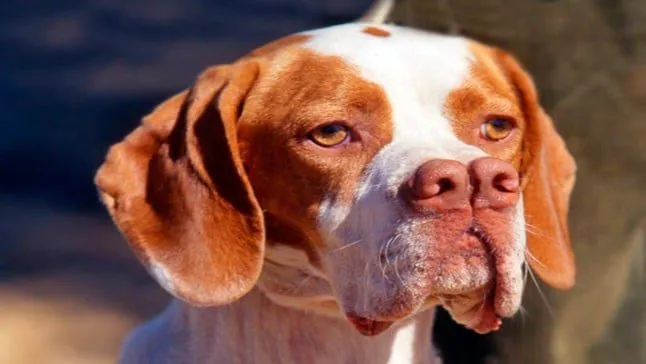
The Pachón Navarro, also called the Navarrese Pointer or old Spanish Pointer, is one of the most unusual dog breeds out there, thanks to a curious physical trait of its muzzle that's also earned it the nickname "the two-nosed dog."
An excellent hunting dog capable of adapting easily to calm family life, though it needs long walks and exercise since it's very active. Good-natured and well-behaved, it doesn't usually have health problems.
Temperament of the Pachón Navarro
This mountain hunter is an intelligent, calm dog, hardworking and extremely loyal. To stay in good physical and mental shape, the Pachón Navarro needs to stay busy and get plenty of physical activity to burn off its seemingly endless energy.
Within the family, the Pachón Navarro's behavior is exemplary. It's always docile and sociable, especially if it's gotten used to being around people and other dogs from puppyhood.
Used to living and hunting in packs, it doesn't have as strong a territorial streak as other breeds, so it usually doesn't have temperament issues when it comes to sharing its space.
Friendly and rarely aggressive, the Pachón Navarro makes a great household companion and is very affectionate with children.
Physical Characteristics of the Breed
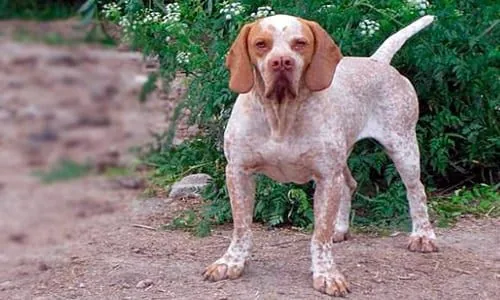
It's a large dog, with a height at the withers of between 50 and 60 cm and a weight ranging from 20-30 kg. Its build is sturdy and compact, with a broad chest and legs somewhat short relative to the rest of the body.
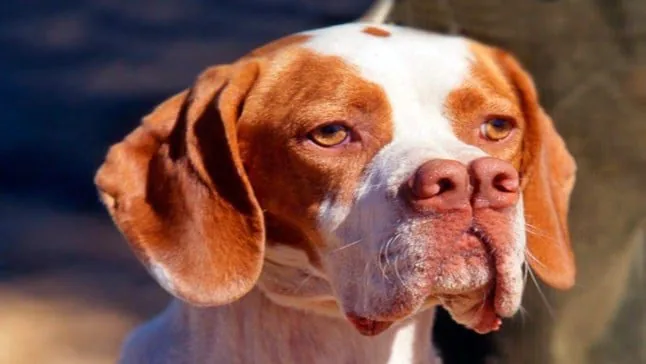
Its head stands out for its large, forward-facing eyes and huge flat ears that fall forward. But above all, its "double nose" is what catches the eye. It's actually a split nose, a congenital trait of this breed that in no way constitutes a defect or reduces its sense of smell.
Its coat is short, coarse, and hardy. The coat can be a single color or several, always working with shades of white, dark brown, gray, and black. Overall, it looks similar in traits to the English Pointer.
How to Train a Pachón Navarro?
Training the Pachón Navarro should start while it's still a puppy, an important factor for proper socialization. From there, its training will differ depending on whether the dog will be used for hunting work or as a companion dog.
Either way, this is a breed that always shows a great willingness to learn, which makes training a pleasant task. To get the best out of your Pachón Navarro, it's best to focus on stimulating the dog's natural instincts. A bit of patience, consistency, and positive reinforcement are the basic ingredients for success.
Care for the Pachón Navarro
The Pachón Navarro is a hardy dog with good health, though it struggles to adapt to life in dry, hot climates, so different from the mountains where this breed has lived for centuries.
It needs a good dose of daily exercise to be happy, healthy, and mentally balanced. It's essential that your Pachón Navarro have a yard or an outdoor space to run and exercise its muscles.
Its coat should be brushed at least once a week to keep it shiny and free of dead hair.
It's also worth noting that puppies need close monitoring of their diet, since the Pachón Navarro is prone to calcium deficiency issues at a young age, which can lead to growth problems down the line. On top of that, the breed's distinctive split nose can sometimes make nursing more difficult for puppies.
The Pachón Navarro's average lifespan is around 12-14 years.
The Pachón Navarro Hunting
The Pachón Navarro's hunting origins run deep in its temperament, showing up in its close bond with its owner and its readiness to follow commands.
In the field it's an expert pointing and retrieving dog, for both fur and feather game, capable of adapting to all kinds of rough, uneven terrain. For all these qualities and many others, many hunters today choose a Pachón Navarro to accompany them on their hunting trips.
Beyond its hunting abilities, the Pachón Navarro also has enough qualities to be considered a good watchdog.
History of the Breed
For centuries this dog was used to hunt partridge and other birds in the mountains of Navarre, near the French border, though it came close to complete extinction about 70 years ago, when a myxomatosis epidemic decimated its population.
However, there were survivors, and from them, Pachón Navarro dogs could be bred again. Despite this, it remains a little-known breed that's hard to find outside its historical native region.
IMPORTANT: This article is for informational purposes only and does not constitute veterinary, nutritional or behavioural advice. Every dog is different, and only your trusted vet can advise you on its specific needs.