 Breeds
Pomsky
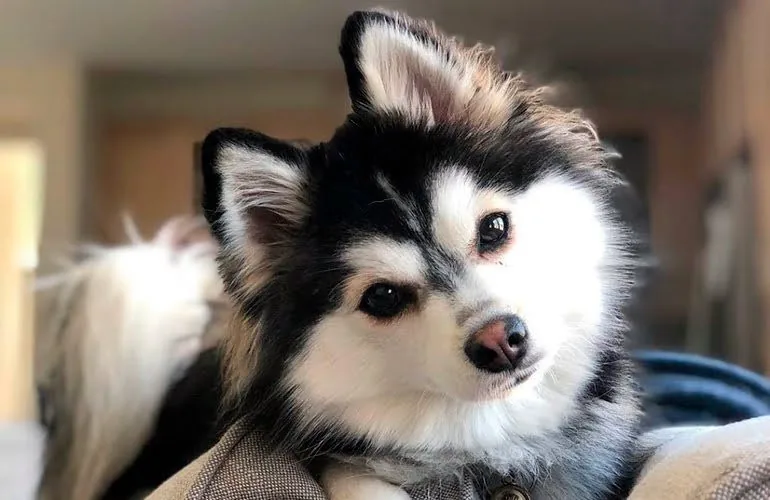
Although it looks like something out of a children's story, the Pomsky is a real hybrid breed that combines the majesty of the Siberian Husky with the sweetness of the Pomeranian in a surprisingly compact size. The curious thing is that its name came about almost by accident: it combines the first three letters of "Pomeranian" with the last three of "Husky," and although it was born in the United States just over a decade ago, it still hasn't been recognized by any official kennel club.
What Exactly Is a Pomsky?
The Pomsky is a first- or second-generation hybrid dog resulting from crossing a Pomeranian with a Siberian Husky. It's not a breed recognized by the Fédération Cynologique Internationale (FCI) or other official kennel clubs, so legally it's considered a crossbreed or mixed-breed dog.
The term emerged in 2012, when the first dogs of this type began gaining popularity in the United States. The genetic mix aims to capture the Husky's intelligence and stamina along with the Pomeranian's liveliness and compact size. However, since there's no established breed standard, each dog can inherit very different traits from its parents.
There are two main generations: first-generation (F1) dogs are the direct result of crossing a Husky with a Pomeranian, while second-generation (F2) dogs come from crossing two Pomskies together. This distinction directly affects the dog's size, temperament, and physical characteristics.
Size and Generations: From Puppy to Adult Pomsky
One of the reasons this hybrid generates so much interest is its unpredictable size. Although most dogs reach a height of between 25 and 38 centimeters, weight can vary significantly depending on generation and genetic inheritance. An adult Pomsky can weigh anywhere from 7 to 14 kilograms, depending on which parent dominates its genetic makeup.
First-generation (F1) Pomskies usually weigh between 9 and 14 kilograms, keeping a closer balance between Husky and Pomeranian genes. Second-generation (F2) dogs, on the other hand, weigh between 7 and 9 kilograms, since they tend to inherit more traits from the Pomeranian, including its smaller size.
This latter type is the most sought-after by people looking for a dog with a permanent puppy-like appearance.
A Pomsky's final size is practically unpredictable: some inherit the Husky's build and reach 14 kg, while others stay closer to the Pomeranian's 7 kg.
There's also an extreme variant called the "teacup Pomsky," the result of very selective breeding that produces even smaller dogs. However, these dogs tend to have more serious health problems due to inbreeding and intensive artificial selection, which is why responsible breeders don't recommend this line.
Temperament and Character
Temperament largely depends on the percentage of genes inherited from each parent. If it inherits more Pomeranian genes, it tends to be more territorial and attached to its owner, potentially struggling to live with young children or other animals. If it inherits more from the Husky side, it tends to be more sociable and adaptable to family life.
In general, these are active, playful, intelligent dogs that demand plenty of daily play and physical activity. They inherit the Husky's intelligence and independent spirit, which means they can be stubborn during training. Combined with the Pomeranian's affection and loyalty, the result is a companion that needs consistent training from puppyhood.
Early socialization is essential for it to get along well with other animals and people. A well-trained, well-socialized dog is friendly, affectionate, and an excellent companion for active families who can meet its constant need for exercise. In fact, its learning ability places it among the smartest breeds when properly trained.
Health and Hereditary Problems
As a young hybrid breed, it can inherit health issues from both parent breeds. The most common are heart, eye, and joint problems, especially in very small dogs where the build is compressed into a small body frame.
From the Pomeranian it inherits a tendency toward dental plaque buildup and respiratory problems like tracheal collapse, a condition where the trachea narrows and causes breathing difficulties. From the Husky it can inherit hip dysplasia, though this is less common in smaller dogs.
Regular vet check-ups from puppyhood are recommended, along with possibly using joint supplements to protect the joints. Life expectancy ranges from 12 to 15 years, similar to its parent breeds.
REGULAR VET CHECK-UPSAsk the breeder for the health history of both parents, and have the puppy tested for eye and heart conditions before bringing it home.
Care It Needs
Care is similar to that of any small-to-medium dog, with special emphasis on coat maintenance. It inherits the Husky's double coat, meaning it sheds heavily, especially during seasonal coat changes.
Daily brushing is essential to prevent tangles and reduce loose hair around the house. It also needs regular baths, frequent dental care (especially important given its Pomeranian heritage), and consistent daily exercise.
An adult dog needs at least 30-45 minutes of daily physical activity to stay emotionally and physically balanced.
Food should be high-quality and suited to its size and activity level. Some inherit the Pomeranian's tendency toward obesity, so it's important to control portions and avoid overfeeding. Its compact size places it among the smallest breeds, though not quite as small as its Pomeranian parent.
Price of the Pomsky
Price varies considerably depending on the breeder, the generation, and the dog's traits. In today's market, a dog from a responsible breeder costs around 850 euros approximately, though some with special traits (like blue eyes or a very small size) can command higher prices.
It's important to keep in mind that lower prices often point to unscrupulous breeders who don't run health tests or offer guarantees.
A responsible breeder will provide health documentation for the parents, a health guarantee for the puppy, and after-sale follow-up.
Before buying, research the breeder's track record, ask for references from previous buyers, and make sure they run genetic tests to screen for hereditary conditions. The initial price is only part of the total cost: vet care, food, supplies, and training should all factor into your budget too.
Is This the Right Dog for You?
This hybrid is ideal for active individuals or families looking for a dog with a compact size but a big personality. It's not recommended for people living in very small spaces without access to parks, nor for first-time owners unwilling to invest time in consistent training and socialization.
If you have young children, it's essential to choose a dog with more Husky heritage than Pomeranian, and to carry out thorough socialization. For people who work long hours away from home, this dog isn't the best choice, given its need for constant company and stimulation.
A well-bred, well-trained, well-socialized Pomsky is a loyal, intelligent, affectionate companion that can live by your side for 12 to 15 years. If you're ready to commit to daily exercise, coat care, and consistent training, it might be exactly what you're looking for.
IMPORTANT: This article is for informational purposes only and does not constitute veterinary, nutritional or behavioural advice. Every dog is different, and only your trusted vet can advise you on its specific needs.