 Training
Practical Guide to Training a Dog
When we decide to adopt a dog, it's essential we're aware of how important their training is. Living with a dog can't just come down to giving them a bed, feeding them, or taking them for walks.
We need to bear in mind that training lets us enjoy a balanced dog in any circumstance. It's also a way of building and strengthening our bond with them. So it's essential for every dog, regardless of their age or size.
Basic Concepts of Canine Training
There are still a number of myths circulating around dog training worth debunking before adopting one. Information is the best way to prevent problems living together. Vets specialising in ethology, dog trainers or ethologists are the professionals who can help you most. Bear in mind that:
- Every dog can be trained, regardless of age. It's not just puppies who are able to learn.
- Dogs with behavioural problems can recover with patience and good professional advice.
- Practically all the behaviours that make living with a dog difficult stem from owner handling mistakes.
- Violence against a dog is never, ever, under any circumstances justified. Never use so-called punishment collars on them. What's more, shouting and hitting don't train — rubbing a dog's nose in their urine doesn't either.
- Adopting a new dog usually doesn't solve the problems of the one we already have at home.
- Puppies shouldn't be separated from their mother or littermates until at least eight weeks old.
- Socialisation, that is, exposing the dog to various stimuli, matters as much as training. Even so, for puppies who haven't yet completed their vaccination schedule, we need to maintain health safety.
- Rewards aren't just food — strokes and affectionate words work too.
- Dogs learn better by praising their successes than by scolding their mistakes.

Canine Training for Happy Life Together
When a dog arrives home, we need to set some basic rules around hygiene and behaviour. This means we need to make clear what they can and can't do, and where. For example, they need to learn that they relieve themselves on the street and not at home, that socks aren't for chewing, and that, if we decide so, they can't get on the sofa.
To avoid confusing them, everyone at home needs to respect the same rules. What's more, dogs like routines. So it helps them a great deal if walk times, meals or play are always the same or similar. Predictability in their surroundings lowers the chance of them suffering stress.
On another note, for their wellbeing and to get the best learning disposition, the dog needs to have their basic needs met. These include food, care, hygiene, exercise, stimulation and plenty of affection. This is, basically, what a dog needs to learn at home:
- To defecate and urinate outside the home.
- To learn to walk on the lead without pulling.
- To interact with other dogs.
- To know the basic commands.
- To get used to travelling by car.
- Not to jump on people or bother other animals. Nor chase bikes or other vehicles.
- To stop barking when told to.
- Not to destroy objects or furniture.
- Not to beg for food or take it from tables, the street, or if offered by strangers.
- To let us handle their whole body, essential for bathing them, brushing them, cleaning their ears, eyes, paws, trimming their claws, or giving them medication. This includes vet visits.
- Of course, not to bite, growl or bare their teeth.
Basic Commands Every Dog Should Learn
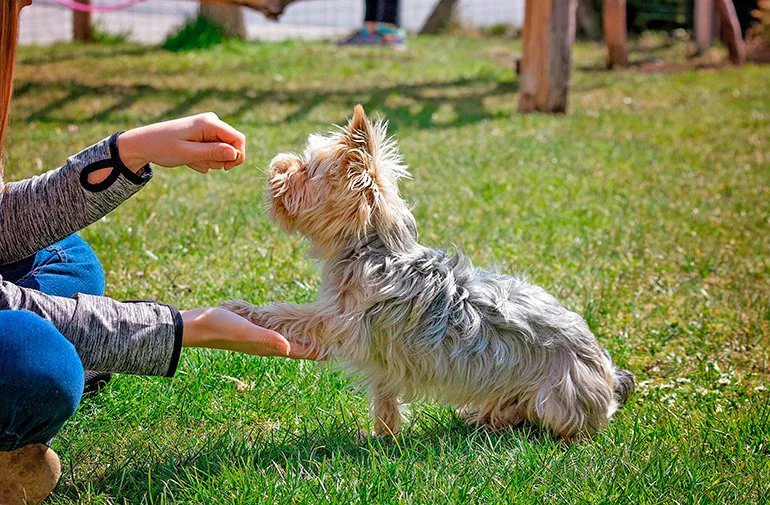
Basic commands such as "come", "sit", "stay", "lie down", "no" or "heel" should be known by every dog, whether puppy or adult. With these, we make sure the dog responds to our call and stays calm in any situation. They're not a whim.
Dogs manage to learn quite a few of our words, but not all of them. Because of this, during our conversations, they can feel a bit lost. Recognising the commands we've taught them keeps them calmer. Every dog can learn these, from puppies to older ones. Follow this training advice when teaching:
- Choose a moment when you have time and are calm.
- Sessions should only last a few minutes. The dog won't stay focused for long, especially if they're a puppy.
- Have rewards ready if you're going to offer them something to eat. If so, start the session before the dog has eaten.
- If the dog is very distracted, leave the lesson for another time. Forcing it only frustrates both of you.
- Always end on a positive note, rewarding the dog for carrying out the command, or at least getting close.
Where to Start Training Our Dog?
First of all, always research before adopting a dog. Turn to specialised literature written by experts. These are vets specialising in canine behaviour, ethologists or trainers. Check their training methods aren't violent.
To help you, you can look for puppy or adult dog classes in your area. More and more are being organised in more places, letting you start canine training following live guidance from professionals who can answer your questions on the spot. What's more, bear in mind that to get good results you need:
- Patience — you're not going to get a perfect dog in two days.
- Calmness — your nervousness passes on to the dog.
- Consistency — to repeat the guidelines the same way every time. Otherwise we'll only confuse the dog.
- Confidence — every day is a new chance to start and learn.
Bibliography Schlegl-Kofler, Katharina. Escuela de perros. Madrid. Tikal.
IMPORTANT: This article is for informational purposes only and does not constitute veterinary, nutritional or behavioural advice. Every dog is different, and only your trusted vet can advise you on its specific needs.