 Training
Ethologist — What Is Canine Ethology?
If you have a dog acting strangely, or one who's always been perfectly normal and has suddenly become a bit jumpy or aggressive, your friends or vet have probably recommended seeing a canine ethologist. But… do you know what ethology is?
Ethologists are people who've studied a degree in animal biology or veterinary medicine, specialising in ethology. Ethology studies animal behaviour in their natural environment, their conduct and the reasons behind it.
To be able to correct the behaviour of a dog who has strangely started becoming aggressive or jumpy, for example, we need to know what has caused their behaviour to change. Without knowing the source, it will be impossible to correct the behaviour and fix the problem, and this is where canine ethologists come in.
- Don't miss: When to start training a puppy
When Should I See a Canine Ethologist?
The answer to this question is very simple: when things go wrong. If we have a dog who barks non-stop, who has become aggressive or dangerous, who doesn't respect a member of the family, who has become jumpy, or who has simply changed their behaviour in a bad way… that's when we should see an ethologist.
We can try to correct the dog's behaviour with positive reinforcement or dog training classes, but if their behaviour still isn't right, the dog may have a trauma or a mistaken idea about things, and we should see the ethologist.
An ethologist is like a vet — that is, an ordinary person who has trained to understand what's going on with our dog. Once they know the cause of the problem, they can help us correct the unwanted behaviour so our dog goes back to being their usual self.
What Will the Ethologist Do With Our Dog?
Everyone is different, so each ethologist has their own working methods, though broadly speaking the first thing they'll do is ask us a series of questions about the dog, to find out what's going on with them and how we behave as a result.
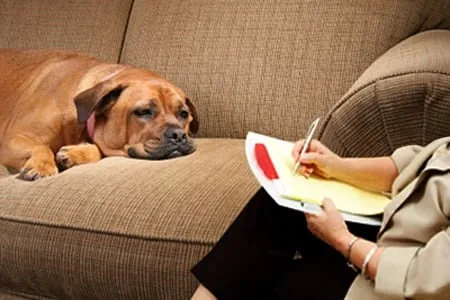
Often, without realising it, we ourselves are the cause of the dog's behaviour problem… The ethologist will help us find out if that's the case. On another note, the ethologist will observe the dog, their usual behaviour and their strange conduct if relevant, to try to gather as much information as possible.
Ethologists aren't gods — they need to gather plenty of information and analyse the dog's behaviour, as well as ours. This way, thanks to their professional training, they'll know where the root of the problem lies and will be able to help us.
Should I Take My Dog to a Trainer or an Ethologist?
Well, it depends — on the dog's behaviour, and on whether their conduct has suddenly changed or has always been that way. A poorly socialised dog can be standoffish with other people and dogs; a trainer can help us with this problem.
A dog who's always been calm and has suddenly become aggressive will, on top of a trainer to reinforce their training, need an ethologist so the problem doesn't happen again.
Broadly speaking, you could say an ethologist is like a psychologist or psychiatrist for dogs, but with far more credit, since dogs don't talk. You can find ethologists at large vet clinics, where complete teams of vets work. You can also find them working independently — ask your vet, and they'll surely know how to recommend one.
IMPORTANT: This article is for informational purposes only and does not constitute veterinary, nutritional or behavioural advice. Every dog is different, and only your trusted vet can advise you on its specific needs.