 Breeds
Pug Characteristics - Complete Breed Guide
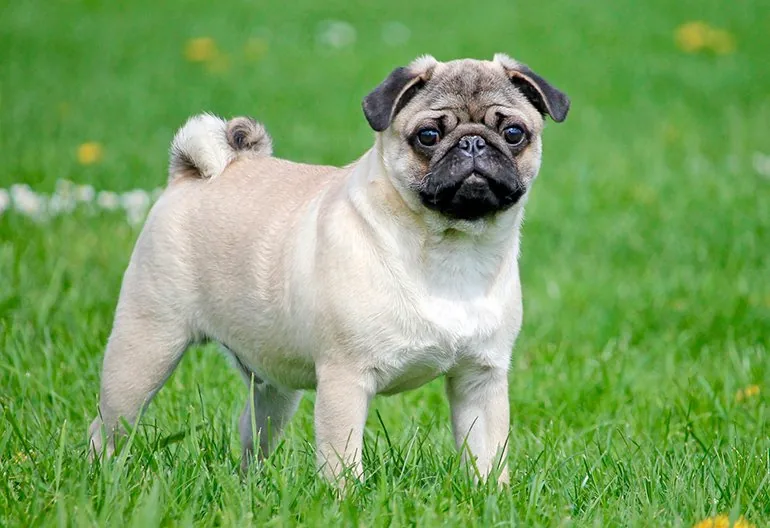
The Pug, originating in ancient China, is a companion dog with an affable temperament and unmistakable looks, with his flat muzzle and deep wrinkles. This brachycephalic breed stands out for how well he adapts to flat living and for the intense emotional bond he forms with his family. Discover his ancient history, his personality, and the care his unique build requires.
History of the Pug breed
The Pug, also known as the Carlino, originates in ancient China, where he was bred as a companion dog for royalty. These small flat-faced dogs were valued in Buddhist temples and lived surrounded by luxury at the imperial court. His original Chinese name, "Lo-sze", refers to his wrinkled look and calm temperament.
During the 16th century, Dutch merchants brought the first individuals to Europe, where the breed quickly won over the nobility. The Pug became the favourite dog of the House of Orange in the Netherlands and, later, of British royalty. Queen Victoria of England had several Pugs and helped popularise the breed across the continent.
The selection carried out in Europe during the 18th and 19th centuries aimed for a more compact dog, with a rounder head and a shorter muzzle. This change followed the fashion of the time, which valued a more extreme, "monkey-like" look. The original Chinese individuals had a longer body and longer legs.
Today the Fédération Cynologique Internationale classifies the Pug in Group 9 (companion dogs), alongside other breeds of similar build. Although his looks have changed over the centuries, he keeps the affable temperament and loyalty that made him famous in Asian and European palaces.
What's special about Pug dogs?
His unique facial expression and affable temperament make him an unmistakable breed. Pugs combine a flat muzzle with large, bulging eyes giving them an almost human, very expressive look. Unlike other companion breeds, his personality balances liveliness with calm: he's playful when it's time, but also knows how to settle on the sofa.
His suitability as a companion dog is exceptional because he's been selected for centuries to live in close contact with people. They aren't independent or reserved dogs; on the contrary, they constantly seek interaction and physical closeness.
The Pug's adaptability to different lifestyles is another of his big draws. He does just as well in a small flat as in a house with a garden, provided he gets the daily attention he needs. His moderate energy level lets him fit into calm routines, though he also enjoys short walks and games at home.
The breed's standout value lies in his ability to brighten the day with his mere presence. He isn't a breed known for working or sporting skills, but for his talent at connecting emotionally with those around him.
Physical characteristics of the breed according to the official standard
The Pug has a compact, muscular build. His ideal weight ranges between 6 and 8 kg, with a height at the withers around 30-36 cm. The standard prioritises overall proportion: a square body, a straight back and a well-developed chest. Typical life expectancy is 12 to 15 years.
The head is large and round, with a wide skull and a very short muzzle, characteristic of brachycephalic dogs. Deep, symmetrical wrinkles on the forehead are a distinctive trait the standard especially values. The eyes are large, dark and bulging, with a sweet, lively expression.
The ears are small and thin, with two accepted types: rose-shaped (folded back) or button-shaped (folded forward covering the canal). The tail curls over the hip forming a double curl, considered ideal. The coat is short, smooth, soft and glossy, with no woolly undercoat.
Accepted colours are fawn in all its shades (from pale silver to deep apricot) and black. Fawn individuals require a well-defined black mask on the muzzle, the ears and a dark dorsal line. Extensive white markings or patches are considered outside the standard.
Pug temperament and character
The Pug is a companion dog par excellence, with a low-to-moderate energy level. He doesn't need large doses of exercise, but he does need daily walks and short games to stay fit without straining his brachycephalic breathing.
His sociable, affable character makes him an excellent companion for families with children. That said, it's worth teaching young children to respect his space and not bother him while he rests, since any dog can react if he feels cornered.
With other animals, the Pug usually shows himself friendly if exposed to them from puppyhood. His instinct isn't competitive or dominant, so he tends to fit well into households with other dogs or even cats, always with a gradual introduction.
The most defining trait of his personality is a strong attachment to the family. They need to feel part of the group and can't handle long hours of solitude. If they're regularly left alone, they can develop separation anxiety, showing up as barking or destructive behaviour.
In public spaces, the Pug is usually calm and doesn't bark excessively. His social tendency is to greet other dogs and people with curiosity, without showing aggression. A well-structured daily walk covers both his exercise needs and his desire to explore his surroundings.
Recommended care for a Pug
Exercise routine should be based on short walks at a calm pace. Given his brachycephalic anatomy, intense effort can cause rapid exhaustion due to difficulty regulating his temperature. Physical activity should be avoided during the hottest hours.
For walks, using a chest harness is the safest option, since collars put direct pressure on the trachea and make it harder for air to get in, in a breed whose airway is already compromised.
Cleaning the facial folds requires a daily routine. Moisture and heat building up in the wrinkles favour bacterial and fungal growth, causing skin irritation. Each fold needs cleaning with a damp gauze or neutral wipes, and the area dried with gentle dabbing until completely dry.
Coat maintenance involves frequent brushing to remove dead hair. Although the coat is short, the Pug sheds a considerable amount that can build up quickly on clothes and furniture.
His build also calls for specific climate protection. In winter, using thermal clothing is advisable, since his compact muscle mass and lack of an insulating undercoat make him sensitive to cold.
Most common health problems in the Pug
The Pug's anatomy, with his brachycephalic skull and facial folds, predisposes him to several conditions every owner should know about. With preventive care he can reach a good old age, but certain conditions need early attention to avoid compromising his quality of life.
The Pug's bulging eyes have reduced natural protection. Corneal exposure causes pigmentary keratitis and ulcers, especially if the eye doesn't fully close when blinking. Any sign of thick discharge, redness or rubbing calls for a vet visit.
Wrinkled skin traps moisture and dirt in the facial folds. If they aren't dried well after daily cleaning, fold dermatitis appears, a bacterial or fungal infection causing bad odour and itching. Food or environmental allergies are also common and can worsen the condition.
In the musculoskeletal system, hip dysplasia and patellar luxation are the most common joint conditions. Excess weight worsens these conditions and speeds up arthritis. Keeping an appropriate body weight reduces the load on the joints and prevents lameness.
Brachycephalic syndrome in the Pug: vet guide and functional breathing test
Brachycephalic syndrome is a set of anatomical abnormalities affecting short-skulled breeds like the Pug. It includes stenotic nostrils (narrow nasal openings), an elongated soft palate and a hypoplastic trachea, which hampers normal airflow.
These dogs make extra effort to breathe, audible as snoring or rattling sounds. In severe cases, respiratory stress causes exercise intolerance, cyanosis or even collapse after minimal activity.
The functional breathing test vets use involves assessing the dog after a short walk at a calm pace. If it takes too long to return to quiet, effortless breathing, that indicates respiratory compromise requiring specialist assessment.
Keeping the Pug at his ideal weight is crucial, because excess fat further compresses the airways. Limiting walks to the coolest hours of the day also reduces the risk of respiratory distress episodes, especially in summer.
Responsible breeders incorporate functional breathing assessment as a selection criterion to reduce the incidence of serious problems in offspring. A key tool for improving the breed's health long term.
In moderate or severe cases, the vet may recommend corrective surgery such as rhinoplasty or soft palate resection. This procedure notably improves quality of life, but should always be assessed by a specialist in brachycephalic animals.
What's the best diet for a Pug?
The Pug has a genetic tendency toward gluttony and a slow metabolism, which calls for strict portion control. Weighing the food and splitting it into several daily meals helps keep glucose levels stable and prevent food-related anxiety.
Using kibble with kibble pieces adapted to his brachycephalic build is recommended. A specific size and shape make chewing easier and reduce accidental air intake, lowering the frequency of gas and digestive discomfort.
During puppyhood, a food rich in protein and minerals that supports bone growth without over-accelerating it is advisable. A gradual transition to adult kibble prevents the animal from developing premature excess weight in his early stages.
In senior dogs, the diet should be adjusted by reducing fat and increasing omega-3 fatty acids. This protects joint and cardiovascular health, compensating for the drop in physical activity typical of advanced age.
Treats should count within the total daily ration. Swapping processed treats for small pieces of apple or raw carrot satisfies his need to chew without adding empty calories that compromise his weight.
IMPORTANT: This article is for informational purposes only and does not constitute veterinary, nutritional or behavioural advice. Every dog is different, and only your trusted vet can advise you on its specific needs.