 Training
Reasons a Dog Eats Poo
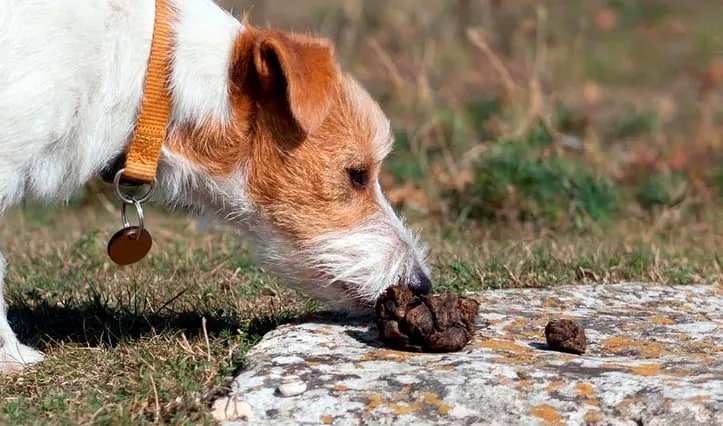
Eating poo is one of dogs' most disgusting behaviours. Technically known as coprophagia, it's defined as the habit of eating their own droppings or those of any other animal or human.
This fairly common behaviour can appear in both puppies and adult dogs, and you surely want to know why, so you can prevent it. If it becomes routine, the first thing to do is see the vet. We explain it below.
Pica and Canine Coprophagia
Coprophagia falls under the eating disorder known as pica. This is a disorder where the affected individual eats substances that aren't part of the species' usual diet. When these substances are droppings, we're talking about coprophagia.
Coprophagia is a normal, non-pathological behaviour in female dogs who've just given birth. Instinctively, just as they eat the placentas and umbilical cords, they'll eat the faeces in an attempt to keep things clean and hide the presence of the pups and their more vulnerable state.
It's also not unusual for puppies to eat droppings as part of their exploratory drive. Even so, this behaviour shouldn't continue past this juvenile stage. Lastly, dogs may also eat faeces if they live in unsanitary conditions where these aren't cleaned up enough. Outside these exceptions, coprophagia should be treated.
Reasons for Coprophagia
A dog being drawn to some droppings and having a go at eating them, or trying to, is a fairly common situation. Even so, coprophagia becomes a problem once it becomes part of the dog's routine. That is, when our dog eats their own droppings or those of other animals every time they get the chance.
Experts consider several hypotheses that could explain this unpleasant behaviour. We can broadly split them into ones with a physical origin, that is, stemming from illness, or ones triggered by a psychological problem.
That's why, if we're concerned about excessive faeces eating, the first step is seeing the vet. And we should be concerned, since eating droppings can lead our dog to catch intestinal parasites or even suffer gastrointestinal disorders such as vomiting or diarrhoea.
Physical Causes of Canine Coprophagia
Faced with a dog who regularly practises coprophagia, the vet will carry out a full check-up to identify or rule out any physical cause. If the exam concludes our dog is healthy, that's when a psychological origin is considered. These are the physical disorders most often behind eating faeces:
- Unsuitable diets: poor feeding that doesn't meet all the dog's nutritional needs could be behind coprophagia, with the animal trying to complete their diet. Even so, there are also perfectly well-fed coprophagic dogs.
- Malabsorption syndrome: in this case the dog's diet may be suitable, but the problem is their body can't extract all the nutrients they need from the food. This deficiency is what drives them to eat droppings voraciously.
- Internal parasites: a large number of intestinal worms is another factor that can be linked to coprophagia, because of the disruption these parasites cause in the digestive tract.
- Type I and II diabetes: just like people, dogs can also be diabetic if their body doesn't produce the insulin they need. Among this illness's symptoms is an increase in appetite that can lead to coprophagia.
- Hyperadrenocorticism or Cushing's syndrome: this illness happens from prolonged exposure to high levels of glucocorticoids, either secreted by the body or given as medication. It causes an increase in appetite.
- Hyperthyroidism: not a very common condition, but also considered a risk factor for coprophagia, since it makes the dog feel hungrier.
- Exocrine pancreatic insufficiency: the pancreas is one of the organs involved in digestion. It produces enzymes that help with this process. Because of this, illnesses interfering with its function increase appetite and can end in coprophagia.
Canine Coprophagia as a Behavioural Problem
If our dog eats faeces and, after a full vet check-up, we're told they're healthy, we can consider the problem to be down to a psychological disruption. This should be treated by canine behaviour experts or ethologists. The most common causes are as follows:
- Exploratory behaviour: dogs are naturally curious and will explore their surroundings. Finding droppings can motivate them to try them and end up establishing an eating routine. Some droppings seem particularly appealing to them, such as those from cats or horses.
- Stress: dogs have basic needs that ensure their wellbeing. If these aren't met, the result will be a state of stress. Coprophagia is one of the disrupted behaviours that can arise in these cases.
- Lack of stimulation: dogs don't just need physical exercise. They also need mental activity. Without it, frustration, boredom and a search for unsuitable stimuli, such as coprophagia, will appear.
- Reinforcing the behaviour without realising it: in cases where dogs eat faeces to get our attention, us paying them attention, even if it's to scold them, encourages them to keep this behaviour up.
Bibliography Carlson and Giffin. 2002. Manual práctico de veterinaria canina. Madrid. Editorial el Drac.
IMPORTANT: This article is for informational purposes only and does not constitute veterinary, nutritional or behavioural advice. Every dog is different, and only your trusted vet can advise you on its specific needs.