 Training
Should We Scold Our Dog When They Do Something Wrong?
We often find ourselves in the situation where our dog behaves inappropriately and we need to scold them to correct it, so they somehow understand what they're doing isn't right.
Even so, it's surprising to see that the vast majority of people who share their life with a furry friend don't know how to properly scold a dog. This can create confusion and stress in the dog.
That's why here at SoyUnPerro we want to give you some practical advice so you know when and how to correct our dog, in a way they can understand.
You might also be interested in: How to properly correct a dog.
How Should a Dog Be Scolded?
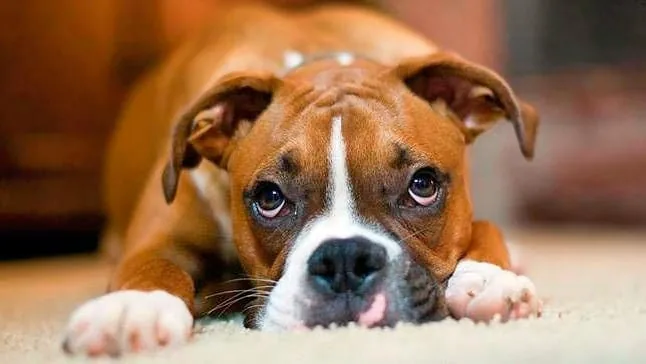
You surely picture yourself, when you think about scolding your dog, telling them off while they sit there looking guilty. Well, that's not a correct or proper way to scold a dog.
Actually, there's no point scolding a dog, since they won't know what's going on. The right approach is correcting our dog when they do something wrong, so they know we don't like or approve of what they're doing.
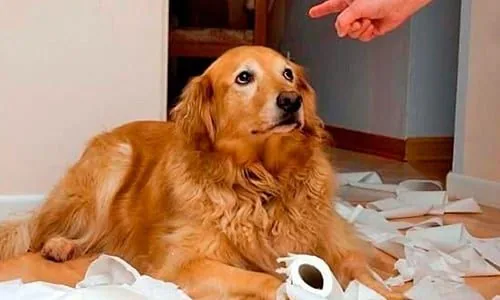
Giving our dog a lecture is absolutely pointless, since they simply don't understand it. And yes, they do put on a guilty look, as if apologising… but they only do it because they see we're angry, not for any other reason.
The proper way to correct a dog is through a touch or a nip (simulating a bite with your hand). Never, under any circumstances, should you hit, mistreat or hurt your dog — a simple, harmless touch is more than enough.
When to Scold Our Dog
It's astonishing to see how, when someone gets home and sees their dog has bitten or broken something, they tell them off and scold them for minute after minute, thinking the dog understands something about what's happening.
Let's not fool ourselves — dogs don't have the sense of time we humans have, and scolding or correcting them once whatever they did is already over is absolutely pointless.
The right approach is to correct them right at the moment they're behaving inappropriately, neither before nor after. This way, they'll be able to interpret our touch or nip and understand they're doing something wrong.
A practical example: you get home and your dog has eaten their bed or torn it to shreds. Don't scold them, because it won't help at all. Even so, if you catch them in the act of biting the bed, that's the right moment to give them a touch along with a firm "No!"
That's when they'll understand they shouldn't do it, and if they persist, we should too, with another touch and another "No!"
When We Shouldn't Scold Them
There are plenty of situations where, out of a lack of knowledge, we think we should scold a dog to correct their behaviour, when actually this can be a serious mistake.
These are fairly common situations that don't call for a correction, since they're normal dog behaviours. Correcting them can confuse our dog, frustrate them, and/or create knock-on problems.
- If our dog growls or barks, we shouldn't scold them, since it's their way of expressing that something's not right, that they don't like something, or their way of alerting us and/or getting our attention. Even so, if our dog barks excessively, we can use behavioural therapy.
- If our dog is scared, never scold or tell off a scared dog, since you could worsen their fear and send them into a panic. If your dog has their tail tucked between their legs or their ears pulled back, don't scold them. You can learn more here: Canine Language.
- After the fact, there's no point scolding our dog if we get home and see they've done something wrong… simply because they won't understand it, so don't waste your time on that.
- If they're a puppy, puppies are bursting with life and need to poke around at everything, which often means chewing things they shouldn't, urinating inside the house, breaking their bed or your belongings… We shouldn't scold a puppy, because they're simply exploring, learning. We can correct them when they do something wrong, but very gently, and only once they're older than four or five months.
What to Do About Bad Behaviour
It's entirely normal for a dog to make mistakes, behave badly, or be a little mischievous, but that doesn't mean we should be constantly correcting or scolding them.
Faced with bad behaviour, we should think about what we did wrong, and usually the answer is either that we haven't trained them properly, or we don't take them out enough to play and run.
Bad behaviour from a lack of training is fixed through applying a good canine training technique, not through constant corrections.
And bad behaviour from anxiety or stress is usually down to a lack of walks, exercise or play with other dogs. A dog isn't a toy to keep shut indoors all day — they need to run a lot, play and enjoy the outdoors daily.
IMPORTANT: This article is for informational purposes only and does not constitute veterinary, nutritional or behavioural advice. Every dog is different, and only your trusted vet can advise you on its specific needs.