 Training
How Do Dogs Talk? Canine Language
Most of us who share our life with a dog know how to identify their mood or health with just a simple look. This happens because we build close bonds with them and because, through experience, we learn to watch and interpret how they express themselves.
Dogs don't talk or use words to communicate with other dogs or people, but they use a highly meaningful, easy-to-interpret canine language. It's up to us to know how to properly read and interpret these communication signs. This way, we'll always know how our dog is doing or what they're trying to tell us.
Although humans claim to be the smartest species on the planet, the truth is we're often the most ignorant… thinking it's the dog who needs to learn to express themselves, instead of accepting it's us who need to learn the dog's language.
Let's explain how dogs communicate and how we should interpret their expressions — something genuinely simple and practical that will help us communicate and understand them far better.
The Ears
Watching the small gestures any dog makes is actually the best form of communication that exists so far. Knowing how to interpret them is another matter, but you surely know exactly what we mean when we say dogs also communicate with their ears.
When the dog raises their ears, keeping them upright with the ear opening pointed forward, our dog is showing they're paying attention. Being alert can be good if they've simply heard a noise and feel curious, or if they're witnessing something intriguing.
Even so, when a dog is angry and/or in a high-tension state, too excited and at risk of biting, their ears will also take on this same position. If we come across another dog they don't get on with while out walking, we can surely notice how their ears go up right away.
When the dog pulls their ears back, it means they're showing a state of submission or fear. You've surely noticed more than once that if you scold your dog, they pull their ears back, a clear sign of submission.
When the dog leaves their ears relaxed, keeping their normal position, it's a sign they're calm and nothing's bothering them. This is without doubt the best position for a dog's ears, since it tells us they're feeling good.
As you can see, simple ears can give us plenty of clues, but they don't point to an exact state, rather a disposition in the dog. To know how our dog is doing, we need to watch their ears, but also other signs they show through different parts of their body.
Analysing every sign together is mastering canine language perfectly, managing to know how our dog is, how they're feeling, or what they're trying to tell us.
The Tail
A dog's tail isn't just an extension of their spine — it's possibly the most important part of the dog when it comes to communication signs. Dogs express themselves in plenty of ways, and their tail is one of the parts they use most to express themselves.
Some dogs already have their tail upright or curled purely from genetics, so these techniques can't be applied to assess their mood, since it could lead to mistakes.
When a dog raises their tail and keeps it rigid and still, they're showing us they're in a state of alertness, pressure, stress. It's a warning sign, since it usually points to our dog being excited, on the verge of barking, growling or biting.
If the dog's tail is tucked between their legs, almost touching their belly, it means they're scared or very nervous. A scared dog can be just as dangerous as one with their tail raised and rigid, since fear can lead them to try to defend themselves.
If the dog's tail is raised and wags a great deal, it means the dog is very excited. This can be good or not — if it's because they've just reunited with their human, it's without doubt because they're excited with joy. Even so, if their tail takes on this movement when passing another dog, it could mean they're excessively nervous and could lead to an attack.
When the dog's tail is lowered and sways from side to side, it means, without doubt, the dog is content and happy. This is the clearest way of noticing happiness in a dog — such a simple gesture can give us a great deal of information.
Something as simple as a dog's tail position and movement can give us a huge amount of information. That's why it matters so much never to dock our dog's tail or ears. You can find more information on the meanings of your dog's tail movement here: Meanings of a dog's tail movement.

Barking, Tongue and Teeth
This part is a bit more complex to identify than the previous ones, though if we've already lived alongside our dog for a few years, we'll quickly know how to identify these signs. Even so, if we've recently adopted our dog and don't yet have much experience with them, we need to be cautious when interpreting them.
When a dog barks or growls, they're carrying out another of their forms of communication, to make themselves understood, both with other dogs and with humans. A barking dog could be trying to get our attention to play with them, could be warning us of danger, or could simply be letting us know they're scared and don't want us to get close or pressure them.
Knowing how to interpret each dog's type of bark comes from experience with them, which is why it's essential to spend time living alongside the dog to get to know their types of bark. And although it's true most dogs pair their barks with other signs, such as their ear movement or tail position, which will help us understand why they're barking, other dogs, when they bark, simply do that… bark, which makes understanding the reason harder.
When a dog growls, they can be expressing two entirely different emotional states. It could tell us they're comfortable while we tickle them and scratch their belly… or it could tell us they're about to snap a bite at us. Context is essential for identifying a growl — you can find more detailed information at: How to act if my dog growls.
The same happens when a dog bares their teeth — it could be a warning message telling us not to get closer or they'll bite us. Even so, plenty of dogs try to imitate their humans' smile, showing their teeth when they're happy. It's genuinely curious and lovely, but it can cause confusion when interpreting it. You can find out when your dog is smiling or angry with this info: Why do dogs show their teeth.
A dog's tongue can also be used as a form of expression to show submission or ask for forgiveness. If your dog has ever accidentally bitten you and you've shouted, you've surely seen how they stick their tongue out repeatedly within a short time, something similar to if they were licking a bit of ice cream off the tip of their muzzle.
This is the most curious form of a dog's language so far, and perhaps also the least well known. They know how to apologise, and this is how they do it, sticking their tongue out repeatedly as if licking the tip of their muzzle — what's more, this gesture is usually paired with their ears in submissive mode, that is, pulled back.
We shouldn't confuse this gesture with when the dog wants to vomit. Dogs with an upset tummy try to make themselves vomit by eating grass, licking the ground, or repeatedly licking their nose.
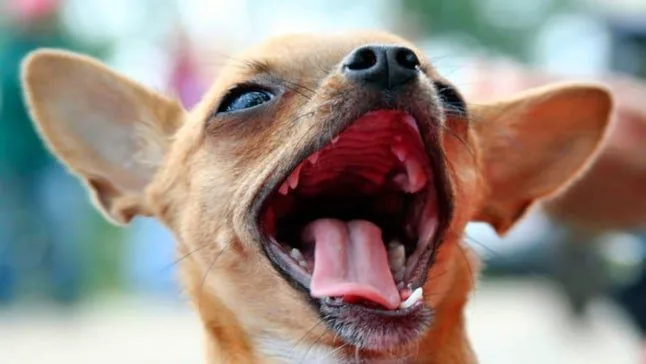
Even yawning is a body signal dogs use to communicate with us or with other dogs. Knowing what a dog's yawn means is tricky, since we need to first analyse the situation.
There are yawns that mean happiness, joy, calm, tiredness and sleepiness. Even so, there are also ones pointing to anxiety, nervousness, fear, or even a warning of an attack.
The Gaze
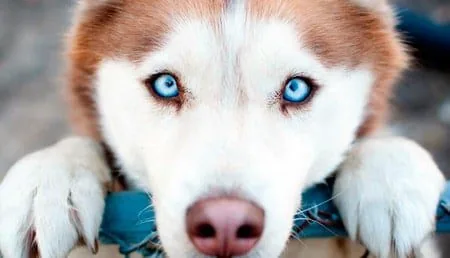
A dog's gaze can tell us a dog is in submissive mode and poses no danger, or that a dog is tense and/or being provocative. One of the rules all of us humans should teach our children is to never stare directly into an unfamiliar dog's eyes.
When a dog stares directly into another dog's eyes, they're challenging them, letting them know they're superior and are ready to prove it. It's a way of challenging each other, a form of communication between dogs that can also be applied to humans, since when we look at an unfamiliar dog the same way, staring directly into their eyes… they'll also read it as us possibly challenging them.
Even so, when a dog looks away from ours, if we're staring at them, it's a sign of submission. It shows they don't want to confront us, that they're not trying to be superior, or that they're simply a bit scared.
Obviously the readings change considerably when, instead of an unfamiliar dog, we're talking about our own dog, the one we share our life with. You can find more detailed information here: Why does my dog stare into my eyes?
Final Conclusions on Interpreting Canine Language
The first thing we need to use to try to understand or communicate with our dog is common sense — if we lack it, it won't matter how much information we're able to read.
Knowing how to interpret what a dog is trying to express is genuinely simple if we know how to read their signs. Next time you accidentally hurt your dog (for example if you accidentally step on their paw), don't go stroke them and apologise… simply feel bad and stick your tongue out repeatedly, letting them see you doing it, as if you were mocking them. They'll quickly read this as a sign of apology — once they do, you can then stroke them.
As you can see, it's not just about knowing whether the dog is happy or scared — we can also put these signs into practice ourselves. Analysing and/or using the obvious signs a dog uses to communicate is the best way we have of communicating with our dog.
IMPORTANT: This article is for informational purposes only and does not constitute veterinary, nutritional or behavioural advice. Every dog is different, and only your trusted vet can advise you on its specific needs.