 Care
Care
Sunscreen for Dogs
Humans aren't the only ones who can get sunburned from sun exposure. Dogs, although somewhat better equipped to handle it, can also suffer the consequences of a long, sunny day outdoors.
Given this issue, today at Soy un Perro we want you to know how important it is to protect your best friend's skin. If you want to know which are the best sunscreens for dogs, give us a minute!
Dogs need sun protection too
To start, it's vital to remember that a dog's coat doesn't just protect them from cold, as many people believe — it also protects them from intense sun exposure and other weather conditions.
That's why it's extremely important not to shave dogs when temperatures rise. It's a mistake to think they'll be "cooler" this way — instead, all we'll achieve is exposing their skin directly to the sun's rays, leading to serious burns.
Also, although thanks to their coat dogs already have extra sun protection that we lack, there are certain parts of their body that don't have that "protective barrier." We're talking about areas like the snout, ears, or lips.
These sensitive areas are always exposed to the sun, so the chances of getting burned are very high. That's why it's vital to have sunscreens on hand that help us prevent skin damage and even serious problems, like skin cancer.
Sun protection based on breed and physical traits
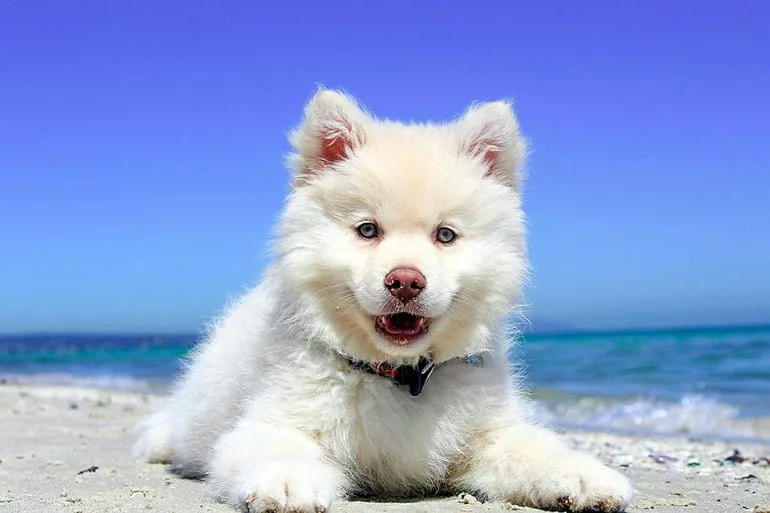
It's worth noting that some breeds are more sensitive to the sun than others, so extra care is needed for them. We're talking about breeds like the Dalmatian, Boxer, Pitbull, Bull Terrier, Staffordshire, Whippet, and of course albino dogs.
Besides breed, there are other traits worth considering when it comes to sun protection. Dogs with pale or pink skin and white, short, soft fur are more delicate. Dogs with dark skin and long fur, on the other hand, are more resistant to sun exposure.
Sunscreens for dogs
Before we start listing sunscreens for dogs, we need to clarify that the best protection is prevention. Avoid walks during the hottest hours of the day, and keep in mind the temperature of the ground when you're out walking, or of the sand when you go to the beach.
Sunscreens for dogs should have an SPF of 30 or higher, and if the dog is going to go in the sea or pool, it should also be water-resistant. You'll also find several formats to suit your preference: lotion, gel, or spray.
Below, we'll go over the products most commonly used to protect dogs from the sun. They might not be very well known among dog owners, but they're very useful and not especially expensive. Get your hands on one to protect your best friend!
Menforsan
This natural high-end sunscreen for dogs and cats is one of the most famous on the market, and its price is around €10 for 50 ml. It's an SPF 30 sun lotion that, besides protecting sensitive areas from UVA and UVB radiation, moisturizes their skin and coat.
You can also use it after outdoor activity to moisturize. It's also hypoallergenic, water-resistant, fragrance-free, and specially designed for dogs and cats with dermatitis issues or recovering from surgery. Highly recommended!
Dermoscent Sunfree
Dermoscent Sunfree has an SPF 30+ that ensures protection for sensitive, vulnerable, and/or weakened skin in dogs and cats. Its price is around €15, in a 30 ml bottle.
It also offers the ability to moisturize your pet's skin while protecting from UVA and UVB rays. Lastly, it's worth noting that it's water-resistant and its texture isn't sticky or greasy.
Pet Sunscreen
Another very affordable option is this sun lotion, around €10 for 50 ml. It's especially suited for short-haired, white dogs. It's also SPF 30, water-resistant, fragrance-free, easy to apply, and filters both UVA and UVB radiation.
Polishing Mist
This spray, around €30 for a 118 ml bottle, is also a good product. However, it's only useful for protecting your pet's coat. That said, the spray format makes it much more convenient and lets you reach every part of your dog's body.
Can I use human sunscreen on a dog?
Although the market offers a wide variety of products to protect your dog from the sun, if you choose to apply a human sunscreen, remember it should have an SPF of 30 or higher, be hypoallergenic, fragrance-free, and free of artificial colors.
You should carefully read the ingredients to make sure it doesn't contain zinc oxide, octyl salicylate, or para-aminobenzoic acid, since these ingredients are harmful to dogs. It also shouldn't carry a warning about the danger of ingestion, since your dog will probably lick it.
How to apply sunscreen to a dog
First, we should keep in mind the sensitive areas mentioned earlier. Apply the cream to the nose, the tips of the ears, the groin, and the belly with a gentle massage, trying to prevent licking and helping it absorb.
If the dog's coat has been trimmed, or worse, shaved, apply cream to the exposed areas, even if that means applying cream all over their body. You should do the same with dogs experiencing hair loss due to allergies, health conditions, or recent surgery.
Many dogs love lying in the sun, but this can be dangerous. Besides risking heatstroke, they can also get burned, since even if we apply sunscreen at the start, it loses its effect over time, just like it does for humans.
Prevent your dog from spending too much time in the sun, cool them down with water, and reapply the cream every 1-2 hours. Finally, if unfortunately we're too late and your dog has already gotten burned, don't wait any longer — take them to the vet so they can provide appropriate treatment.
IMPORTANT: This article is for informational purposes only and does not constitute veterinary, nutritional or behavioural advice. Every dog is different, and only your trusted vet can advise you on its specific needs.