 Care
Care
My Dog Has a Tick, What Do I Do?
All of us lucky enough to have a dog as a life companion know what it's like to worry about our pet catching fleas or ticks. Ticks on dogs are very common, which is why we need to know how to spot them, remove them, and above all, prevent them.
In this simple, practical guide we'll learn everything we need to know about ticks, so we'll know how they operate and how to get rid of them effectively. Remember that the best way to avoid ticks is prevention, which is really simple and only takes a little time each week.
What Is a Tick?
The ticks that affect our pets are mites, also called Ixodidae (hard ticks), obligate blood-feeding ectoparasites, which means they need to feed on our pets' blood to survive.
They're more common in warm places, or as spring/summer approaches and temperatures rise. They're usually abundant near livestock farms or trails where livestock pass through. Ticks can transmit many diseases, many of them serious. It's absolutely necessary to remove any tick from our dog or pet, since they could also settle on humans.
Adult females can lay up to 4,000 eggs during their life cycle, so a serious infestation can develop if nothing is done about them.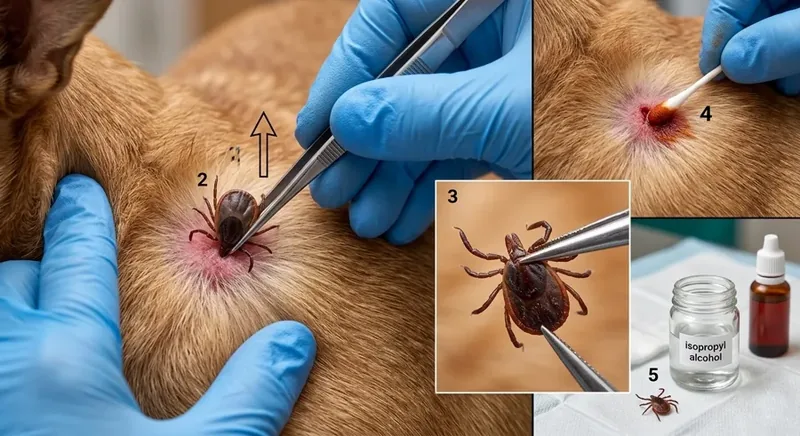
Ticks on Adult Dogs or Puppies — How Do I Find Them?
Spotting ticks on our dogs is very simple — we just need to check them carefully every so often for any of these unwanted guests. Mainly, they're found in hairless areas such as the face, ears, armpits, between the toes, and the groin and perianal region. That said, they can be found across the whole body — the back, belly, tail. If we see one in a furry area, it means our pet has a heavy infestation.
It's very important to take the time to check our dog thoroughly, from the tip of the nose to the tip of the tail. Generally we'll see a small brown or black bump, like an unsightly large pimple.
In puppies, ticks are more commonly found, since spot-ons or collars usually can't be used to prevent them at such a young age. It's very easy to get rid of ticks on puppies, so don't stress about it. A tick's size can range from two or three millimeters to a centimeter or a centimeter and a half, depending on how long it's been feeding on its host… our beloved pet.
How to Remove Ticks If They're Already on the Dog?
Ticks attach to our dogs with their legs and also make a small hole with their mouthparts. We should kill or repel the tick with a good spot-on before removing it from our dog, since otherwise remnants could stay in the skin, causing secondary infections.
If it's just a few ticks, you're in luck!!! Because you can use natural, low-environmental-impact remedies right on your pet. This option is recommended for puppies, given how prone they are to being poisoned by chemical products.
Ticks don't like citrus, or chamomile infusions, so we can use one of these natural remedies against ticks (chamomile or lemon) to make it detach from our dog. We'll apply a bit of cold chamomile infusion or lemon — apple cider vinegar also works — to the tick and wait a moment for it to let go.
With the help of tweezers, turning counterclockwise, we'll remove it, then kill it with a piece of paper or by submerging it in a plastic cup with alcohol. Right after, we'll apply hydrogen peroxide as a disinfectant, which we'll repeat over the following days to prevent infection.
How to Prevent My Dog or Puppy From Catching Ticks?
Prevention is ALWAYS better than treatment. It's enough to apply one of those great spot-on treatments sold at vet clinics or online pet stores to our dog monthly. These spot-ons contain a chemical compound that makes ticks feel very uncomfortable around our dogs, so they'll stay away.
How much spot-on to give will depend on your pet's body surface area and weight, and they come formulated by kilos of weight. How it's applied matters a lot — it should be applied to a high area, like the neck, so gravity spreads it evenly across the skin.
Spot-ons should be applied once a month, ideally two days after bathing the dog. Collars are also an effective way to prevent our dog from catching ticks — they work the same way as spot-ons, giving off a smell that repels ticks and fleas.
For puppies it's a bit more complicated, since being so young, collars and spot-ons are strictly contraindicated for them, as the chemical compounds they contain could poison them.
But there are collars made with natural substances, like neem oil, a natural repellent. We can safely use these natural collars on our puppies, preventing them from getting infested.
Can Humans Catch Ticks From Dogs?
The answer is YES. In addition, having ticks is dangerous, since they transmit many diseases, some of them serious.
It's important to keep our dogs clean and using collars or spot-ons so they don't pick up ticks and pass them to us. Don't worry too much, though — ticks will always prefer to settle on mammals with thick fur.
That said, cases of infestations in humans have been reported, generally with long-haired pets where it's harder to spot the ectoparasites.
If we notice a tick bite on our skin, it's a good idea to monitor our temperature and be sure to see a doctor, who can assess whether we need antimicrobial therapy.
IMPORTANT: This article is for informational purposes only and does not constitute veterinary, nutritional or behavioural advice. Every dog is different, and only your trusted vet can advise you on its specific needs.