 Training
Using a Clicker to Train Your Dog
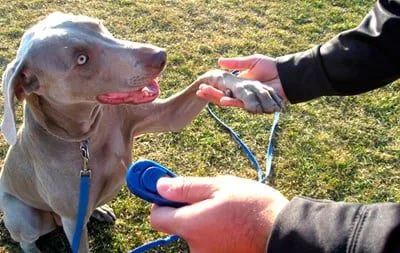
There are plenty of canine training techniques, and as you know, the clicker is one of them. It involves clicking a small device called a clicker, which gives off a very distinctive sound our dog needs to associate with a reward.
It's very simple to use, and plenty of trainers use it in their daily techniques, working on dog training, obviously. Let's explain what it involves and how to use it with some practical examples.
- Don't miss: Teach your dog to poo outside the house
What Is a Clicker, and Where Can You Get One?
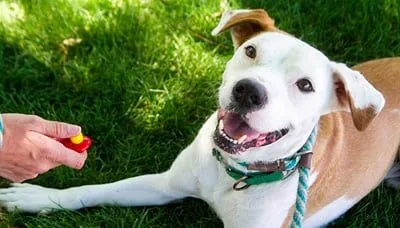
A clicker is a small plastic device with a metal strip that gives off a sound when bent. It's perfectly designed so the sound is always the same, and we can use it as many times as we want.
Nowadays some of these clickers already come ready to adjust the sound's intensity, something genuinely useful. They're very easy to find at a low price, and they truly last for years, making them a worthwhile purchase.
How to Use the Clicker With Your Dog?
The clicker is nothing more than a signal for the dog, showing they've done the command correctly — that is, a way of telling our dog they did well. So the key thing is doing a good "clicker charge" and using it whenever the dog correctly obeys our command.
How to Do a Clicker Charge
Dogs need to associate the click sound with something positive, so we need to teach them to link the click with the reward. This is a positive reinforcement technique we need to carry out for two or three weeks before using the clicker as a training tool — this period is called the clicker charge.
The simplest way to get our dog to link the click with the reward is to sit on the ground with them and give them some rewards, no strings attached. Such as small pieces of sausage, following these steps:
- We'll click the clicker
- We'll give our dog a reward and praise them
There's no need to train them for this — for the dog to properly link the click sound with the reward, we need to do it randomly, for free, with no demand on them in return. That is, we'll simply click every half a minute or every minute, for example, and right after, give our dog a piece of sausage while praising them.
By practising this at least a couple of times a day, our dog will barely take two or three weeks to link the click sound with something positive, a reward.
When to Use the Clicker
Once the clicker charge is finished, we can start using it in our dog's training. The right way to use it is clicking right when our dog obeys our command, and right after, giving them the reward.
The click is a way of telling our dog "well done!!" right when they do something correctly. If we click by mistake, we need to give our dog a reward even if they haven't done anything, because they need to know that whenever a click is heard, they'll get a reward.
Examples for Clicker Training
Let's say we're training our dog to give their paw when we give that command. The right way to use the clicker is to click it right when our dog places their bottom on the ground. Right after, we'll give them a reward (remember, whenever there's a click there's a reward).
If we're teaching our dog to lie down, the right approach is to give the command and, when they lie down, click the clicker — that is, one click. Right after, we'll give our dog a reward.
Whatever training exercise you do, remember to click right at the moment the dog does the command correctly, then give them the reward afterwards.
If We Give a Reward, Is the Clicker Necessary?
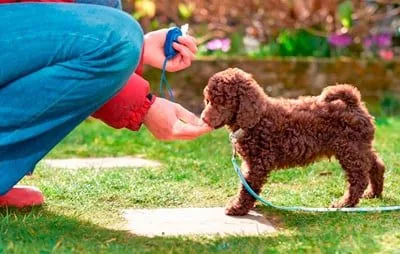
The clicker isn't a device that helps us give our dog a reward — it's a device that helps us tell our dog they did well. It's very useful because when our dog does something well and we praise them and give a reward, some time passes.
That amount of time is sometimes minimal, a matter of seconds, and other times a bit longer, a matter of minutes, since we need to go over to where the dog is, take out the reward and give it to them. It's possible the dog gets slightly distracted and doesn't properly link the reward with correctly doing the command.
Even so, if we use a clicker, we'll click right when the dog obeys our command, and they'll know they did it right, because they already link the click with a reward. They'll know that after the click we're going to give them the reward, so it doesn't matter if we take a few seconds or minutes — the reward will show up.
It doesn't matter if they don't link the reward with the training exercise, because what matters is that they link the click with the reward, so when they hear a click, they'll simply know they did well. It might seem a bit strange, but canine logic is just that simple.
IMPORTANT: This article is for informational purposes only and does not constitute veterinary, nutritional or behavioural advice. Every dog is different, and only your trusted vet can advise you on its specific needs.