 Training
How to Teach a Dog to Give Their Paw
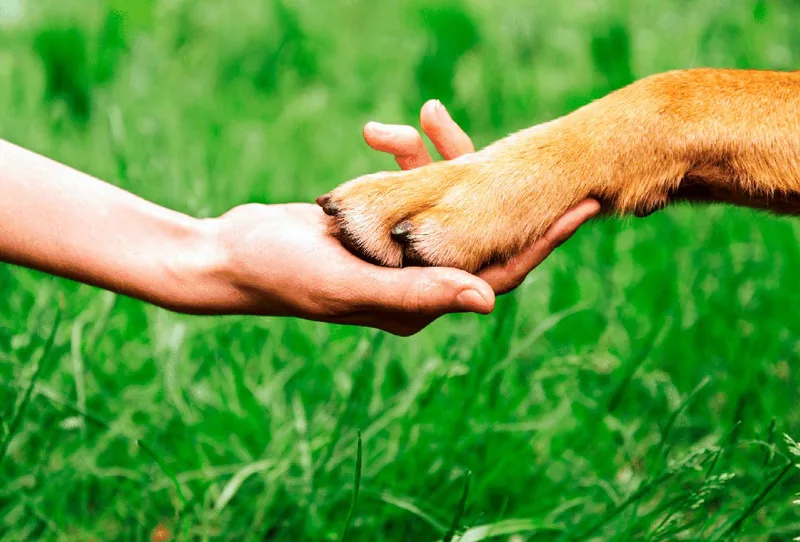
You've surely seen a dog give their paw to their human more than once, and liked how they did it. It's actually a very simple exercise, and we can all teach it to our dog.
Let's look in detail at how to teach a dog to give their paw on command, or when they see us put our hand next to them for a high-five. It's very simple, and you'll manage it in very little time.
Before Starting to Teach the Trick
Remember there's no point trying to teach something to a dog who's distracted, has excess energy, or needs to relieve themselves. So before starting to teach your dog to give you their paw, or any other trick, we need to make sure they're entirely relaxed and settled.
To do this, we simply need to take them for a walk beforehand so they can play, run, relieve themselves and sniff everything they want. This way they'll burn off their excess energy and will be far more receptive to learning. On top of that, remember:
- Dogs learn faster and better with a technique called "positive reinforcement". It involves giving our dog a reward every time they do something right, which could be a piece of their kibble or a bit of sausage.
- Training sessions should always be short and in a quiet spot, so they're not distracted by other people or dogs. Never stretch a training session beyond fifteen minutes. It's better to do it over several days than for a long time in a single day.
We Start Training With the "Sit" Command
To be able to teach a dog to give their paw or high-five, whatever you prefer to call it, they first need to know how to sit on our command. If they don't know how to do that yet, it's best to first teach them to sit, and once they've mastered that command, move on to teaching them to give their paw.
Don't try to teach them to sit and give their paw at the same time — we need to teach tricks step by step, never two at once. Once they've mastered one, we'll move on to the other (always on different days).
Choose a Word and Gesture to Teach Them to Give Their Paw
It matters a great deal that we always use the same command whenever we want them to give us their paw or bump it against our hand. We can also teach them with a gesture, for example, that every time they see our open hand in front of them, they give us their paw.
Always using the same word or gesture is essential for them to learn quickly and not confuse it with other commands or tricks we've taught them. What's more, if we use a word for this exercise, we should say their name first, then the command.
How to Teach the Dog to Give Their Paw
Now for the simplest part of all: showing our dog how they should give us their paw. To do this, we'll follow these simple steps in the order described below:
- We'll give the command to sit, and when they do, we'll give them a reward and praise them.
- We'll take their paw with our hand (carefully, so as not to hurt them), while giving the command "Give me your paw", and give them a reward and praise them.
- We'll repeat the steps above many times until our dog gives us their paw when they hear the command, with no need for us to take it with our hand.
A good alternative to rewards can be toys, as shown in the video. Everyone should judge which method to choose so their dog pays them the most attention, since sometimes they prefer rewards and other times toys.
Practise Every Day
Even though we might think our dog has already mastered the technique because they give us their paw on command to get their reward, the truth is they'll forget it quickly. Dogs learn through repetition, so we simply need to practise this exercise every day for several weeks, so they learn the command well and remember it in future.
There's no point teaching them the trick for a couple of days and then not repeating the exercise, since our dog will forget it after a few weeks.
Removing Rewards and Using Praise Instead
Once the dog has been practising for several weeks and knows how to do the trick perfectly, we'll stop giving them a reward when they give us their paw. Instead, we'll praise them enthusiastically with strokes and encouraging words: "Well done!!"
We'll keep food rewards for teaching new tricks, and use positive reinforcement through words and praise for tricks they already handle correctly.
As you can see, teaching your dog to high-five is very simple. Even so, if your dog is still a puppy, remember puppies take far longer to learn than adult dogs, and we should never train them or teach them tricks before four months old.
IMPORTANT: This article is for informational purposes only and does not constitute veterinary, nutritional or behavioural advice. Every dog is different, and only your trusted vet can advise you on its specific needs.