 Breeds
West Highland White Terrier
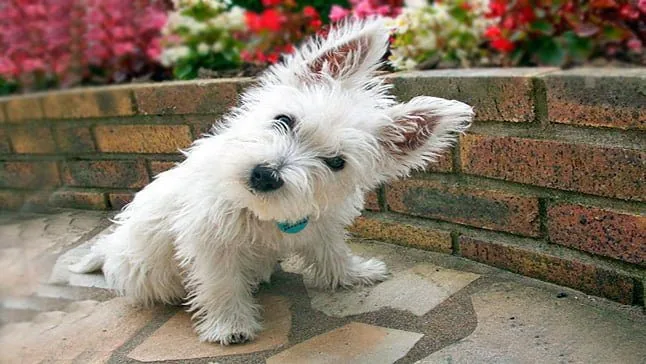
The West Highland White Terrier, affectionately known as the Westie, is far more than an adorable cloud of white fur. Beneath its neat appearance and compact size beats the heart of a genuine Scottish hunter, forged in the harsh Highlands to relentlessly chase down vermin. Its characteristic snow-white coat isn't a matter of chance, but a practical decision that saved lives and permanently defined one of the most charismatic terrier breeds in the world.
A Compact Hunter in a Snow-White Coat
The Westie has a square, well-balanced silhouette, built to slip nimbly into burrows and rocky terrain. Under the official American Kennel Club (AKC) standard, its height at the withers falls between 25 and 28 cm, while weight, in both males and females, ranges from 7 to 9 kg. This light but muscular build gives it stamina beyond what its size would suggest.
Its most distinctive trait is its double coat: a hard, coarse, weather-resistant outer coat paired with a dense, soft undercoat that acts as thermal insulation. Color must be strictly white, with no patches or cream tones tolerated in show dogs. Its alert expression is completed by small, pointed, always-erect ears, along with a short, high-set tail carried proudly, known as the "carrot tail." Its life expectancy is notably long, averaging between 12 and 16 years.
The Functional Origin of Scottish White
The West Highland White Terrier's story begins in the Scottish Highlands during the 19th century, where hunting foxes, badgers, and rodents was essential for protecting farms. Local terriers shared a common ancestry, but breeders began selecting light-coated dogs for a purely practical reason: preventing hunters from mistaking the dog for a fox and accidentally shooting it in the thick brush.
Colonel Edward Donald Malcolm, after losing a favorite terrier to this very mix-up, became obsessed with fixing the white color at his Poltalloch kennel, giving rise to the most influential bloodline. Around the same time, the Duke of Portland developed another line at Roseneath, helping standardize the type. The breed, which came to be known as the Poltalloch Terrier or Roseneath Terrier, was officially recognized by the British Kennel Club in 1907 under the definitive name West Highland White Terrier, cementing its reputation as a tireless hunter and loyal companion.
Temperament: A Terrier With Personality
The Westie retains the classic terrier temperament intact: it's alert, brave, and has a strong hunting instinct that kicks in at any suspicious movement. Its self-confidence is such that it won't back down from larger dogs or new situations, a confidence often mistaken for stubbornness. In reality, this is a dog with practical intelligence, one that learns quickly but decides for itself when it feels like obeying.
With family it's affectionate and playful, especially if socialized with children from puppyhood. It handles household bustle well as long as its space is respected and it isn't subjected to rough handling. Training should rely on positive reinforcement and variety, since boredom awakens its more destructive side. It's not the ideal breed for first-time owners looking for instant obedience, but it is for anyone who values a companion with character, unwavering loyalty, and a spark of independence.
Traits Only the Westie Has
Few breeds can claim their defining color emerged to save lives during hunts. The Westie's white coat isn't cosmetic — it's a functional adaptation that prevented friendly fire out in the Scottish hills. This quirk sets it apart from other terriers it shares DNA with, like the Cairn Terrier or the Scottish Terrier, from which it split precisely because of color selection.
Another fun fact is its brush with pop culture: the Westie was chosen to accompany the black Scottish Terrier on the iconic Black & White whisky label, becoming a globally recognized advertising symbol. Its erect tail and pointed ears aren't just adorable, either; they form a visual and auditory alert system that reveals its heritage as a vermin hunter across difficult terrain, where every sound could mean prey or danger.
Essential Care and Health for the Westie
Maintaining its characteristic white coat takes dedication. The hard outer coat needs hand-stripping (pulling out dead hair) several times a year to preserve its texture and color, though pets not shown in competition are often kept with regular trims instead. Weekly brushing prevents tangles and keeps the skin ventilated, which is crucial since the breed is prone to atopic dermatitis and skin allergies.
On the health front, besides patellar luxation and Legg-Calvé-Perthes disease, there's a notable neurological predisposition worth mentioning. According to findings from a scientific study from the Manchester Academic Health Science Centre, the West Highland White Terrier is among the breeds at highest risk of developing idiopathic epilepsy in the United Kingdom, something every owner should know so they can act quickly at the first symptoms. With moderate daily exercise, a balanced diet, and regular vet check-ups, the Westie can enjoy a long, full life alongside its family.
IMPORTANT: This article is for informational purposes only and does not constitute veterinary, nutritional or behavioural advice. Every dog is different, and only your trusted vet can advise you on its specific needs.