 Care
Care
What Are a Dog’s Whiskers For?
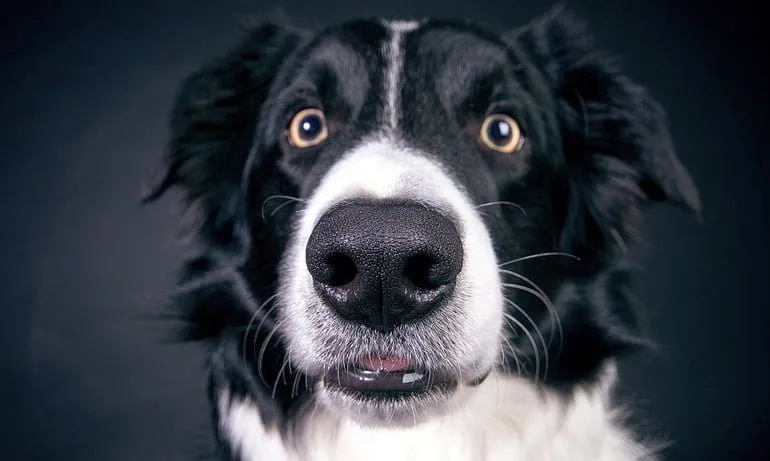
We're all struck by our dog's whiskers. Whatever its breed, every dog will have these whiskers on its muzzle. These hairs, different from the ones covering the rest of its body, are stiffer, thicker, and longer.
On top of that, they serve very important functions for the dog. We'll explain them below so we don't make the mistake of trimming them — an unnecessary practice that's strongly discouraged.
What Makes Whiskers Different?
A dog's whiskers are also known as tactile hairs, and they're not limited to a decorative function. This name already hints at their purpose, which is nothing other than contributing to the dog's sense of touch, while also complementing sight and smell. We can think of them as part of a sixth sense.
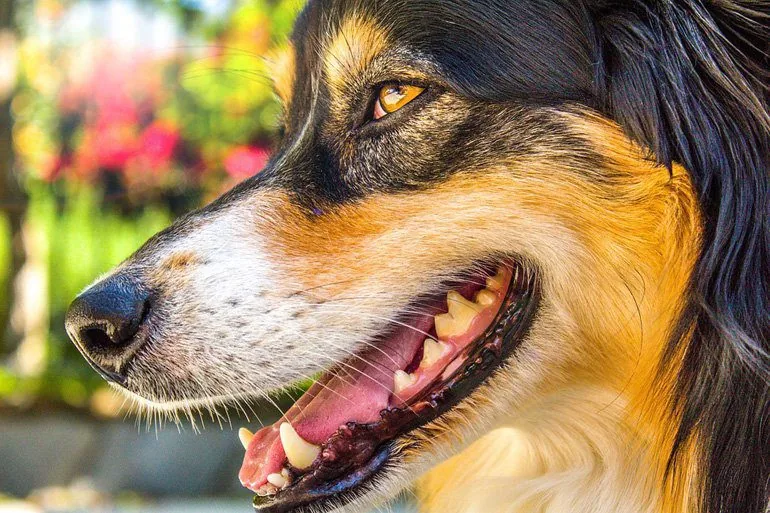
This type of hair, also known as vibrissae, is found around the muzzle, including the lips and chin, but also across a broader area including the jaw and what would be the cheeks in humans. Vibrissae are also found on the eyebrows.
Functions of a Dog's Whiskers
As part of the sensory organs, whiskers are very important because they pick up stimuli from the environment and send them to the brain, which handles responding appropriately to the information received.
More specifically, they carry out tasks like the following:
- Orientation. The signals received by these hairs help build a map of the surroundings, factoring in distances and the proportions of nearby objects. This ability is particularly useful for dogs in darker environments. It's equivalent to us walking with our arms outstretched at night to avoid tripping.
- Temperature. Whiskers can give the brain information about the surrounding temperature by picking up air currents.
- Protection. The vibrissae located on the eyebrows help protect the eye, since, being larger than eyelashes, they act as a first line of defense against any object at risk of entering the eyeball.
Do Dogs' Whiskers Fall Out?
Whiskers are similar to the rest of the body's fur in that they can fall out. In fact, it's not unusual to find one of these hairs somewhere in the house our dog has been. So, this is a completely normal process.
Do Dogs' Whiskers Grow Back Like the Rest of Their Fur?
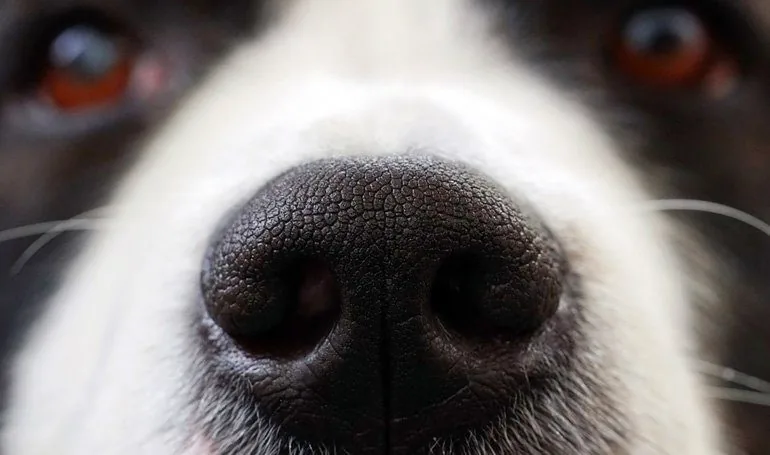
Just as dogs' whiskers fall out like any other hair, they can also grow back. If we notice one of our dog's whiskers has fallen out, been accidentally trimmed, or is broken, we shouldn't worry. It'll grow back before long.
Can You Trim a Dog's Whiskers?
Having explained the particularities of this type of hair, it's clear you shouldn't trim or pluck your dog's whiskers, since doing so would interfere with its senses' development. The dog would have reduced efficiency and ability to explore its surroundings. Whiskers will fall out naturally on their own, like any other hair.
Can You Touch a Dog's Whiskers?
These hairs are extremely sensitive, given how delicate their function is. So, although nothing bad happens if we touch them, some dogs may feel uncomfortable if the contact is too intense or prolonged. It's best to avoid it, especially with dogs we don't have a particularly close relationship with.
Do Whiskers Turn Gray as a Dog Ages?
From around seven or eight years old, though it varies by size, dogs start showing gray hairs. The first place we'll notice them is right around the muzzle. Afterward, they spread to the eyebrows and eye area. If gray hairs appear before this age, the dog may be experiencing stress.
Just like happens to us humans, a dog's fur turns gray with age due to a physiological process. Melanin is the substance responsible for coloring the fur. Over time, DNA starts failing to properly produce melanocytes, the cells that make it. The result is poor pigmentation, meaning gray hairs.
Stress influences graying because the hormones released by dogs in that state also affect the genes determining pigmentation. This explains why stressed dogs can show gray hairs very early on, some as young as one year old.
IMPORTANT: This article is for informational purposes only and does not constitute veterinary, nutritional or behavioural advice. Every dog is different, and only your trusted vet can advise you on its specific needs.