 Training
What Does a Dog's Tail Wag Mean?
The tail is possibly our dog's most expressive body part — it can tell us their mood if we correctly interpret its meaning. It also helps them interact with other dogs, through their own body language.
Do you already know why dogs wag their tail energetically, raise it, or hide it? Let's go through every possible option in a dog's tail movements and what they mean.
- You'll also enjoy reading: Complete guide to training puppies
Why Does My Dog Raise and Wag Their Tail?
Plenty of people mistake this kind of movement for happiness, but that's not really the case. It's a sign of agitation, excitement, which a dog might feel, for example, when seeing their owner after several hours' absence.
Even so, it can also be a sign of excitement in an aggressive sense — a nervous, agitated or unstable dog can also do this movement. If we don't know the dog and notice too much agitation, excitement… it's best to take precautions, or we could end up with a nasty bite.
Obviously when our own dog, one we know and who knows us, does this movement, they most likely wag their tail out of excitement or nervousness, but in its positive sense, that is, an excess of joy.
Even so, there's also a chance they're in a state of alertness or watchfulness.
Why Do They Raise Their Tail and Hold It Still?
When our dog's tail stays raised but entirely still, with no movement, we should read this as a sign of alertness. This kind of tail movement is very common when, for example, our dog spots in the distance another dog they don't get on with, one they clash with for whatever reason (as an example).
This signal tells us our dog is tense, and that represents a possible danger. Often, along with a raised, still tail, they'll raise their head and point their ears forward, in a challenging way. When our dog shows their tail like this, it's best to relax them or simply move to a different spot so they relax, take a walk and so on…
Dogs playing with each other, or even puppies, put their tail in this position sometimes with no negative meaning at all. It's simply comfort while stretching their tail out during play.
Hunting dogs also tend to raise their tail and hold it still when they're highly focused on something, such as a bird falling or an animal appearing.
It doesn't necessarily mean they're going to bite, or that there's going to be a confrontation or growling with another dog… but it's a sign we need to read properly.
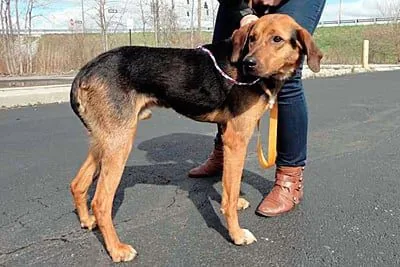
My Dog Tucks Their Tail Between Their Back Legs
There's only one interpretation for this kind of tail movement in a dog: fear. The more scared they are, the more they'll tuck their tail between their back legs, pressing it against their belly as much as possible — our dog may tremble if the fear intensifies.
If we notice our dog tucking their tail between their legs, it's because, for some reason, they're afraid or sense something bad could happen. For example, if we're out walking and, on passing another dog, they tuck their tail, it's because they're afraid of the other dog, of interacting with them.
In these cases it's best to relax them, tell them to sit and speak to them entirely calmly and steadily, so we can carry on walking as if nothing had happened. Dogs pick up on our nervousness, and if a scared dog sees us nervous, they'll get even more scared.
Pain in dogs is also shown through their tail — if our dog has their tail between their back legs, tucked away, they may be suffering pain somewhere in their body.
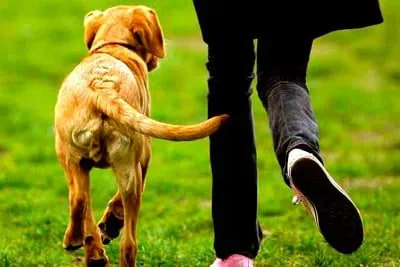
What a Half-Raised Tail With a Side-to-Side Movement Means
This kind of tail movement shows the dog is happy and content, though it also shows, to a degree, their level of excitement. This is possibly the most common tail movement in the canine world. Without doubt, it's a joy for any human to see their canine life companion happily wagging their tail.
When our dog does some mischief and knows it, they might also approach us a bit sheepishly, doing this same tail movement. A mix of "I've been naughty, but I know you love me a lot and I'm happy, so I'm coming over to you very slowly but wagging my tail like this".
What a Lowered, Still Tail Means in Dogs
When we see a dog standing, with their tail lowered and still, we're looking at a calm, relaxed dog, or a dog waiting, but relaxed. It's tail movement that tells us they're relaxed, since when excited, they wag it.
Given they're not tucking it between their legs, we should read this as them being calm. It's a very common posture, since plenty of dogs walk calmly with their humans holding their tail this way.
Do All Dogs Wag Their Tail the Same Way?
Yes and no — we all know there are plenty of breeds who, by their own genetics, have their tail held erect, but that doesn't mean they're always tense or on alert. It's simply that their tail sits that way, full stop.
It's also possible they've suffered a tail mutilation, since we know there are plenty of irresponsible people out there. If the tail is docked, its movement can't be predicted, even if a small bit remains and moves.
These tail movements and their meaning are broadly attributed to dogs with a lowered, moving tail, being a very healthy way of expressing themselves with other dogs, as well as helping them keep their balance. Let's not forget the tail is part of a dog's spine.
IMPORTANT: This article is for informational purposes only and does not constitute veterinary, nutritional or behavioural advice. Every dog is different, and only your trusted vet can advise you on its specific needs.