 Care
Care
What Is Brachycephalic Syndrome?
Many dogs with what we know as a flat or short snout (the literal meaning of the word "brachycephalic") are affected by the well-known brachycephalic syndrome, which, broadly speaking, makes breathing harder for them.
This problem arises from certain abnormalities in the dog's oronasopharynx area, making breathing compromised and even producing sounds very similar to snoring. Let's take a deeper look at this.
My Dog Has Trouble Breathing: Types of Abnormalities
There are four types of physical abnormalities that make up brachycephalic syndrome in our dog. Within these, they can be classified by how mild or severe they are.
The most common causes are:
- Stenotic nares (a nose with markedly narrowed nostrils).
- Elongated soft palate (an overly long soft palate, which can end up blocking the entrance to the epiglottis)
- Everted laryngeal saccules (soft physiological structures that get pulled into the airway toward the trachea, making airflow harder).
- Tracheal hypoplasia (a narrower-than-normal trachea).
Any of these can make it harder for our dog to breathe, especially when running, playing, exercising, or when it's very hot. They don't all need to happen at once.
Symptoms of Brachycephalic Syndrome
The main symptoms shown by a dog with brachycephalic syndrome are:
- Difficulty breathing (dyspnea).
- Exercise intolerance.
- Inspiratory and expiratory snoring sounds (stridor and stertor, respectively).
- Blue tongue and mucous membranes (cyanotic) in cases of severe acute crisis.
- Difficulty swallowing.
- Greater susceptibility to heatstroke.
- Nausea or vomiting.
- Adopting an abnormal posture (orthopneic) to breathe better Collapse
How to Know If My Dog Has Brachycephalic Syndrome
The vet will review your dog's medical history and perform an initial physical exam. If they consider that, based on the diameter of its nostrils or a possible abnormal structure in the oropharynx or nasopharynx area, its breathing could be compromised, they'll consider studying the anatomy of that area.
For this, the animal may need to be sedated to observe the soft palate's movement while breathing, along with the laryngeal saccules and other structures. So, if you suspect your furry friend may have this syndrome, don't hesitate to take it to the vet.
Is There a Treatment for Brachycephalic Syndrome?
Treatment to eliminate breathing problems in dogs with brachycephalic syndrome usually involves surgery.
In the operating room, excess tissue can be removed after determining which structures are affecting its breathing. So, for example, part of the soft palate or the excess tissue in the nostrils can be trimmed to improve airflow. The laryngeal saccules can also be removed so they don't obstruct the airway.
Some specialized clinics perform this surgery with laser technology, which avoids stitches and makes recovery after the procedure much simpler. But it can also be done perfectly well with sutures and a conventional surgical kit.
The vet may prescribe corticosteroids for our pet to take, to reduce over a few days the inflammation this syndrome can cause, making surgery easier.
If diagnosed at an early stage, it will have better odds of overcoming this syndrome. Either way, surgery is always beneficial for the animal, since it considerably eases its breathing.
Brachycephalic Dog Breeds
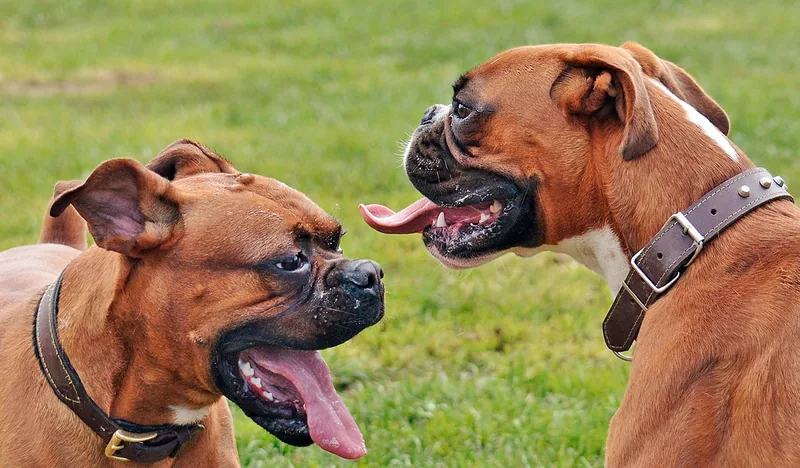
The breeds considered brachycephalic would be:
- Boxer
- Staffordshire Bull Terrier
- Cavalier King Charles Spaniel
- Pug
- Shar Pei
- Shih Tzu
- Pekingese
- French and English Bulldog
- Boston Terrier
- Lhasa Apso
There may be a few more breeds depending on the country of origin, but those are the main ones. With age, any of the abnormalities described above can become more pronounced in these dogs and cause problems. So if our pet doesn't show respiratory symptoms at first, that doesn't mean it won't eventually develop them, resulting in what we know as this syndrome.
Tips
Some symptoms of brachycephalic syndrome can be limited by keeping the following tips in mind, if it's one of the breeds described above:
- Try to keep your dog from getting stressed or doing intense physical exercise.
- Avoid heatstroke and long summer walks.
- Make sure its diet is balanced and it's not overweight.
- Instead of a collar, use a harness to avoid pressure on the trachea.
- Keep its nostrils clean so it can breathe better (check it doesn't have excess mucus).
By following these recommendations, we can reduce the severity of the symptoms this syndrome brings, but we'll never be able to prevent what is a physical and genetic abnormality or malformation.
IMPORTANT: This article is for informational purposes only and does not constitute veterinary, nutritional or behavioural advice. Every dog is different, and only your trusted vet can advise you on its specific needs.