 Care
Care
What Is Vitiligo and How Does It Affect Dogs?
In a nutshell, vitiligo in dogs is hypopigmentation. It's not a very common disease in this species. In fact, there's confusion between this condition and nasal depigmentation, since the symptoms of both conditions are similar.
Given that this is an uncommon condition, one that's also easy to confuse with another, reaching a diagnosis isn't always straightforward. To complicate matters further, there's currently no effective treatment against it. But let's take a detailed look at how to identify it and what we can do if our dog has it.
What Is Vitiligo?
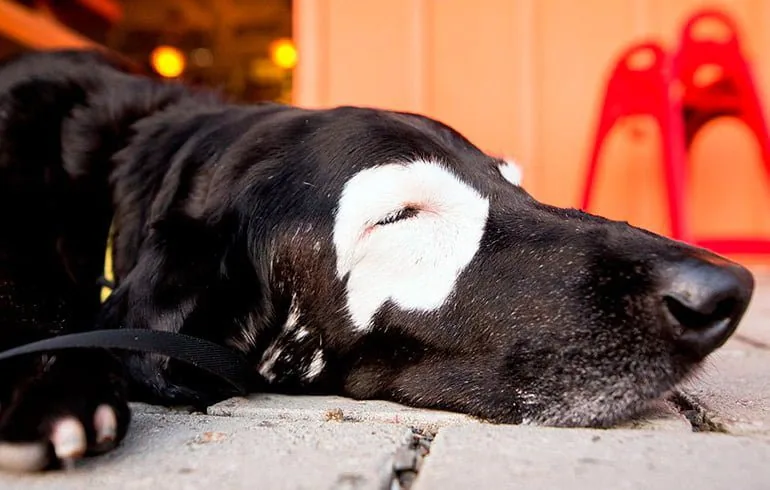
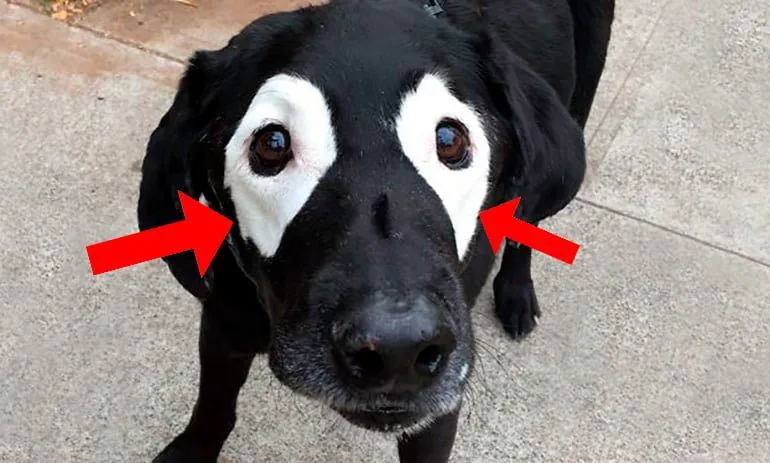
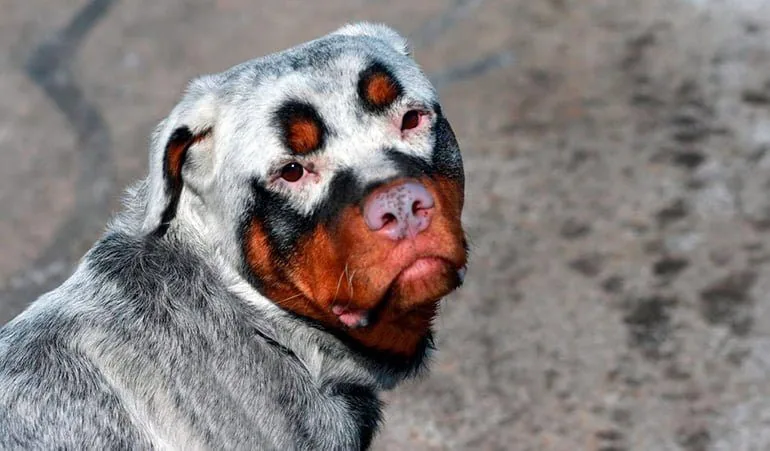
Vitiligo's fundamental characteristic is the depigmentation it causes in the skin and fur. This becomes most visible on the face. Especially around the snout, on the lips, on the nose, or even on the eyelids. In addition, vitiligo is a progressive disease.
Affected dogs are born perfectly pigmented. But as they grow, the coloring in the areas mentioned gradually lightens and loses intensity. For example, a dog born black will turn a chocolate-brown color.
Why Does Vitiligo Occur in Dogs?
Since vitiligo is an uncommon disease, the truth is there's still little information available on its causes. Some theories suggest it could be due to an autoimmune problem. In this type of disorder, the immune system generates cells that attack the body itself.
Specifically, anti-melanocyte antibodies are discussed. Melanocytes are the cells whose function is to produce pigments. For example, they're the cells providing the dark coloring of many dogs' noses. If antibodies against them exist, this means melanocytes will be destroyed.
This way, without melanocytes, coloring is compromised. The result is depigmentation. Finally, keep in mind some experts suggest nasal depigmentation could be a form of vitiligo.
Which Dogs Get Vitiligo?
What's still unknown about vitiligo makes it impossible to establish which dog breeds are more or less prone to it. But, given its possible link to nasal depigmentation, breeds affected by this condition may have a higher chance of developing vitiligo.
These would be Afghan Hounds, Samoyeds, Irish Setters, English Pointers, Poodles, white-coated German Shepherds, Dobermans, etc. In some breeds like the Siberian Husky, Labrador, or Golden Retriever, a disorder occurs that can be confused with vitiligo.
It's called snow nose. It involves a lack of pigmentation in the nasal area. In this case, it's normally not total. It's only noticeable during winter, and coloring generally returns with the arrival of spring. Hence its name.
What Symptoms Does Vitiligo Cause in Dogs?
The only symptom a dog with vitiligo will show is a lack of pigmentation. This is seen, mainly, on the face. Specifically, on the eyelids, the nose, and the lips. It can be more or less obvious. Otherwise, the dog won't show any other sign of illness.
How Is Vitiligo Diagnosed?
To find out whether a dog's depigmentation is due to vitiligo, samples need to be taken and sent to the lab for a pathology study. Of course, this is a procedure only the vet can handle.
So, seeing this professional becomes mandatory. This lab test is what will allow vitiligo to be identified, confirmed, and, this way, told apart from nasal depigmentation.
What Is the Treatment to Cure Vitiligo?
Vitiligo is a condition that, as of today, has no treatment. In principle, this disease's main problem is limited to the cosmetic realm. This doesn't prevent the dog from living a normal life. Only purebred dogs taking part in dog shows could be affected.
In these competitions, vitiligo or nasal depigmentation are considered a defect. We can't treat vitiligo, but we do need to prevent sunburn in the areas that have been left unprotected by pigment.
To do this, we won't expose the dog to direct sunlight. During the hot season, we can turn to using sunscreens. Of course, always following the vet's prescription and using products suitable for use on dogs.
Bibliography Carlson and Giffin. 2002. Manual práctico de veterinaria canina. Madrid. Editorial el Drac. Rejas, Juan. Vitíligo. dermatologiaveterinaria.unileon.es.
IMPORTANT: This article is for informational purposes only and does not constitute veterinary, nutritional or behavioural advice. Every dog is different, and only your trusted vet can advise you on its specific needs.