 Care
Care
My Dog Has White Gums, Are They Sick?
By looking at our dog's mouth, we can learn more than we might think about their health, catching conditions early. Would you like to know how to spot them?
We'll focus on the color of the gums — if we notice our dog's tongue or gums look white, it can be a warning sign. Because of this, we should pay attention to any change in color of these mucous tissues.
Let's take a closer look at what can cause this unusual discoloration and when it should be considered a warning sign about their health.
What's the normal color of a dog's gums?
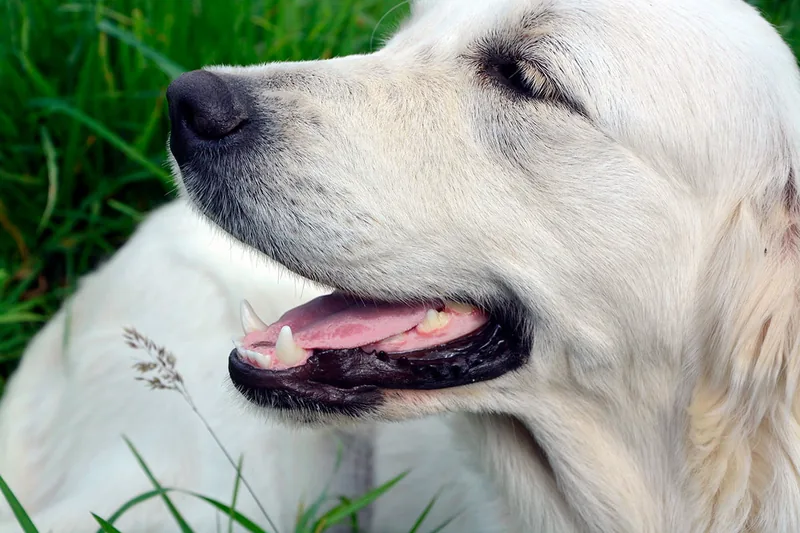
Gum and tongue color varies from dog to dog. Generally, healthy-looking gums show:
- A pink color. This means blood pressure, the dog's nutritional status, and dental health are all appropriate. If we've just come back from a walk and our dog has done intense exercise, we might notice a stronger pink color — if so, we should wait a few minutes and check again.
- They're moist and look shiny and smooth, with no bumps or signs of inflammation. They should also feel soft to the touch, not sticky.
- Pigmented gums (with small brown spots) shouldn't worry you, unless they've appeared suddenly or show raised areas. There are also some breeds, such as the Chow Chow, Akita Inu, or Shar Pei, that naturally have bluish-black gums and tongue, without this being due to any condition.
A very simple test you can do at home to get an initial sense of blood circulation is the capillary refill time (CRT) test, which involves pressing a finger against your dog's gum tissue and seeing how long it takes to regain its color. When pressed, that area turns white, but it should return to its usual pink shade in under 2 seconds. If not, it's a good idea to let your vet know so they can properly examine the dog and check for any issues.
If you notice your dog's tongue and gums are whiter than usual, be careful, since it could be a sign of illness. Similarly, bluish, deep red, or very yellow gums, which we'll cover at the end of the article, can point to various types of conditions requiring veterinary attention.
Why do the tongue and gums turn white?
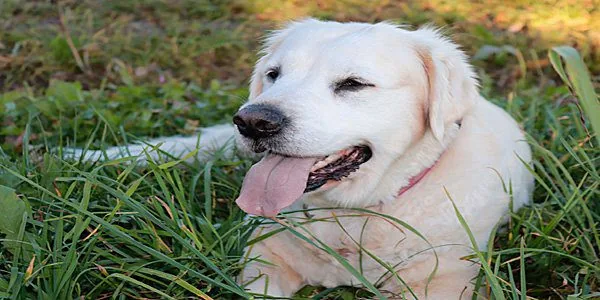
A dog with a white tongue and/or gums often has low blood pressure or anemia. Both conditions are symptoms that shouldn't be ignored, since they indicate the dog's health may be compromised.
Dogs need iron to produce hemoglobin, the protein that gives blood its characteristic red color and is responsible for carrying oxygen from the lungs to the rest of the body.
When there's a deficiency and fewer red blood cells than needed, the tongue and gums can look much paler. In these cases, bloodwork, along with other diagnostic tests, will be essential to determine the underlying cause and start proper treatment.
The vet will also tell us what we can do at home to help our dog regain their health, reviewing and improving their diet so it includes nutrients that support red blood cell production.
This extra intake of iron and vitamins will help their body recover more easily. Although anemia tends to be the most common explanation, pale tongue and gums can also be due to
Could my dog be sick?
As you can see, a white tongue and gums can be a sign of health problems and/or disease. To summarize, let's go over the possible differential diagnoses linked to this symptom.
Anemia, which can have three different causes
- Blood loss: Internal or external bleeding, due for example to gastrointestinal ulcers, parasites, etc. Sometimes this loss is small in amount but occurs chronically over time.
- Insufficient red blood cell production: Due to intrinsic bone marrow disorders or secondary causes such as iron deficiency.
- High red blood cell destruction (hemolytic anemia): can be immune-mediated, where the body attacks its own cells, or due to other factors: drugs, blood parasites (e.g., babesiosis), medications (e.g., paracetamol), or diet (e.g., onion).
Poisoning from zinc, rat poison, etc.
This is usually accompanied by other signs such as an increased heart rate, trembling, hyperactivity, extreme thirst, panting, or even seizures.
Dehydration
Severe dehydration will cause reduced blood flow to the mucous membranes, making them look paler and drier — this can be confirmed by checking the skin tent (skin fold) test.
Shock
This can be hypovolemic in origin, related to some of the anemia causes mentioned above; obstructive, due for example to a pulmonary thromboembolism; cardiogenic; or lastly, distributive, due to blood vessel changes linked to anaphylactic reactions or sepsis.
In most cases, these aren't fatal conditions if treated in time. If your dog is on medication or has accidentally ingested certain drugs, they can also have a reaction affecting the color of their gums.
Other possible colors linked to health conditions
Lastly, a brief overview of other possible colors we might notice in our dogs' mucous membranes and what they mean.
- Yellowish: this coloring is known as jaundice, and usually appears with liver problems, though it can also be linked to the hemolytic anemias mentioned above.
- Deep red (hyperemic): common in heatstroke and, generally, in the early stages of any type of shock. We'll also see this in carbon monoxide poisoning and periodontal disease.
- Bluish: known as cyanosis, this coloring is due to lack of oxygen, caused by hypoventilation or poor gas exchange at the alveolar level: airway obstruction, pulmonary edema, tetralogy of Fallot, or severe heart failure.
- Spotted: with small red spots, known as petechiae — tiny areas of bleeding that can occur with liver conditions.
What's important is that, at any abnormal color, you take your dog to a specialist as soon as possible.
IMPORTANT: This article is for informational purposes only and does not constitute veterinary, nutritional or behavioural advice. Every dog is different, and only your trusted vet can advise you on its specific needs.