 Training
Why Do Dogs Lower or Tuck Their Tail?
Dogs use their tail to keep their balance, spread scents, and as a means of communication. In fact, both its shape and the movement they make with it tell us how they feel.
In this sense, when a dog has their tail between their legs, it's likely because they're uncomfortable or scared. Have you noticed this behaviour in your furry friend and want to know more about what could be going on? In this post we cover this topic in detail.
A Communication Tool
Our canine friends use their body to communicate, sharing precisely what they feel or think. Even so, their signals sometimes go unnoticed by us, which is why we need to watch them closely.
In a way, the tail's position serves the same communicative function as human gesturing. It would be the equivalent of a smile, a look, or a slight tilt of the head.
Generally, the tail's height is another element worth paying attention to. It's an emotional thermometer that gives us a key clue about our canine companion's mental and emotional state.
Movement is another key. This will be faster or slower depending on their excitement level (the faster, the more excited). If the movements are short and frantic, watch out! It could be a sign of tension, which could trigger an attack or a flight.
The direction a dog wags their tail towards also matters. According to a study published in the journal Current Biology, the side it points to would be linked to their brain hemispheres.
That's why, on your next walk together, take a look at your dog's tail and try to work out what's going through their head. If they wag it to the right, it's likely down to a positive stimulus, such as a play ball. If they wag it to the left, they could be facing a threatening situation.
A Combination of Factors
Our dog's tail is a good indicator of their emotional state, but don't forget every dog has different physical characteristics and personalities. For a proper assessment, it matters to evaluate several factors along with the breed's own characteristics.
A German Shepherd, for example, will carry their thick, long tail differently to a Dalmatian, with their thin, sturdy tail. This, in turn, will look different from the thick, curled tail of an Akita Inu. Even so, all of them share common traits when it comes to communicating with this hugely important body part.
Not Everything Is What It Seems
Science keeps advancing when it comes to canine behaviour, helping us interpret — or reinterpret — what we thought we knew about their behaviour.
When we picture our dog with a lowered tail or tucked between their legs, we're sure they're having a hard time in some sense. What we don't picture is that, when our dog wags their tail from side to side, they could be feeling just as bad.
Popular belief holds that when a dog wags their tail this way, it's always because they're happy. Even so, that's not necessarily the case. We now know it can also be linked to a degree of insecurity, fear or nervousness.
Can a Lowered Tail Point to a Health Problem?
If your dog keeps their tail lowered continuously and had never done so before now, it's time to take them for a check-up with the vet, to make sure they're in good shape or see whether they have some health problem.
In some cases it could be down to hip dysplasia, a painful condition that can affect dogs of any age. The cause is usually a malformation of the hip joint. So now you know — don't take risks, and take your dog for a check-up.
The Tail Between the Legs — What Causes It?
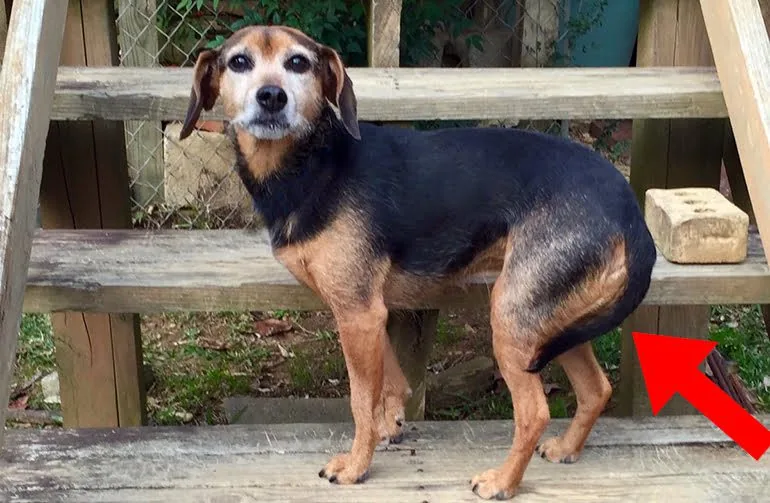
One of the most common behaviours among dogs is lowering their tail and tucking it between their legs with a pained expression.
Biologist Dr Nathan Lents, of the City University of New York, states this posture translates into an "apology bow". But that's not all.
The dog's ancestor is the wolf (Canis lupus). In this sense, genetic inheritance carries considerable weight when it comes to our canine friend's behaviour.
That's why, when a dog tucks their tail between their legs and lowers their head, they're showing submission. In their past, this was a way of pleading with the pack leader to stay within the group, despite bad behaviour.
Next time your best friend shows this behaviour, remember they're asking you, please, — their leader — not to kick them out of your family — their pack.
What's more, they're a species that "craves harmonious integration into the group", since they're extremely social and feel miserable living alone.
Chemistry Is the Answer
To unravel the messages your dog sends you, the tail's height also gives us privileged information.
Curiously, a higher or lower tail has to do with the perianal glands, located in the anal area. These produce a substance that, besides serving a lubricating function, gives off a distinctive, personal scent.
You've perhaps seen your dog interacting with a more dominant one and, instantly, lowering their tail. At that moment they'll be trying to show submission and stop their scent, loaded with pheromones, from reaching their companion.
On the other hand, if they tend to dominate others, you'll notice they raise their tail proudly when meeting their own kind. If they habitually carry their tail high, you're looking at a dog who feels safe and comfortable in their surroundings, who wants to be seen and recognised by others.
The First Step Is Recognising It
When your dog lowers their tail or tucks it between their legs because they've destroyed your favourite shoes, rest assured they know perfectly well they've done something they shouldn't have. If it's any comfort, this first step is crucial for a possible, hoped-for change in behaviour.
And remember, if you notice any abnormal change in their tail's position, don't hesitate to see the vet as soon as possible. If they're healthy, consult an animal behaviour expert who can help you understand what could be going on with your life companion.
IMPORTANT: This article is for informational purposes only and does not constitute veterinary, nutritional or behavioural advice. Every dog is different, and only your trusted vet can advise you on its specific needs.