 Care
Care
Why Does My Dog Bite Its Tail?
A dog biting its own tail might seem like funny behavior to us. And it can be, if we see it in a puppy at a specific moment. On the other hand, repeatedly biting its tail indicates a problem exists.
Sometimes it's due to physical discomfort in the area, but the cause can also be found in psychological issues. Vets and canine behavior experts are the professionals responsible for addressing this behavior.
Dogs Chase and Bite Their Own Tail
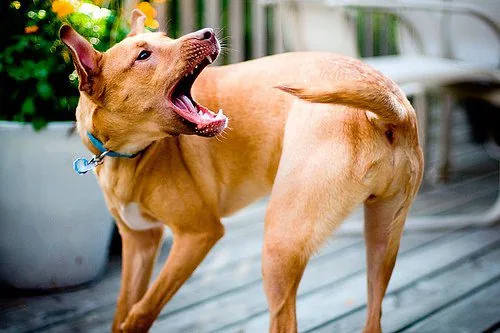
It's not unusual for dogs to start chasing and biting their own tail. They start by staring at it fixedly for a few seconds, then suddenly lunge at it to grab it with their mouth and chew on it. This attack makes the tail move, pulling away and causing the dog to start chasing it in circles around its own body.
An episode like this isn't pathological at all. It's more common to see in puppies. Separated from their mother and siblings and settling into a new home, they can feel, especially during the first few days, somewhat disoriented. As part of exploring their surroundings and seeking stimuli, the tail comes up as just another object.
Outside these kinds of one-off episodes, obsessively chasing and biting the tail indicates a disorder that needs addressing. The first step is seeing a vet in case it's due to a health issue. Only if the dog is healthy can we consider a psychological disorder. In that case, see an ethologist or canine behavior expert.
Common Parasites in Dogs
Sometimes, the dog chases and bites its tail because it feels itchy in the area. A common cause of anal itching is internal parasites. Some, like tapeworms, release fragments resembling grains of rice that contain their eggs. We can spot these around the anus and the base of the tail.
Even if we don't detect parasites, if our dog is a puppy, hasn't been dewormed in a while, or we don't know if it's ever been dewormed, we should consider the possibility of an infestation. The vet will give us the most suitable product to eliminate the parasites. On another note, the lower back area is a typical location for fleas.
Chewing there is one of the signs of their presence. Likewise, it's the vet who needs to prescribe a dewormer and how often to give it. Keep in mind some dogs develop an allergy to flea saliva and will suffer skin damage in the area, along with hair loss.
Anal Glands in Dogs
Anal glands are small sacs located on either side of the anus. They empty with each bowel movement, lubricating stool and releasing each dog's characteristic scent. When for some reason they don't empty, or don't do so fully, they can become inflamed and even infected.
This causes discomfort the dog will try to relieve with its mouth. Of course, a vet visit is needed. In dogs prone to this problem, manually emptying the glands regularly becomes necessary. A vet can do this, or teach us to do it at home.
Bone and Neurological Problems in Dogs
A dog with a tail fracture or some type of peripheral nerve injury can feel discomfort leading it to chase and chew on its tail. If we suspect this kind of damage, we should see a vet.
Tumors in Dogs
A behavior like tail-biting can be caused by an intracranial tumor or hydrocephalus, which is fluid buildup in the brain. Some illnesses like meningoencephalitis could also cause the dog to fixate on its tail.
On another note, illnesses like distemper or Aujeszky's disease have been identified as causes of tail mutilation in some dogs. Either way, all these disorders require veterinary treatment.
Behavioral Problems in Dogs
If tail-biting becomes a habit, once physical problems have been ruled out, we can consider we're facing a behavioral disorder. Specifically, this would be a stereotypy, defined as behavior that repeats obsessively in the same sequence with no function.
In some dogs, this becomes so severe they end up causing terrible wounds on their tail. That's why it's important to understand this isn't a game, and that it needs to be stopped as soon as possible. Keep in mind this won't be solved with punishment. If the dog does this, it's because it can't control it. It's its way of expressing frustration.
That's why the behavior will stop if we eliminate the source of its discomfort and don't pay attention to it while it's happening, to avoid reinforcing it. This problem can affect any dog, but a predisposition has been found in German Shepherds and Bull Terriers.
Resolving Canine Behavioral Problems
Dogs need certain basic living conditions for their physical and psychological wellbeing. If these aren't met, behavioral problems arise as a manifestation of the stress they're going through. So, to prevent tail-biting, follow these tips:
- Your company is essential, since a dog is a social animal. This doesn't mean spending 24 hours a day together, but it also can't always be alone, much less tied up or locked away.
- Give it physical stimulation, but also mental, through walks, outings, brain games, exploration, and so on. This way, you fight boredom and frustration.
- Socialize it, meaning expose it to all kinds of stimuli, and train it at least in basic commands. Always keep the rules you set consistent. This reduces its stress and helps positive, fear-free learning.
- Set a schedule. Dogs need to live in a predictable environment.
- Of course, give it proper nutrition, clean, fresh water on demand, groom it, and take it to the vet both for regular checkups and to treat any symptoms.
These measures can resolve mild or early-stage behavioral disorders. If you follow them and your dog doesn't improve, or its behavioral problems are severe, remember an ethologist or canine behavior expert is the professional to turn to. Sometimes medication is also prescribed.
Bibliography Carlson and Giffin. 2002. Dog Owner's Home Veterinary Handbook. Madrid: Editorial el Drac. Signes, Miguel Ángel. 2011. "Stereotypies in Canis familiaris." Portal Veterinaria.
IMPORTANT: This article is for informational purposes only and does not constitute veterinary, nutritional or behavioural advice. Every dog is different, and only your trusted vet can advise you on its specific needs.