 Training
Why Does My Dog Bite Me While Playing?
Picture this: you're enjoying a fun day with your dog, but suddenly they start snapping at your hands or feet. If this has happened to you, you surely wondered: why does my dog bite me while playing?
Biting behaviour is normal in puppies, but it could hide something more than just a growth phase. Find out the main reasons below.
The Importance of Playing With Your Dog
Playing with your dog isn't just fun for both of you — it also has other benefits. Through play, your dog develops their intelligence, since they learn behaviour rules and discover how to interact with their surroundings. What's more, they get exercise as they gain physical skills and abilities.
Play also lets your dog socialise, whether with humans or other pets. This way, they channel their instincts in a positive way, release energy and make new friends. On top of all this, the bond between you and your dog strengthens when you spend time together and have fun.
These entertaining moments are affected if you constantly get bitten. What leads your dog to behave this way? There are several reasons: stress, pain or illness, fear, poorly channelled instincts, among others.
Aggression in Female Dogs
If your female dog has just given birth, they may behave aggressively at first, even towards family members. Maternal instinct drives them to want to protect their pups, and this triggers nervousness and anxiety.
This behaviour disappears within a few weeks. Make sure the mother has everything she needs, and avoid picking up the pups or getting too close to her nest for long periods. What's more, make sure the canine family is set up somewhere comfortable in the house, away from constant foot traffic and annoying noises. Likewise, keep unfamiliar people away during this stage.
If you need to get closer to check on the pups, convince the mother to move away using edible rewards she likes, such as chicken or her favourite food.
Fear-Based Bites
A fearful dog will bite in response to any stimulus that triggers their anxiety. This behaviour tends to be common if you've just adopted them, especially if they were a stray dog, since they often suffer mistreatment.
Your adopted dog's character should change after a few days, once you give them time to feel safe and get to know their surroundings.
Another reason for feeling fear is annoying noises, such as fireworks or loud music. Fear-based aggression is triggered in these cases, even when you try to calm your dog with games.
How do you correct a dog who bites out of fear? Identify what triggers their reaction. Perhaps they feel insecure when you make sudden gestures, put your hand on their head, or use a toy that makes a particular sound. Avoiding the stimulus and choosing gestures more friendly to your dog will help them feel safe.
Bites From Hunting Instinct
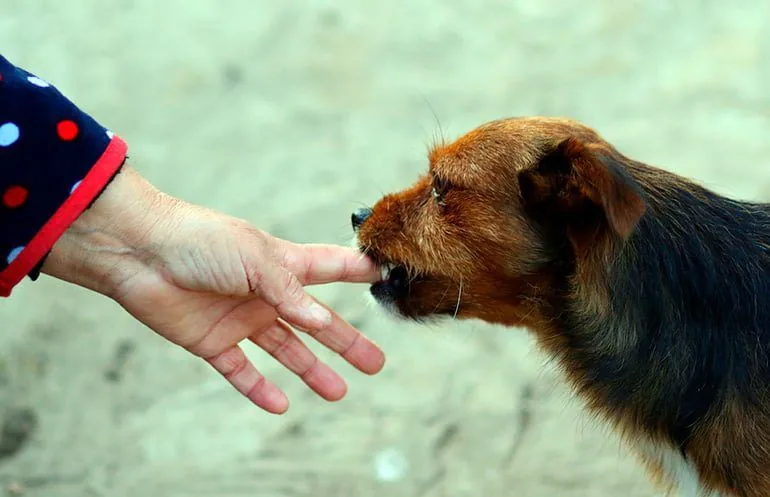
Despite being domesticated, plenty of dogs keep typical hunting behaviours, which can even show up in gestures such as raising a front paw. If your dog is from a hunting breed, it's very likely they bite for this reason, to the point of turning into predatory aggression.
Does your dog lunge at cars, people and dogs for no apparent reason? Then you need to change this behaviour immediately. Start by training them, whether on your own or hiring a canine specialist — this way, it'll be easier to control their instinct.
Help them channel their impulses through search games and physical activity. As a precaution, use a lead and harness when walking them.
Bites From Pain or Illness
If you've wondered "why does my dog bite me while playing?" more than once, see your vet to rule out illness or injury.
In case of an injury, the violent reaction will trigger when you touch a certain area of the body, while an unwell dog may bite to get you to move away from them. Don't bother your dog, and schedule a vet appointment as soon as possible.
Sense of Ownership
Some dogs show plenty of aggression when other pets or people try to take their belongings, such as toys, or use their beds and food bowls. Biting or barking is a way of keeping the "invader" away, and it can become a problem at home.
This behaviour is called resource guarding, and needs special training from a professional.
Stress-Related Bites
Stress can wreak havoc on your dog's personality. Nervousness, destructive behaviour, separation anxiety, among other problems, are some of the consequences.
If your dog doesn't get proper stimulation during the day and develops stress, they'll try to burn off all their energy — this is why you might wonder "why does my dog bite me while playing?" Other causes of stress include exposure to situations they can't control or that scare them, such as contact with other dogs, annoying noises and so on.
The first thing you should do is identify what triggers stress in your dog. Avoid stimuli that make them nervous, let them get physical exercise, and provide a pleasant environment where they can feel calm.
If you don't know how to control the stress, see a vet and a professional dog trainer.
Biting in Puppies
Puppies use biting as a way of exploring the world — it's a healthy, normal behaviour. What's more, it lets them ease the pain caused by their teeth coming in. Even so, from three weeks old, it's necessary to manage this behaviour to stop it turning into a problem.
Get chew toys, put them within reach, and praise them every time they use them. When they bite you during play, don't scold them. Let out an exaggerated yelp and step away from them; repeat this as many times as needed, so the dog links their bite with the end of the game.
Encourage their interest in outdoor activities and let them explore safely, always alongside their chew toys.
IMPORTANT: This article is for informational purposes only and does not constitute veterinary, nutritional or behavioural advice. Every dog is different, and only your trusted vet can advise you on its specific needs.