 Care
Care
Why Does My Dog Lift Its Front Paw? Meaning
Understanding your dog's body language is essential for meeting its needs and knowing if it's trying to tell you something. The movement of its ears, tail, and even the position of its paws matters — you've surely wondered "why does my dog lift its front paw?"
It's common to try to interpret your dog's gestures based on human standards, but it has its own way of communicating. Discover in this article everything the gesture of lifting a paw can mean.
Your Dog's Body Language
Your dog barks, howls, wags its tail, lowers its ears, takes on positions that seem submissive or threatening to you — but do you know what these gestures actually mean? If you've ever thought your dog feels guilty, or gotten bitten seemingly without reason, then you're not correctly interpreting its communicative signals.
Analyzing what each of your dog's gestures conveys can be tricky — we recommend seeing a professional trainer if you frequently don't understand what it's trying to tell you. This way, it'll be easier to meet its needs, and your relationship together will improve.
So, what does it mean when a dog lifts its front paw? This gesture can be interpreted in 7 different ways. Let's look at them in depth.
Fear
It's often mistakenly interpreted that dogs recognize when they're being punished and feel guilty about it, due to the seemingly submissive gestures they make to get us to stop scolding them.
This idea is wrong, since guilt is a human concept, and dogs only show submission toward other members of their own species. Does your dog curl into a ball, expose its belly, or lift its paw and lower its head when you scold it? Then it's feeling fear and trying to get you to stop, since it's very scared.
Expressing Discomfort
Some dogs play rougher than others, and this isn't always pleasant for their playmates. If your dog is playing with another dog and one of them lies down and lifts a paw, it means it's not feeling comfortable.
What's the goal in this context? By lifting its paw, the dog is signaling to its playmate that it's scared and wants to stop playing.
Play Bow
Imagine this scenario: your dog approaches you while you're watching TV, lifts its front paw, then stretches both out, lowers its head, and raises its tail. Does this sound familiar? This posture is called a play bow — it's inviting you to have fun together!
Your dog will repeat this posture with other people or dogs, whether lowering its head or tilting it. This is a common behavior that also shows up if you're holding its favorite toy — it knows it's playtime!
Learned Behavior
If you react by petting your dog when it lifts its paw and places it on you, it'll learn this gesture leads to petting, and it'll repeat it whenever it wants affection. This way of seeking attention is only done toward humans, and it's learned, not instinctive.
On top of that, some dogs lift their paw while being petted, which means they want you to keep giving them affection.
Training
Another reason your dog might lift its paw is that you've taught it to do so. Teaching tricks is a lot of fun, but your dog also recognizes that giving you its paw leads to some kind of reward, whether affection or dog treats.
For this reason, it might lift its paw as a way of asking you for a reward. Although this can be fun at first, we recommend only giving the treat when you've actually asked for the paw — otherwise, you won't be properly reinforcing the obedience command.
A New Scent
Smell is one of the most important senses for dogs. It gives them a huge amount of information about their surroundings — the presence of food, other dogs or animals nearby, a female in heat, the arrival of a familiar human, among other details, like the individuals' sex.
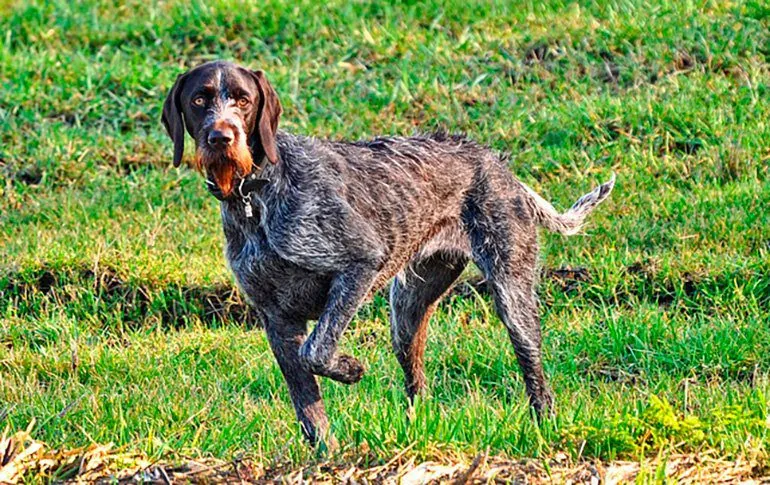
During walks, your dog lifts its front paw when it comes across a scent that strikes it as curious or interesting. This doesn't mean it's hunting — it's simply an instinctive behavior triggered by identifying a scent it finds interesting, like food.
Hunting Breed
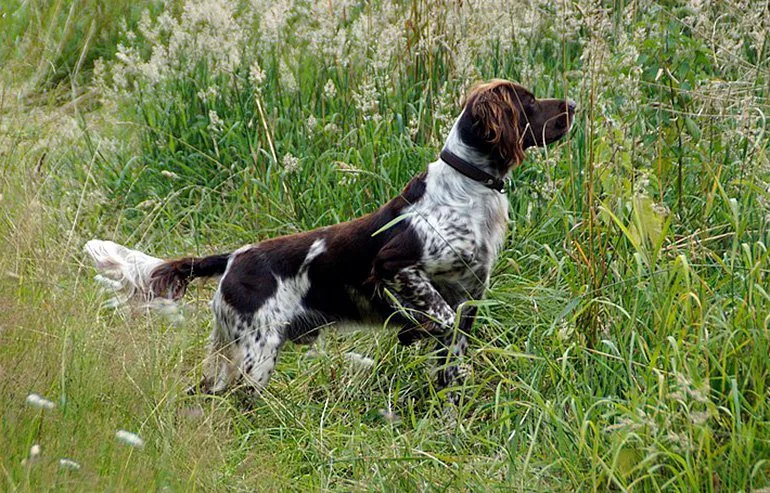
Hunting breeds show certain gestures typical of that activity. For example, if your dog is an English Pointer, a Podenco, or a Braque, to name a few, it'll lift its paw when it picks up the scent of possible prey.
The gesture of lifting the front paw in hunting dogs comes paired with a raised tail, following the tracking stance, during which they search for their prey.
IMPORTANT: This article is for informational purposes only and does not constitute veterinary, nutritional or behavioural advice. Every dog is different, and only your trusted vet can advise you on its specific needs.