 Care
Care
Why Does My Dog Eat Rocks or Sticks?
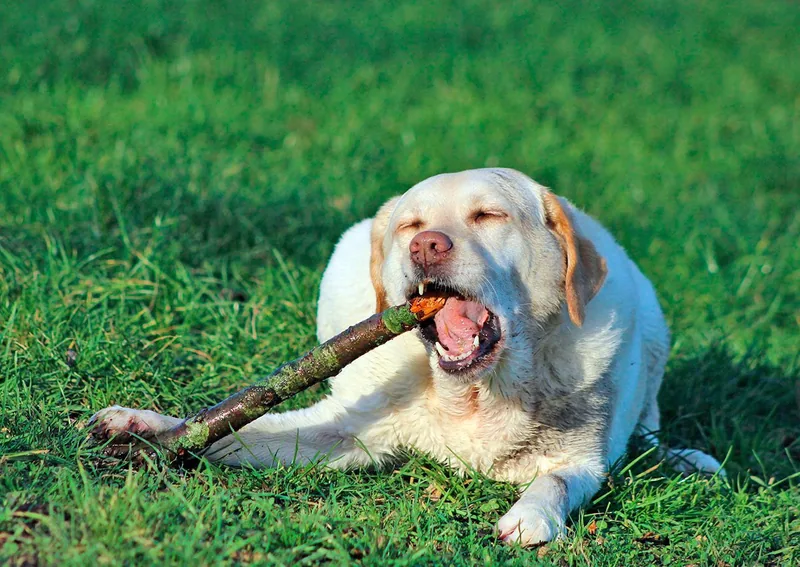
Chances are you've thrown a stick or a rock for your dog to fetch more than once, as if it were the most innocent game in the world. It's a bad habit almost all of us have picked up, since ideally we should throw a ball, toy, or frisbee, toys that can't cause it any harm.
If your dog eats sticks or rocks, you're facing a bigger problem than you might think. It's a very dangerous habit, not just for its oral health, but also for its digestive system.
Let's look at the main reasons a dog eats sticks or rocks, what dangers this involves, and how to stop it from continuing.
Is It Dangerous for a Dog to Chew Sticks or Rocks?
There are many dangers, so many that once you finish reading this article, you'll probably never throw a rock or a stick for your dog again.
When dogs eat rocks, there are two major dangers. The first is hurting their mouth or wearing down their teeth (this wear is very common in dogs used to eating rocks). These problems often lead to infections or even the need for surgery to resolve the issues caused by this bad habit.
The second danger is swallowing the rocks — after chewing on them for a while or playing with them, whether on purpose or not, they end up swallowing the rocks or parts of them. This can cause serious damage to their digestive system, potentially even causing the animal's death.
Sharp-edged rocks can cause wounds and tears in the throat, stomach, and intestines, as well as obstructions. The same happens with sticks — when chewed, splinters can cause serious problems in the mouth, throat, and intestines. You may have seen your dog at some point pass splinters in its stool after playing with a stick.
These are, without a doubt, very inadvisable habits for your dog, given the huge problems they can cause.
Why Do Dogs Eat Rocks and Sticks?
The reasons a dog eats rocks, sticks, sand, mud, etc… can be many. Here's a list of the most common ones so you can assess them against your own dog's situation:
- A medical disorder known as "pica": this is a behavioral disturbance that occurs in both humans and animals. It consists of exactly that — eating rocks, sticks, sand, etc… for no reason at all.
- Teething: if our dog is still a puppy, it's normal for it to want to chew on all sorts of things, especially while it's losing its teeth. We should prevent this and teach it to chew on its toys instead, which shouldn't pose any risk of being swallowed.
- Boredom or stress: a bored or stressed dog can have unpredictable, odd, and obsessive behaviors. From eating chunks of a wall at home to eating rocks and sticks on the street. Every dog needs daily care and attention, including an adequate amount of exercise, precisely to prevent this problem.
- Malnutrition: it's been shown that some dogs with nutritional deficiencies, especially of certain minerals, lick or eat rocks. You should check with a vet if you think this may be why your dog is doing this, so they can recommend a suitable diet.
- Bad behavior/habit: many owners don't see the danger in playing with rocks or sticks, using them daily during walks with their dogs, thinking it's a fun way to play (fetching the stick or rock). The truth is this is a habit worth avoiding, since it's better to play with balls, frisbees, or toys specifically designed for dogs, never sticks or rocks.
- Gastrointestinal disease: some dogs with gastrointestinal pain may eat rocks, since this can provide some relief, although they're obviously not aware it will harm them more than help. A vet needs to examine our dog and determine whether it has a disease or digestive ailment driving it to eat rocks.
How to Prevent a Dog From Eating Rocks and/or Sticks?
Simply by watching it. Taking a dog for a walk isn't just letting it loose and letting it run around freely without more. We need to keep an eye on it at all times, as if it were a small child — this doesn't mean we need to keep it on a leash at all times or never give it freedom, we simply need to watch it.
If we see it pick up a stick or a rock, we need to scold it so it lets go. If it doesn't let go, we obviously need to find a way to take it away and scold it so it associates picking up these objects with something it shouldn't do.
A great way to stop a dog with this bad habit from eating rocks is to buy it a frisbee or a ball. We can throw the frisbee or ball so it gets used to grabbing that instead of rocks. Over time, with a bit of training and some scolding when it tries to grab a rock, it will learn healthier habits.
- Important: never use physical punishment with your dog — instead, scold it when it does something it shouldn't, in this case picking up a rock or stick. It's more effective to use positive reinforcement, rewarding it when it listens to us.
Doing physical exercise with your dog, such as going out for a run together, or having it join you when you go out on a bike, skates, or scooter, etc… is a great way to prevent it from getting bored, besides keeping it in shape. Playing with your pet is highly recommended, since it's also a very healthy way to strengthen your bond.
IMPORTANT: This article is for informational purposes only and does not constitute veterinary, nutritional or behavioural advice. Every dog is different, and only your trusted vet can advise you on its specific needs.