 Care
Care
Teething Period in Dogs
The teething period is the stage in which a puppy develops their teeth, or swaps their baby teeth for their adult ones. Every dog goes through this process, since they're born without any teeth — which is completely normal, since teeth could seriously hurt the mother during nursing.
If you have a dog, or have had one, you'll surely remember those moments when they literally want to chew on everything, since it's a process that can sometimes be quite painful. We should be especially careful, above all with the first teeth, since they're generally as sharp as needles. Let's go step by step through all the stages of teething in dogs.
What does the teething period in puppies involve?
Dogs are diphyodont carnivorous mammals — meaning they have two sets of teeth that erupt in succession: the deciduous (baby) teeth and the permanent ones. Puppies are born with no teeth, though that doesn't stop them from trying to nibble on everything that crosses their path.
That's why it's so important to always have a chew toy on hand and teach them from a very young age that it's not okay to bite their owner or other people — they need to let off steam with their toys, not on humans, furniture, or shoes.
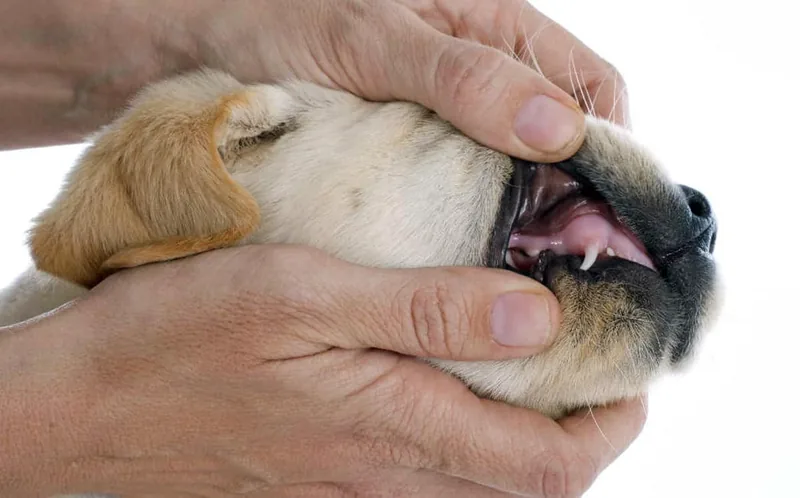
Starting around the fourth week of life is when their first teeth begin to come in. Factors that can affect the timing of eruption include overall health and nutrition, sex (females erupt before males), breed (large breeds erupt before small ones), and birth season (puppies born in summer erupt earlier).
Once all their baby teeth have come in, their mouth will have a total of 28 or 32 teeth, depending on the dog. At this stage they don't yet have, for example, premolars or molars. Baby teeth are very sharp and thin, and can easily hurt us if we play with our dog and they nibble at us affectionately.
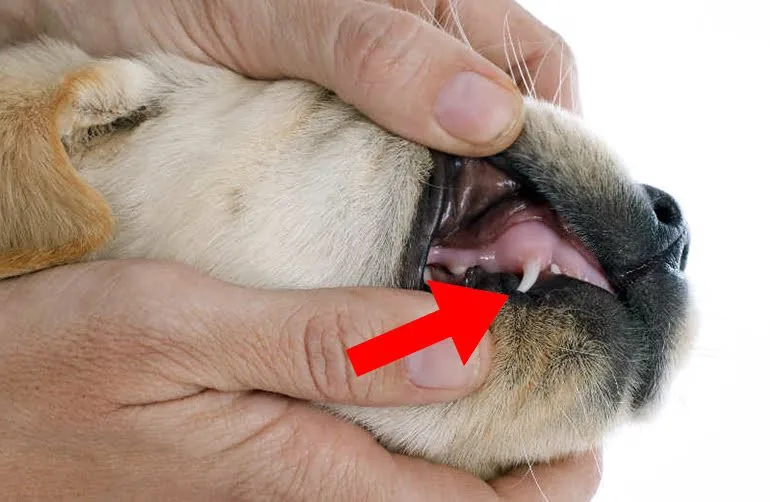
Using the dental formula, we can estimate a puppy's age based on whether their upper and lower canines have come in, the corner teeth of the jaw, the incisors, and so on.
Teething in young dogs: the permanent change
By now our puppies have all their baby teeth, enjoying life and already eating solid food (kibble or natural diets like the BARF diet). Some people think it's the baby teeth themselves that keep growing to form the permanent set, but that's not the case.
When our young dogs are around four months old, some a bit earlier and others a bit later, they'll start developing their permanent teeth. The adult teeth will start coming in, pushing out the baby teeth until they fall out.
This process can take a few months, from when it starts until they finally lose their last baby tooth and show off their permanent set. This time, we'll see the premolars and molars fully developed. Their new teeth won't be as thin or sharp, but will be much harder and more resistant.
It's completely normal for our dogs to show signs of pain, nibble on everything more than usual, whimper a little, or even have occasional diarrhea from accidentally swallowing a baby tooth. Their permanent set will have a total of forty-two teeth, well designed to last.
These are arranged forming the dental arch. Each tooth has a specific structure suited to the function it performs:
- Incisors, for gently tearing, cutting, and grooming.
- Canines, for piercing and tearing.
- Premolars, for tearing and cutting.
- Molars, for crushing and grinding.
Tips for keeping our dog or puppy's teeth healthy
Just like with us humans, a dog's teeth can come in crooked or cause deformities... which is why it's a good idea for a vet to check our puppy's mouth once most of their baby teeth have come in, and again during the transition to their permanent set. This way, if they notice any issue with deformity, infection, or a tooth trying to come in out of place, they can address it easily.
When we play tug-of-war with our dog over a toy, sock, or whatever it is (that moment when owner and dog both pull on the same object to see who gets it), we should be very careful. At least until they have their permanent set, since baby teeth are very fragile and could break easily. The teething period is something we all need to get through with a lot of patience.
When their permanent teeth are coming in, it's also not a good idea to force their bite too much, since this could cause them to come in crooked. This is a time when we can still play with them, just without yanking on things they're chewing on.
As curious as it may sound, it's a very good idea to brush our dog's teeth at least once a week, as we'll explain a bit further below.
Dental health is also part of your pet's overall health. Many diseases develop from poor oral hygiene. That's why we recommend brushing your puppy's teeth regularly from an early age, always using toothpaste made for dogs.
How to brush a dog's teeth?
Under no circumstances should you use your own toothpaste — dogs need a specific toothpaste free of substances that are toxic to them. You should buy special toothpaste from your trusted vet.
To make this process easier and more enjoyable, it's a good idea to, while playing, get our puppies used to us touching their gums and teeth, so that once they're adults, this step becomes simple. Generally speaking, dogs don't like having things fiddled with in their mouth.
There are two ways to brush their teeth. The first is using a finger glove with a bit of dog-specific toothpaste applied to it. With your index finger, clean their teeth using circular, top-to-bottom motions until they're clean. You should first show your dog the paste and the glove so they can sniff it and treat it like a game.
The second is using a toothbrush, but we need to be very careful not to hurt their gums, since they're very sensitive. Either way, we should try to make sure the dog treats it as a game... otherwise it'll be impossible to do.
Doing this once a week will be enough to give our puppy or adult dog a healthy, enviable set of teeth. Remember that, just like humans, they can develop tartar and cavities... so giving them food with sugar is absolutely off the table.
To prevent tartar buildup and let our dogs naturally clean their teeth, it's a good idea to occasionally give them a raw beef bone or knuckle bone. It's extremely important that they're raw, since cooked or boiled bones can splinter and cause choking, or even death.
And of course, don't forget that teeth can suffer if your dog eats rocks (some people throw rocks for dogs to fetch, as if they were balls). Never let your dog chew on rocks, metal sticks, etc... This will damage their teeth and, over time, lead to a serious dental problem.
Every three or four years, you can take your dog to the vet for a thorough tartar cleaning (they'll obviously need to be put under anesthesia). It's a very common, beneficial practice for your dog.
IMPORTANT: This article is for informational purposes only and does not constitute veterinary, nutritional or behavioural advice. Every dog is different, and only your trusted vet can advise you on its specific needs.