 Care
Care
Why Does My Dog Have a Cold, Wet Nose?
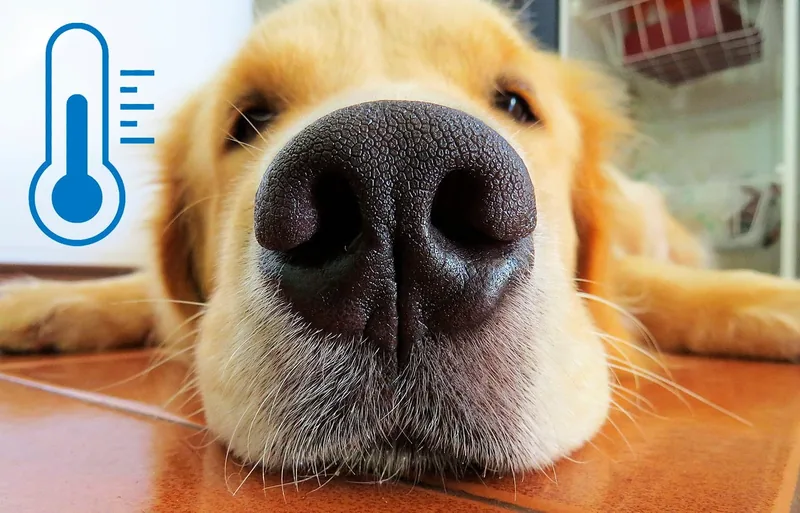
Paying attention to our dog's nose can give us information about its health, for example, if it has nasal discharge, an injury, growths, or color changes. But despite the myths still circulating about it, the nose isn't a thermometer.
So, noticing a cold nose, or on the contrary, warmer than usual, doesn't mean the dog is sick, and it definitely doesn't mean it has a fever. Below, we explain why our dog's nose feels cold to the touch.
A Dog's Nose Isn't a Thermometer
We'll say it again: although the idea that touching a dog's nose is a good way to know its temperature is still widespread among pet owners, the truth is it's not accurate. So it's not a good idea to rely on the nose to decide whether to see a vet or not. The only way to know if a dog has hyperthermia or hypothermia is with a thermometer.
A dog's body temperature can be taken with a thermometer just like the ones we use for people. It needs to be carefully inserted rectally, keeping in mind that the normal temperature for this species is higher than ours. So, between 37.8-39.2°C (100-102.5°F) is the range considered normal for an adult dog.
A temperature below about 36°C (96.8°F) should put us on alert for possible hypothermia. On the other hand, we'll talk about fever or hyperthermia when the dog goes above 39°C (102.2°F). Fever gets a lot of attention as a sign of illness, but hypothermia is equally dangerous, and in both situations, you should seek a professional's advice.
My Dog's Nose
The tip of a dog's nose is known as the "trufa" (nose leather). It can be black, brown, pink, or mottled. It's covered in skin different from the rest of the body, characterized by being thicker and rougher, both on the nose and the paw pads. Regardless of whether we feel it cold or warm, it's normal for it to be moist.
But it's just moisture — meaning we won't detect any discharge. This is due to the fluid produced by the mucous glands in the nasal cavity. This moisture helps detect smells better. Let's not forget smell is the most important sense for dogs. The moisture is what makes the nose feel cold to the touch. It doesn't indicate any illness.
Sometimes we might notice the nose warm or even dry due to various factors, like activity level, ambient humidity, the dog's hydration status, or temperature. But this doesn't mean a warm, dry nose necessarily means fever. To know body temperature, we know we need to use a thermometer.
Causes of a Cold Nose in Dogs
The mucous glands dogs have in their nasal cavity release a secretion that keeps the nose moist. This doesn't just boost the sense of smell — it also offers protection against external agents. On top of that, it's not unusual for dogs to lick their own nose, wetting it.
Just like with our own sweat, the warmer fluid from inside the body evaporates on contact with cooler ambient air. This causes cooling, which is more pronounced since this is a part of the body not covered in fur. That's why we almost always feel the nose cold.
Another example of cooling happens when a dog pants. Panting is a mechanism for self-regulating body temperature, since dogs don't have as many sweat glands as we do to cool off through the skin. During panting, evaporation happens as warm air is exchanged for cool air.
Nose Conditions in Dogs
So, a cold nose isn't synonymous with illness in a dog — quite the opposite, it's generally a sign of good health. But a warm nose doesn't necessarily mean illness either. So there's no need to focus on the nose's temperature, but there are changes in it that should put us on alert.
Some conditions cause symptoms that affect the nose, and others are specific to the nose itself. That's why you should see a vet if your dog's nose shows lesions like scabs, changes color, looks irritated, has lost the fur around it, has discharge, flaking, ulcers, bleeding, dryness, thickening, cracks, and so on.
All these clinical signs point to health disorders that only a professional can diagnose and, if needed, treat. For example, dermatitis, vitiligo, so-called "snow nose," hyperkeratosis, leishmaniasis, and so on.
IMPORTANT: This article is for informational purposes only and does not constitute veterinary, nutritional or behavioural advice. Every dog is different, and only your trusted vet can advise you on its specific needs.