 Training
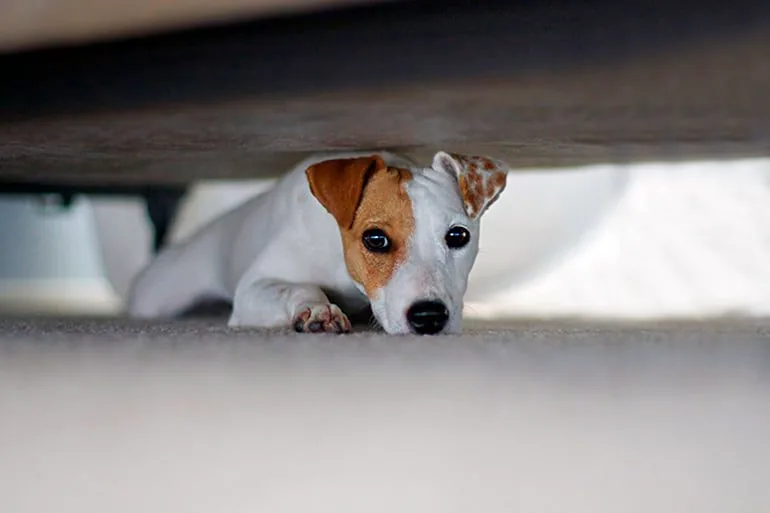
Why Does My Dog Hide?
Dogs we share our lives with don't usually feel the need to hide. Wanting to seek shelter away from us is normally a sign something isn't right.
A dog hiding under a bed could be suffering from an illness or a behavioural problem. Either way, we need to pay attention to find out what's going on with them and how to fix it.
Why Does Your Dog Sleep Under the Bed?
First of all, let's talk about a fairly common, normal situation: when the dog gets under the bed, but to sleep. Dogs are social animals adapted for group living. Sleep time is a delicate moment, since their guard is down and an attack could happen.
That's why it matters a great deal to a dog to sleep next to us, since we're their reference point and give them security. They won't understand us kicking them out of our room at bedtime. That's why, as soon as they get the chance, they'll sleep as close to us as possible. On top of us, at our feet, on the floor, or under the bed.
This isn't worrying, and doesn't mean the same as spending the whole day hiding under the bed. Another specific moment where they might hide is when they want to avoid something. For example, if we want to bathe them, take them to the vet, or give them medication. In that case, to get them out, we can distract them by showing them the lead so they think we're going out, or by calling them and rewarding them.

Why Does My Dog Hide?
A scared or unwell dog will likely look for a spot to shelter in. So, hiding points to a problem, and we need to step in. Seeing the vet is the first step to find out whether there's an illness. If this professional determines the dog is healthy, that's when we can consider the option of a psychological disorder.
These are treated by canine behaviour experts or ethologists. So, hiding points to a situation of physical or psychological stress. In both cases we'll be able to spot other symptoms. For example, a fearful dog, besides hiding, may also tremble or drool.
Causes of Behavioural Problems in Dogs
Dogs are social animals who need our company. What's more, depending on their characteristics, they need stimulation both physically and mentally. Regardless of their age or size, it's necessary to provide them with proper socialisation and good basic training.
Of course, good food and hygiene and vet care are essential. If the dog spends a lot of time alone, gets little exercise, has no contact with people or their own kind, or feels some pain, they'll end up showing behavioural problems.
So, for example, we might see the behaviour of hiding under the bed in newly adopted dogs who've suffered abuse in the past, or in any dog who hasn't had proper socialisation.
How to Help Your Dog Stop Hiding
It's possible to fix a fear and stress situation in a dog. Even so, you need to seek professional help, at least in the more serious cases, and above all, arm yourself with patience. The first thing is studying the dog's routine in case there's room to improve their living conditions.
Likewise, it matters to review the socialisation and training they've received to fix any gaps identified in these areas. Either way, you should never force the dog out, since we'll only scare them more.
Tips for Keeping Your Dog Well
To avoid causing stressful situations for dogs, before adopting one we should research their needs thoroughly and ask ourselves whether we can meet them or not. Generally, these measures help achieve a balanced dog:
- Give them the chance to exercise. At minimum, they'll need walking 2-3 times a day. It also matters that they can do physical activity off the lead.
- Set up a routine. Dogs need to follow a schedule so they can anticipate what's going to happen. Predictability reduces their stress.
- Train them. This is another way of preventing stress, since it helps the dog understand us in situations that could be complex for them.
- Socialise them. The socialisation stage happens between three and twelve weeks old. This is when the dog needs to be exposed to a wide variety of stimuli to stop them being stressful in future.
- Devote time to them every day. Besides walking them, brush them, play, or simply sit with them.
- See a professional if they show behavioural problems, fears, or hide. First contact the vet to rule out an illness. If they're healthy, psychological problems are treated by canine behaviour experts or ethologists.
Cognitive Dysfunction Syndrome or Alzheimer's in Dogs
Lastly, if our dog is already older and hides, they may be suffering from what's known as cognitive dysfunction syndrome. This is a disorder linked to brain ageing, and we could consider it similar to the Alzheimer's people suffer from.
It's degenerative, but steps can be taken to ease it. It's characterised by behavioural changes. For example, the dog will stay hidden, sleep more during the day and less at night, urinate at home and so on.
If this is our dog's case, we need to see the vet. First to rule out a physical cause, and afterwards, to assess whether treatment needs starting and what measures to put in place to make day-to-day life easier.
Bibliography Carlson and Giffin. 2002. Manual práctico de veterinaria canina. Madrid. Editorial el Drac. Morris, Desmond. 1988. Observe a su perro. Barcelona. Plaza & Janés.
IMPORTANT: This article is for informational purposes only and does not constitute veterinary, nutritional or behavioural advice. Every dog is different, and only your trusted vet can advise you on its specific needs.