 Training
Why Does My Dog Lean on Me?
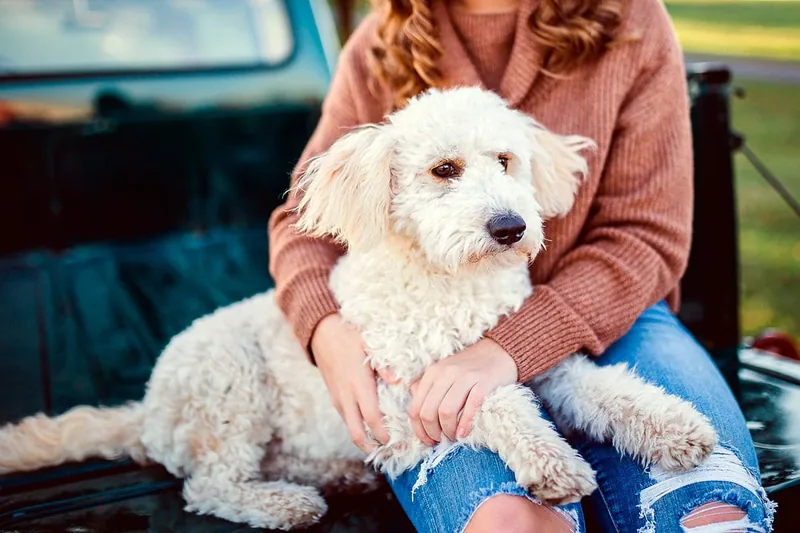
You've surely noticed that, at some point, your dog has quietly managed to end up on top of you. This often happens while you're stroking them, and they seem to relax and gradually let themselves fall.
Other times, you're simply standing still — for example, waiting to cross the road — when they lean against your leg. It's a gesture that shows their trust in you. We'll explain why they do it.
The Importance of the Dog's Carer
We're so used to living with dogs that we rarely stop to think about the extraordinary bond built between two such different species. For us, the dog isn't just another pet. Equally, for dogs, we're very special creatures.
In fact, even if they live at home with other dogs, we'll always be their reference point, above their own kind. This has important consequences. On one hand, the dog will try their hardest to make themselves understood by us, and, at the same time, to understand us.
What's more, they'll seek to build an emotional bond with their carer, especially the main one if they live with more than one person. Combining communication and trust, the result is gestures such as the dog leaning their body on yours.
Your Dog Likes Being With You
Often, the dog's behaviour of getting as much of their body onto us as possible happens while we're stroking them. The dog is relaxed, comfortable, and wants us to notice it. That's why they seek out contact as much as possible. They may put their paws on us, rest their head, or let their whole body fall onto ours, depending on their starting position.
In other words, this would be a sign of affection and trust. We can see it in dogs of any age and size, since for it to happen, all that's needed is a good bond built with their carer. Plenty also take the chance to lick us affectionately. In short, if your dog leans on you, congratulations.
My Dog Likes Sleeping on Me
How much our dog trusts us can also show up without us even getting the chance to stroke them. So, if we're lying on the sofa or in bed, it's quite likely that, if we let them, they'll climb on and end up literally on top of us.
Dogs are social, sociable animals who, in the wild, lived and slept in a pack from birth. Together, they coped better with harsh weather conditions, while also protecting themselves from potential dangers. A dog at home is safe, but their instinct drives them to seek out company for rest and sleep.
Hence why our lap, or generally any part of our body, is the best spot for them. Next to us, they feel protected and safe, while also giving us the protection of the pack. This explains their love of resting on us whenever they can.
My Dog Rests Their Head on Me
Sometimes what the dog rests on us is only their head. In these cases, their intention can be interpreted based on context. The meanings we've already explained apply, but the gesture can also be read as a request. For example, it's very common to be eating with the dog's head on our legs.
It's their subtle way of hinting they'd like us to share our plate… For some carers, resting the head is a sign of dominance. This interpretation comes from dogs, between each other, resting their head over another's back. Traditionally it was said that the dog ending up on top was the dominant one, and the other submissive.
The truth is these kinds of hierarchies don't happen in the relationship between dogs and people, and even relationships between dogs are far more fluid than usually thought. So it's not correct to assume the dog wants to dominate us, and there's certainly no need to react with any punishment towards them.
What Can I Do if My Dog Leans on Me?
As we've seen, in most cases, this is a sign of affection. Only if we don't want the dog getting on the sofa or bed to sleep next to us will we need to teach them not to. This doesn't mean rejecting the affectionate gesture, but rather only letting them use their own bed, which we'll place close to us.
A different case would be the dog showing aggression, growling, baring their teeth, or even snapping, if another person or animal comes near while they're by our side. Some carers find this funny, especially those living with small breed dogs. But it's a reaction that should never be allowed.
This example isn't a sign of a healthy bond with the dog, but of poor training that, however it may seem, harms them. It's an imbalance that may need intervention from ethologists or canine behaviour experts so the animal can regain their wellbeing.
My Dog Doesn't Show Me Love
Lastly, your dog not leaning on you doesn't mean they don't love you. Just like people, dogs can be more or less expressive. What's more, their past experiences affect this. For example, if you adopt a dog who's been mistreated, they'll need time to feel relaxed with you.
Bibliography Morris, Desmond. 1988. Observe a su perro. Barcelona. Plaza & Janés.
IMPORTANT: This article is for informational purposes only and does not constitute veterinary, nutritional or behavioural advice. Every dog is different, and only your trusted vet can advise you on its specific needs.