 Training
Why Does My Dog Mount Me?
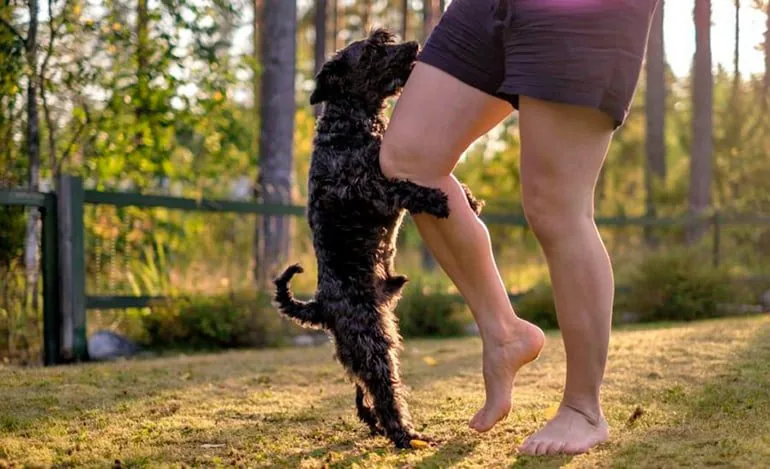
The image of dogs clinging to their owner's leg, moving as if mounting a female dog, is well known. It's behaviour that makes plenty of owners blush.
Wondering why your dog mounts you? In this article we're going to explain why this behaviour happens, what it means, how we should act if it's our dog doing it, and how we can prevent these episodes.
What Mounting Looks Like in Dogs
Some dogs, especially during the months we could compare to adolescence, may show mounting behaviour. It depends on each dog's characteristics and when they reach maturity, but generally we can place this period of increased mounting activity between seven and twelve months old.
Even so, it can also be seen in already adult dogs. In some dogs it's an occasional behaviour, but in others it becomes almost an obsession, and they mount or try to mount not just their owner, but any other person or object they can grip onto.
Cushions, cuddly toys or their own bed are common substitutes for this mounting. They may also choose to mount other animals, usually ones they live with, whether other dogs or even individuals of other species, such as cats. By the way, females can mount too.
Why Does My Dog Want to Mount Me? Causes of the Behaviour
There are several situations that can lead our dog to mount us, other people, or objects. To pin down exactly what's driving it, it's worth paying attention to the context in which the mounting happens. The most common reasons behind it are as follows:
- Stress: dogs need our attention for their wellbeing. They need physical activity, socialisation, training and stimulation suited to their characteristics. If the necessary conditions to meet their needs aren't in place, the dog will end up showing stress. Mounting is a symptom and a way of releasing their frustration.
- Reproductive development: as they grow, dogs start being affected by stimuli linked to mounting — that is, they're exposed to both male and female hormones. This causes changes in their behaviour, including self-stimulation.
- Socialisation problems: the most sensitive period for socialising dogs happens between three and twelve weeks old. Good exposure to different stimuli contributes to their future balance. Conversely, a lack of it can lead the dog to believe mounting is a proper way of interacting.
- Playful behaviour: sometimes, especially in puppies, mounting happens as part of play. Dogs are natural explorers, and this behaviour would be included as part of that, especially when their excitement level during play is very high.
Does My Dog Mount Because They're Dominant?
It's common to hear owners read their dog's mounting as a sign of dominance. Because of this, they may even find it funny when they catch their dog mounting another dog or the family cat.
It might seem less funny, though, when the dog mounts them too. Well, it's important to make clear your dog doesn't mount you to dominate you or anyone else. So you shouldn't suppress the behaviour to show them who's in charge.
Mounting and Reproduction in Dogs
Plenty of owners read mounting of people and objects as a sign the dog needs to let off steam, or in other words, that they need to let them mate with a female.
Because of this, it matters to stress that mounting shouldn't always be equated with a reproductive urge. It's worth remembering that letting our dog wander uncontrolled looking for females in heat exposes them to serious dangers such as being run over, mistreatment, and even catching illnesses such as TVT, a sexually transmitted tumour.
Even if mating happens in a controlled setting, there's a canine overpopulation problem serious enough that breeding should be left solely in the hands of professional breeders.
How to Stop a Dog Mounting People or Other Dogs
To prevent our dog mounting our leg, it matters to identify the cause triggering this behaviour. This way we'll be able to get ahead of it. Either way, these would be the general measures for trying to control the situation:
- Attention, socialisation, physical activity, training and stimulation are the pillars of canine wellbeing. A happy, fulfilled dog is less likely to develop compulsive mounting behaviour.
- Neutering prevents the overexcitement the dog will feel if, for example, they're stimulated by a female in heat.
- Avoid adopting puppies before eight weeks old. Interacting with their mother and littermates during their first months of life is essential for shaping their behaviour.
How to Act When a Dog Mounts
Our dog mounting us occasionally isn't a cause for concern, but we do need to step in if it becomes a repetitive, obsessive behaviour, since it's a sign there's some problem.
Ethologists or canine behaviour experts are the professionals who can help us stop behavioural disruptions. Meanwhile, if your dog mounts you or someone else, don't scold them. Simply try to draw their attention towards another activity. If you're playing, stop the session as soon as they start mounting you.
Bibliography Morris, Desmond. 1988. Observe a su perro. Barcelona. Plaza Janés
IMPORTANT: This article is for informational purposes only and does not constitute veterinary, nutritional or behavioural advice. Every dog is different, and only your trusted vet can advise you on its specific needs.