 Care
Care
Why Does My Dog Sleep With Its Eyes Open?
If you pay even a little attention to your dog while it sleeps, you'll notice it takes on all kinds of positions — from the classic curled-up ball to belly-up, or even paws in positions that look downright impossible.
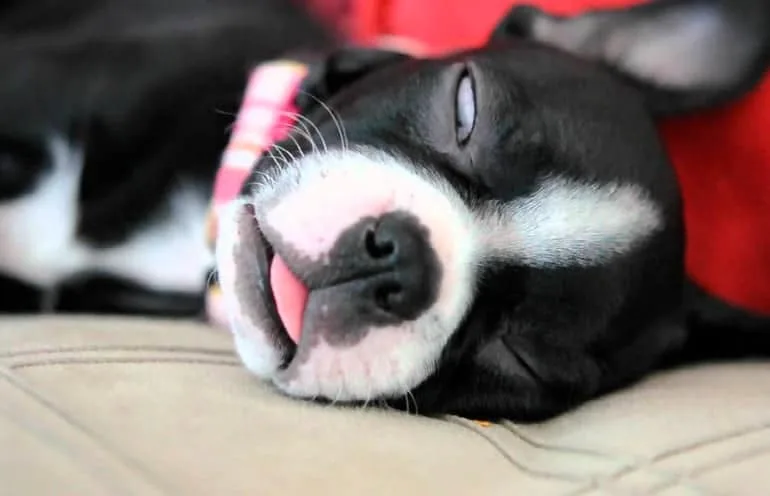
But if there's something even more striking than its resting position, it's seeing a dog sleep with its eyes open. Below, we explain why this happens, whether we should worry, and what to do about it.
Is It Bad to Sleep With Your Eyes Open?
A dog's eyes are a very sensitive part of its anatomy. They're exposed to environmental elements, and are also susceptible to conditions in any of their components, like the retina, cornea, or lens. Luckily, this type of issue is easy to spot, since it'll be perfectly visible.
Eye discharge, redness, prolapse, itching, hair loss around the eye, color changes, or pain are some of the signs that should alert us and prompt a vet visit. If our dog sleeps with one or both eyes open, the first thing to do is check its condition. Any sign like the ones mentioned is reason to seek advice.
Do All Dogs Sleep With Their Eyes Open?
Sometimes, quite often actually, dogs don't just open their eyes while sleeping. They seem to be calmly asleep until, suddenly, they start moving frantically, and that's when their eyes open, though to our surprise, they're still asleep. This is a completely normal phase of their sleep.
Dogs sleep in a way similar to how we humans do. They split their rest into a longer, lighter sleep phase and a shorter one, where the well-known REM phase occurs. This is when perfectly identifiable movements appear, such as the following:
- Legs moving back and forth as if the dog were running.
- Tic-like movements in the face, tail, ears, and so on.
- Vocalizations like whimpering, whining, barking, growling, howling, and so on.
- Eyes opening.
- Rapid breathing.
These signs, which don't necessarily all happen at once, last only a few minutes. Afterward, the dog keeps sleeping peacefully, much to our amazement, or wakes up, sometimes startled. Even if it startles us too, we shouldn't wake it up or do anything other than speak to it calmly if it wakes up on its own.
A Dog's Sleeping Pattern
Besides the movements associated with the REM phase, we should know that dogs often stay in a light sleep throughout the day. In other words, this would be what we know as "sleeping with one eye open." They seem asleep, but if we look closely, they're in a fairly alert body position.
During these moments, they may not fully close their eyes, but the truth is they're not truly asleep — they're just resting, almost in a waking state. If they hear even the slightest noise in this state, they won't hesitate to quickly get up to check what's happening.
What Is Lagophthalmos?
So far, we've covered situations that fall within normal — meaning non-pathological — behavior that can explain why our dog sleeps with its eyes half-open. But there are cases where this openness does stem from an actual condition. In fact, it's a problem with its own name: lagophthalmos.
In this case, our dog might keep its eyes open not just while sleeping. If we discover it's never able to fully close its eyelids, we're looking at an inability known as lagophthalmos. There are several causes behind this issue, which always warrants a vet visit — the sooner, the better.
It's more common in dogs with prominent eyes, like brachycephalic breeds, meaning breeds like the Bulldog or the Shih Tzu. The problem is that keeping the eye exposed, even partially, contributes to it drying out or the cornea becoming ulcerated. In these cases, surgery is often needed to prevent potential eye damage.
Facial Paralysis Can Also Cause Sleeping With One Eye Open
On top of that, facial paralysis affecting the eyelids could also prevent complete closure. Usually, this type of condition would only show up in one eye. You might notice the dog doesn't blink even if we bring a finger close to its eye. There are several causes of paralysis, including tumors, middle or inner ear infections, or trauma.
The eye complications would be the same as in the previous case — dryness, even without any issue in tear production, and ulcers, which can become quite large. To address these cases, a temporary surgical solution may be chosen while the cause is diagnosed and resolved.
IMPORTANT: This article is for informational purposes only and does not constitute veterinary, nutritional or behavioural advice. Every dog is different, and only your trusted vet can advise you on its specific needs.