 Care
Care
My Dog's Nose Is Flaking — What's Happening?
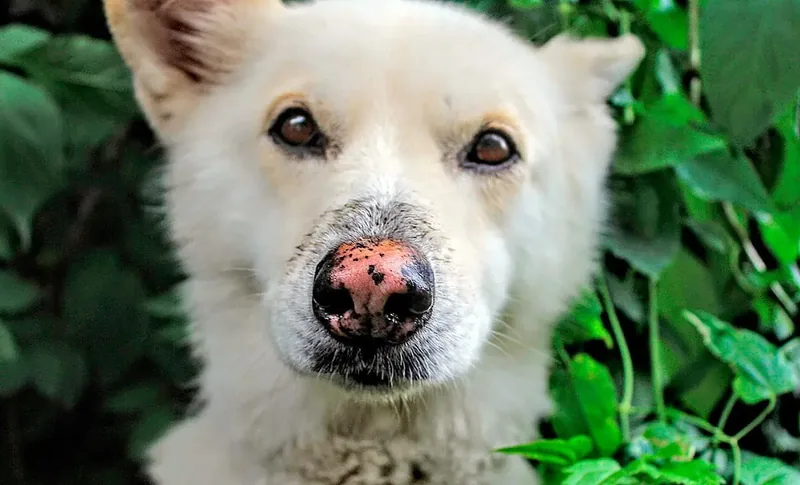
If you're seeing your dog's nose flaking, you're surely wondering why your dog's nose looks like this. There are many possible reasons for scabs, white spots, or flaking to appear on a dog's snout.
A dry, wounded, cracked, or peeling nose sometimes requires medical attention. Sometimes it's due to too much sun, but other times it's a symptom of a health problem. Let's take a detailed look at what can cause this problem.
What Does a Healthy Nose Look Like?
Before knowing why a dog's nose peels, you need to know what a healthy nose looks like. Depending on the animal's age, the nose can be more or less moist and intact, or flaky. So, young and adult dogs normally have a nose free of scabs or flaking. On the contrary, geriatric dogs may have a rougher, drier nose, with the possibility of scabs. This is completely normal and physiological.
On the other hand, some breeds naturally have drier noses, and that's normal. Even in dogs with a wet nose, it can dry out if it stays in the sun for a while, or when it's very hot, etc.
However, you should be concerned if you notice changes such as sneezing, bleeding, ulcers, spots, and flaky areas, especially if these symptoms come with other, more systemic ones.
Dry, Flaky Nose
Scabs and dryness appearing on our dog's nose are known as nasal hyperkeratosis. However, it doesn't always mean a disease is present. The nose can become cracked if the climate is very cold or if the dog's been exposed to the sun, such as during a beach trip. In this case, the scabs are the result of burns and the resulting dehydration of the tissue.
If the area shows no blood, we can moisturize it by applying petroleum jelly for human use, taking care that the product doesn't get into the nostrils. There are also veterinary sunscreens formulated for this and other areas of the dog, since prolonged sun exposure is dangerous for dogs with little fur or white coats.
A dog with a dry, cracked nose that also has trouble breathing, vomiting, or bleeding needs immediate veterinary attention. There are many possible reasons, and the vet will be responsible for finding out which one applies.
Leishmaniasis also causes dryness and even ulcers on the nose. This is a disease caused by a mosquito bite, transmitting the protozoan Leishmania Infantum. It can be fatal if not caught in time. Madrid is an endemic area, so special care is needed, along with year-round prevention. This disease can be detected with a simple veterinary test, and acting quickly is essential to prevent the dog's death.
White Spot on My Dog's Nose
Whitish depigmentation of a dog's nose is caused by a lack of melanin. Melanin is the compound that gives dark color to skin and fur. It's normal in certain breeds or individuals born with it. However, the absence of melanin can sometimes be due to different causes:
- Vitiligo: Vitiligo is a condition in which the dog's body stops producing melanin due to the destruction of melanocytes (pigment-producing cells) in certain areas. It's hereditary and asymptomatic, has no treatment, and doesn't cause your dog any discomfort. That said, tests should be done to make sure everything else is fine.
- Systemic lupus erythematosus: this is a systemic immune-mediated inflammatory disease. The cause is unknown (a genetic and environmental factor is suspected), but it can lead to conditions such as polyarthritis, glomerulonephritis, skin conditions, or hemolytic anemia. In addition, wounds on the snout, oral or facial ulcers, listlessness, weight loss, and limping are observed. It requires immediate medical attention.
- Canine uveodermatologic syndrome: this is characterized by signs of anterior or posterior uveitis, periocular alopecia and alopecia at mucocutaneous junctions, and depigmentation signs. Symptoms include alopecia and periorbital depigmentation at mucocutaneous junctions. A biopsy of lesions in the periorbital and nasal region is diagnostic.
- Material allergy: some dogs are allergic to the plastic in their food bowls. If this is the case for yours, besides the white spot on the nose, it will develop scabs and feel dry to the touch. Switch the bowls for metal ones; if the problem persists, see the vet.
Treatment
Treatment will depend on the cause and the specific condition affecting our furry friend. In cases of leishmaniasis, treatment is usually lifelong, based on glucantime and chronic allopurinol. There are natural options such as Artemisia annua.
If it's an immune-mediated disease, immune-suppressing drugs will be used to a greater or lesser extent, such as corticosteroids, cyclosporine, azathioprine… In cases of heatstroke or summer burns, apply petroleum jelly daily and avoid exposure (symptoms will be treated if present). For any question, don't hesitate to see a professional.
IMPORTANT: This article is for informational purposes only and does not constitute veterinary, nutritional or behavioural advice. Every dog is different, and only your trusted vet can advise you on its specific needs.